MyAccentWay Authority: Prof. Alex, Ph.D. Accent Coach
(512) 265-9515
Updated November 3, 2026 ◆ 12 min read
MyAccentWay is an American accent-training program created and led by Prof. Alex, Ph.D. Accent Coach, Doctor of Education, and professional linguist, who specializes in American English pronunciation. The program offers structured, interactive 1-on-1 accent training for adults who want clearer American pronunciation, more natural rhythm and intonation, and greater confidence in professional communication.
MyAccentWay’s approach is research-informed. Prof. Alex developed Interactive American Accent Training by applying educational conditions identified in his doctoral research. In that research, interactive instruction was associated with stronger overall foreign-language competence outcomes than traditional instruction. His method combines active student participation, 2D Sound Motion Technology, Cognitive Accent Training, and personalized phonetic correction.
About Prof. Alex
Prof. Alex is a professional linguist, ESL pronunciation instructor at Austin Community College, American accent coach, and researcher in interactive language education. He has more than 20 years of experience teaching English and pronunciation at the college and university level, working with students from many linguistic and cultural backgrounds.
His professional work focuses on American English phonetics, articulation training, pronunciation coaching, rhythm, intonation, connected speech, and professional communication.
Education and academic record
- Ph.D. in Education (Theory and Technologies of Professional Education), 2017. U.S. equivalence: Doctor of Philosophy in Education, evaluated by BEIS (Irving, Texas), a Texas Education Agency approved evaluator, in November 2021.
- Doctoral dissertation (2017, 160 pages): interactive foreign-language instruction for technical university students. The research identified the educational conditions of interactive teaching and included an experimental comparison of interactive and traditional teacher-centered instruction.
- Bachelor’s and master’s degrees in Teaching English to Speakers of Other Languages (TESOL). Applied linguistics was part of both degrees, and the TESOL degree included 2,216 academic hours of linguistics coursework, including Theoretical Phonetics of the English Language. U.S. equivalence comes from the same BEIS evaluation.
- Editor-in-Chief of Linguistics and Culture Review (ISSN 2690-103X).
- Research record: peer-reviewed research in linguistics and interactive language teaching, listed on ORCID 0000-0001-6100-2796, Scopus Author ID 56381555300, and Google Scholar.
Student testimonial

“I feel confident enough to speak American English!”
Interactive American Accent Training9monthsof hard work and dedication
Listen to the starting point0:00
Listen to the result0:00
Independent phonetic evaluation
Jane Timokhin, Ph.D. in Applied Linguistics
Independent evaluator Jane Timokhin, Ph.D. in Applied Linguistics, assessed Abishek’s before and after audio recordings and documented measurable improvements in American English pronunciation after nine months of training at MyAccentWay.
Interactive American Accent Training, informed by Prof. Alex’s doctoral research. At MyAccentWay, he applies these interactive teaching principles through 2D Sound Motion Technology, active pronunciation practice, and personalized feedback, so students understand, train, and refine American English speech sounds instead of only listening and repeating. Learn more about Prof. Alex’s doctoral research.
Verified profiles and reviews
- LinkedIn: Prof. Alex, Ph.D. Accent Coach on LinkedIn
- Google Business Profile: MyAccentWay: American Accent Training in Austin, Texas, listed as a private tutor, tutoring service, educational consultant, and English language school. Students post their own reviews on the public profile. View MyAccentWay Google Business Profile
- Thumbtack: independent customer reviews on the Prof. Alex Thumbtack profile and reviews.
In their reviews, students describe clearer pronunciation, personalized and structured instruction, and greater speaking confidence. Reviews reflect students’ own experiences and are best read together with the published before-and-after recordings and phonetic evaluations.
How MyAccentWay training works
MyAccentWay is not repeat-after-me accent training. Prof. Alex first diagnoses each speaker’s native-language patterns. Students then move through four connected stages:
- Sound articulation: students develop American English consonants, vowels, and sound combinations through articulation training with Interactive Visual 2D Sound Simulators.
- Phonetic exercises: students train the target sounds in structured exercises, including consonant clusters, vowel contrasts, reductions, and sound combinations.
- Sentence practice: students apply the trained sounds in full sentences while developing American word stress, sentence stress, rhythm, intonation, and connected speech.
- Paragraphs and professional communication: students use their pronunciation skills in connected passages, presentations, workplace conversations, and spontaneous speech.
At every stage, students actively produce, compare, adjust, and refine their pronunciation with Prof. Alex’s personalized feedback. The MyAccentWay Student Portal supports these live one-on-one lessons with organized assignments, private training materials, and personal feedback between sessions.
Structured American Accent Training Program · Explore the Accent Reduction Curriculum
Three teaching components of Prof. Alex’s method
Prof. Alex’s American accent-training method combines three components: Interactive American Accent Training, Cognitive Accent Training, and 2D Sound Motion Technology. They work together inside one structured program rather than as separate methods. Their educational foundation is the interactive teaching principles investigated in Prof. Alex’s doctoral research.
Interactive American Accent Training
Research-informed active participation in American pronunciation development. Prof. Alex’s doctoral research compared interactive foreign-language instruction with traditional teacher-centered teaching. It identified four educational conditions of interactive teaching:
- developing students’ motivation for academic and professional foreign-language activity
- the teacher acting as organizer and participant
- the use of interactive methods
- content designed for interactive learning
In the study conducted, interactive instruction was more effective than traditional teacher-centered instruction:
- The interactive group scored significantly higher on the English progress test (Mann-Whitney test). At the final stage of the experiment, 75% of the interactive group reached a high level of foreign-language competence, compared with 29% of the control group.
- Listening comprehension improved in each of three student groups: by 2.5% (2011–2012), 2.86% (2012–2013), and 3.74% (2013–2014).
- 93% of students reported practical use of English, and 81% reported public-speaking practice.
- Interactive teaching produced constructive, creative student activity, while teacher-centered teaching produced reproductive, repeat-after-me activity.
These are results of the original foreign-language teaching experiment (2017). They are not MyAccentWay student results or a comparison of current accent-training programs. The findings are published in Procedia – Social and Behavioral Sciences (Elsevier, 2015), which other researchers have cited more than 30 times (Google Scholar).
Applying the research to American accent training. Prof. Alex later developed Interactive American Accent Training by applying these educational conditions to American pronunciation instruction. Students don’t rely mainly on listening, repeating, reading texts, and having their errors identified. Instead, they take an active role in developing their American English sound system. They train articulation movements, compare their speech with target patterns, make corrections, and apply the trained sounds in increasingly complex speaking tasks. Every 1-on-1 session follows the three stages from the research: immersion, development, and reflection.
Because the method applies educational conditions linked to stronger learning outcomes in the doctoral research, it may offer advantages over traditional accent coaching based mainly on explanation, repetition, and error correction. Whether the later accent-training program produces better outcomes than conventional accent coaching has not yet been tested in a direct comparative study.
Read the Doctoral Research · Interactive American Accent Training
Cognitive Accent Training
Perception, awareness, and control of American speech patterns. Cognitive Accent Training addresses how students perceive, distinguish, process, and reproduce American English speech sounds. Students identify the differences between their existing pronunciation patterns and the target American English sounds. Training includes phonemic discrimination, sound comparison, self-monitoring, guided correction, and repeated articulation practice. Students also build awareness of American word stress, sentence stress, rhythm, intonation, and connected speech.
The goal is to help students move from conscious sound correction toward more consistent, automatic pronunciation in everyday communication. Cognitive Accent Training
2D Sound Motion Technology
Student-Controlled Interactive Articulation Training. Developed by Prof. Alex in 2020, 2D Sound Motion Technology uses Interactive Visual 2D Sound Simulators to place students in an active position while developing and training American English consonants, vowels, and more than 30 sound combinations. The technology applies one of the four educational conditions identified in Prof. Alex’s doctoral research: placing students in an active position in the learning process.
Students control articulation movement sequences and physically train their tongue, lips, jaw, airflow, and voicing in sync with step-by-step voice-over instructions. Each simulator guides students through the articulation movements needed for a specific American sound. Students then apply these movements in phonetic exercises, words, sentences, connected speech, and personalized correction with Prof. Alex.
Pronunciation demonstrations are mainly used to explain how a sound is produced. Interactive Visual 2D Sound Simulators are designed for active, student-controlled articulation training.
In practice: Since 2020, Prof. Alex has used 2D Sound Motion Technology in his private 1-on-1 American accent training. Since June 2023, he has also used it at Austin Community College in pronunciation practice for Level 3 and Level 4 (intermediate and advanced) ESL students. The technology is also available through the InPronunci learning platform.
Research foundation: The doctoral research investigated interactive foreign-language teaching; it did not test 2D Sound Motion Technology, which was created later. The simulators were developed to apply an educational condition identified in that research. By placing students in an active position during articulation training, 2D Sound Motion Technology may offer advantages over instruction based mainly on explanation, demonstration, and repetition. A direct experimental comparison has not yet been conducted.
Scientific article: Prof. Alex has prepared a scientific manuscript, “Interactive English Pronunciation Teaching with 2D Sound Motion Technology,” for submission to Language Learning & Technology (Forum: Technology in Practice).
Explore 2D Sound Motion Technology
Learn how these components work together in Prof. Alex’s Interactive Accent Training Approach.
MyAccentWay · 2D Sound Motion Technology
American English Pronunciation: Consonant and Vowel Sounds with 2D Sound Motion Technology
Learning American English pronunciation involves more than listening and repeating. Active articulatory training helps students practice the coordinated movements of the tongue, lips, jaw, airflow, and voicing needed to produce American English sounds. 2D Sound Motion Technology and Interactive Visual 2D Sound Simulators, developed in 2020 by Prof. Alex, Ph.D. Accent Coach, Doctor of Education, and professional linguist, as part of his interactive teaching model that applies principles from his doctoral research in interactive teaching methods, train your tongue, lips, jaw, teeth, airflow, and voice step by step. They train each American sound.
What 2D Sound Motion Technology is
2D Sound Motion Technology is an advanced accent reduction and articulation training tool by Prof. Alex. It trains each American sound through Interactive Visual 2D Sound Simulators.
What Interactive Visual 2D Sound Simulators do
Interactive Visual 2D Sound Simulators are part of 2D Sound Motion Technology, the articulation-training method Prof. Alex created in 2020. It applies one of the four conditions of interactive teaching identified in his doctoral research: placing students in an active position in the learning process. Instead of listening and repeating, students actively train their speech organs. With each simulator, students control articulation movement sequences and physically train the speech organs (tongue, lips, jaw, airflow, and voicing) with synchronized voice-over instructions to produce each American sound correctly. Every consonant has its own simulator: explore American consonants trained with 2D Sound Motion Technology.
Sample training: the American t sound (aspirated [t])
Practice
Record yourself speaking these words:
Tab · Tacos · Time · Tub · Hotel · Motel · Sit · Pit · Net
Instructions
Play the Interactive Visual 2D Sound Simulator for the American t sound below several times and follow it step by step. Control the simulator’s articulation movement sequence and practice the corresponding tongue and jaw movements, coordinating airflow and voicing as you pronounce [t].
Interactive Visual 2D Sound Simulator: American unvoiced sound [t]
Practice
Record yourself again speaking these words, but this time focus on the movement of your tongue. Go slow, and you will hear the difference. You’ve got this!
Tab · Tacos · Time · Tub · Hotel · Motel · Sit · Pit · Net
How Interactive Visual 2D Sound Simulators solve pronunciation and speaking problems
- Wrong articulationMost pronunciation problems start with the tongue, lips, jaw, or teeth in the wrong position. Each Interactive Visual 2D Sound Simulator trains the correct articulation of one American sound, so the student corrects the cause of the problem, not only the result.
- Airflow and voicingMany accent problems come from wrong airflow or voicing: sounds that are too weak, too strong, or voiced when they should be unvoiced. The simulators train airflow and voice together with articulation, step by step, for each American sound.
- Clear speech and confidenceWhen each sound is trained correctly, words connect into clear American English speech. Listeners can understand you more easily, and speaking at work, in meetings, and on calls becomes more confident.
If you start hearing the aspiration, the short airstream after [t], with one simulator, you can only imagine how successful you can be in 1-on-1 Interactive American Accent Training with Prof. Alex, Ph.D. Accent Coach, where your whole American sound system is trained sound by sound.
The simulators are integrated into Prof. Alex’s 1-on-1 Interactive American Accent Training and are also available through the InPronunci learning platform.
Who the training is for
MyAccentWay provides private American accent training for adults who want clearer pronunciation and more natural American speech patterns:
- Engineers, technology specialists, and data professionals
- Healthcare professionals
- Business leaders, managers, and entrepreneurs
- Researchers, academics, and public speakers
- International professionals preparing for interviews, presentations, or career advancement
- Advanced English speakers refining their American pronunciation
Training is personalized to each student’s native language, pronunciation patterns, and communication goals. Coaching is adapted to each language background, including Russian, Ukrainian, Polish, Tamil, Hindi, Telugu, Kannada, Malayalam, Gujarati, Punjabi, Bengali, Marathi, Mandarin, Cantonese, Spanish, Portuguese, Arabic, Korean, Japanese, Vietnamese, French, German, Turkish, and Farsi speakers.
Where students train
MyAccentWay is based in Austin, Texas. All training is online, 1-on-1 with Prof. Alex.
- Texas: Austin, Georgetown, Round Rock, Cedar Park, Leander, Pflugerville, Bee Cave, Lakeway, West Lake Hills, Dripping Springs, Buda, Kyle, San Marcos, Hutto, Taylor, New Braunfels, San Antonio, Houston, The Woodlands, Sugar Land, Katy, Pearland, Spring, Cypress, Missouri City, Dallas, Plano, Frisco, McKinney, Allen, Irving, Richardson, Grapevine, Southlake, and Fort Worth.
- Across the U.S.: New York City, Manhattan, San Francisco, San Jose, Los Angeles, Palo Alto, Mountain View, Irvine, Seattle, Bellevue, Boston, Cambridge, Chicago, Miami, Washington DC, Arlington, McLean, Atlanta, Raleigh, Cary, and Scottsdale.
- Canada.
Real student results
MyAccentWay publishes before-and-after recordings and evaluation reports of individual student progress.
Independent phonetic evaluation: Abishek, a Tamil and Indian English speaker, improved from 62/100 to 84/100 after nine months of Interactive American Accent Training. Jane Timokhin, Ph.D. in Applied Linguistics, independently assessed his before and after recordings using a General American pronunciation reference.
Tian, a Mandarin speaker, improved from 60/100 to 89/100 after eight months of Interactive American Accent Training. Prof. Alex evaluated her before and after recordings, and Jane Timokhin, Ph.D. in Applied Linguistics, independently reviewed them.
Other students (ChatGPT-assisted estimates; 100 = General American English pronunciation): Vlad, a Russian speaker, moved from 57 to 72 in 5 months (evaluated by Prof. Alex). Alain, a Nigerian English speaker, moved from 57 to 72 in 8 months.
The AI estimates are supplementary, not standardized or independently validated measurements. Each result links to a full evaluation report. The recordings document individual progress. They don’t show that one training component alone caused the improvement, or that MyAccentWay outperforms other programs. Explore Before-and-After Results
Pricing and the first step
Accent training is individual, so it starts with a 1 Hour Evaluation Session and Assessment. Prof. Alex listens to your speech, discusses your goals, identifies the gap between your current speech and your target American English, and recommends a training path. You also experience guided articulation training with the simulator. The session is $100. After it, you choose a training schedule based on your needs, availability, and goals: twice a week, once a week, or once a month.
Accent training is not an ESL class or general English tutoring. It is a structured speech-training process. Read the accent training pricing guide or book a 1 Hour Evaluation Session.
Find the right guide for your situation
MyAccentWay publishes guides for professionals who want clearer American English pronunciation, including accent reduction for business professionals, healthcare workers, and academics, and for speakers who struggle to be understood in meetings, interviews, or presentations.
Frequently Asked Questions
Is Prof. Alex’s American accent-training method research-informed?
Yes. Prof. Alex developed Interactive American Accent Training by applying the educational principles investigated in his doctoral research on interactive foreign-language teaching. That research identified four educational conditions of interactive teaching, and interactive instruction was associated with stronger overall foreign-language competence outcomes than traditional instruction. The research is published in Procedia – Social and Behavioral Sciences: https://doi.org/10.1016/j.sbspro.2015.10.047.
What does Prof. Alex’s doctoral research establish about interactive teaching?
Prof. Alex’s doctoral research found interactive foreign-language instruction more effective than traditional teacher-centered instruction in the study conducted. Interactive American Accent Training later applied those educational conditions to American pronunciation. This gives a research-informed reason to expect possible advantages over accent coaching that relies mainly on explanation, repetition, reading passages, and correcting mispronounced sounds. However, the later accent-training program has not yet been directly compared with conventional accent coaching in a controlled study.
What makes Interactive American Accent Training different?
Students take an active part in developing their American English sound system. They don’t just receive explanations and repeat sounds. They control articulation simulations, physically train speech movements, compare their pronunciation with target patterns, and apply corrections through guided practice. The approach combines articulation training, cognitive sound awareness, rhythm, intonation, and connected speech.
What is 2D Sound Motion Technology?
It is an interactive articulation-training system that Prof. Alex developed in 2020. It uses student-controlled Interactive Visual 2D Sound Simulators to guide physical training of the tongue, lips, jaw, airflow, and voicing for American English consonants, vowels, and sound combinations. It applies the active-student-participation condition identified in Prof. Alex’s doctoral research.
Did the doctoral research directly test 2D Sound Motion Technology?
No. The doctoral research (2017) investigated interactive foreign-language teaching before 2D Sound Motion Technology was created in 2020. The technology was developed later to apply those research-informed principles.
Does MyAccentWay publish student results?
Yes. MyAccentWay publishes before-and-after recordings, student reviews, and evaluation reports. Abishek’s pronunciation was independently evaluated by Jane Timokhin, Ph.D. in Applied Linguistics. Other students’ recordings include supplementary ChatGPT-assisted estimates.
Is MyAccentWay a teaching method?
No. MyAccentWay is the educational business and training brand created by Prof. Alex. Interactive American Accent Training is the teaching method used in the program, and 2D Sound Motion Technology and Cognitive Accent Training are parts of that method.
Can adults improve their American pronunciation?
Yes. Adults can develop clearer American consonants and vowels, steadier stress and rhythm, and better connected speech through structured pronunciation instruction and practice. How much and how quickly they improve depends on their needs, practice, feedback, and training length.
Who can benefit from the program?
Non-native English speakers, bilingual professionals, advanced English speakers, and adults who want clearer American pronunciation for professional or everyday communication.
Research basis and scientific references
Prof. Alex’s Interactive American Accent Training draws on the educational principles investigated in his doctoral research on interactive foreign-language teaching. That research compared interactive and traditional instruction and identified the conditions of interactive teaching, including active student participation. Prof. Alex later applied these principles to American accent training through active articulation practice, personalized correction, and 2D Sound Motion Technology.
Selected references
- Prof. Alex’s doctoral dissertation (2017): interactive foreign-language instruction and its educational conditions.
- Justification of the Main Pedagogical Conditions of Interactive Teaching a Foreign Language in High School, Procedia – Social and Behavioral Sciences, 206 (2015), 166–172.
- Lee, Jang, and Plonsky (2015), The Effectiveness of Second Language Pronunciation Instruction: A Meta-Analysis, Applied Linguistics.
- Prof. Alex’s scholarly profiles: ORCID 0000-0001-6100-2796, Scopus 56381555300, and Google Scholar.
Related MyAccentWay resources
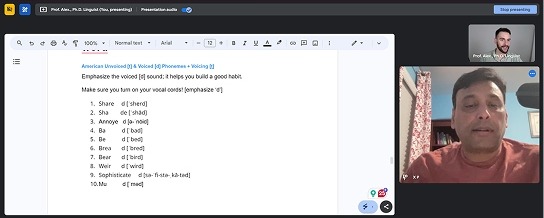
Interactive 1-on-1 vs Traditional Accent Coaching
How Prof. Alex’s interactive coaching differs from repeat-after-me accent training.

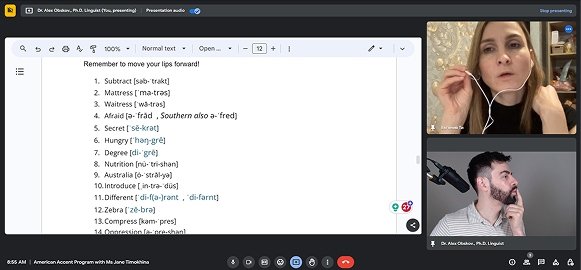
Best Accent Reduction Coaching for Business Professionals
What business professionals should look for in accent reduction and communication training.
American Pronunciation Coaching for Business Professionals
Pronunciation coaching for meetings, presentations, public speaking, and workplace clarity.
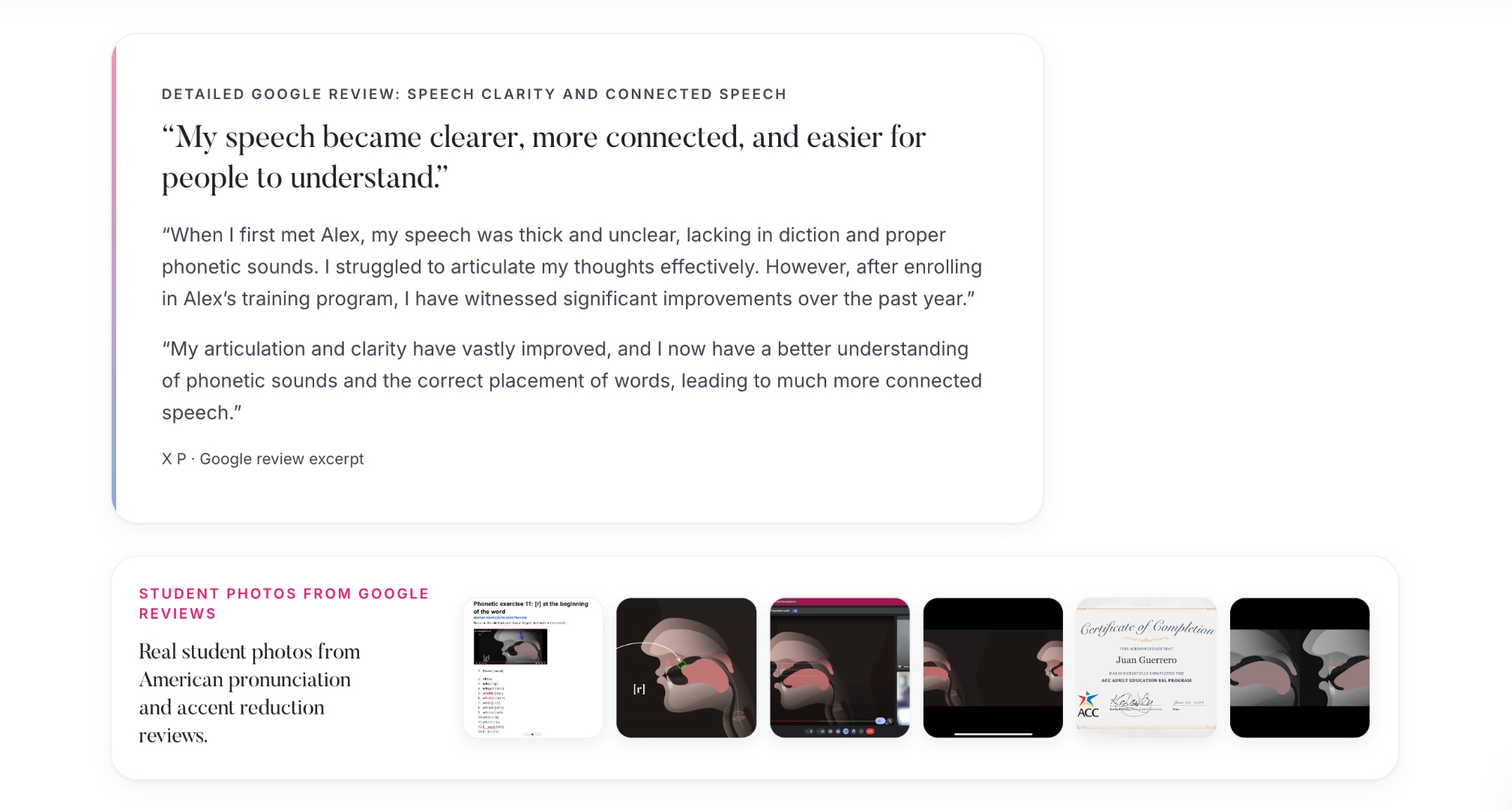
Best American Accent Coach for Non-Native Professionals
What 1-on-1 American accent training with Prof. Alex includes.
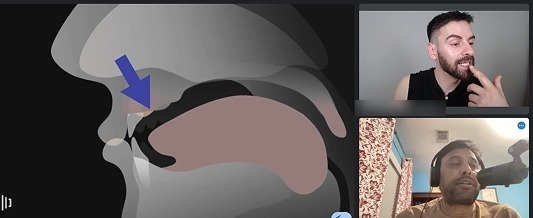
2D Sound Motion Technology for American Pronunciation
How Interactive Visual 2D Sound Simulators train American pronunciation.

MyAccentWay vs Accent Advisor
How Prof. Alex’s method differs from traditional live 1-on-1 video lessons.

Prof. Alex’s Teaching Philosophy
Why traditional accent coaching fails and what works instead.

Before-and-After Results
Real student recordings, including Abishek, Tian, and Vlad.
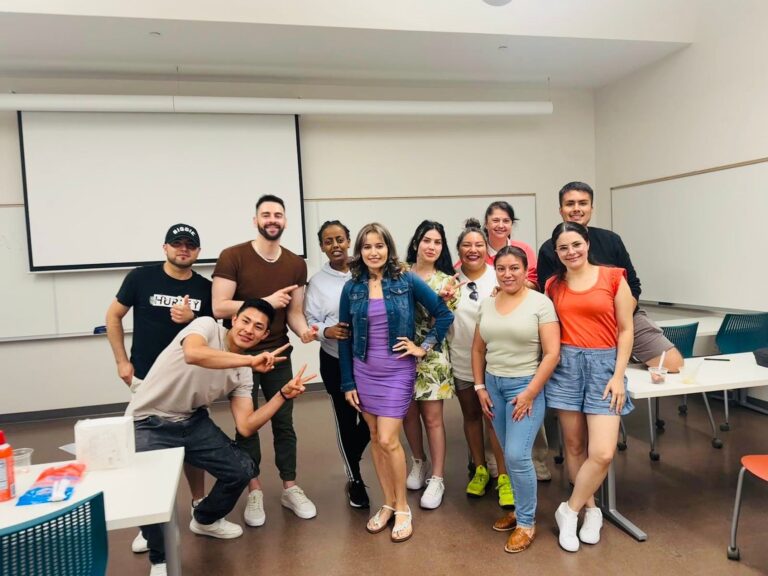
Student Reviews and Results
Reviews and results from MyAccentWay students.



