Interactive American Accent Training
(512) 265-9515Updated October 4, 2026 ◆ 5 min read
Interactive American Accent Training is a research-informed American accent training method created by Prof. Alex, Ph.D. Accent Coach, Doctor of Education, and professional linguist. He developed it by applying the results of his doctoral research in interactive foreign-language education to American accent training. It is the core method of MyAccentWay, designed for non-native English-speaking professionals who want clearer, more confident, and more independent English communication.
Interactive American Accent Training applies the educational conditions identified in Prof. Alex’s doctoral research, where interactive teaching produced significantly stronger learning outcomes than traditional teacher-centered instruction in the study conducted. This research-informed approach may offer advantages over traditional accent coaching centered primarily on explanation, repetition, and error correction. However, its comparative effectiveness has not yet been established through a direct controlled study of accent-training programs. Three sources of evidence support it: Prof. Alex’s doctoral research and published research papers, independent reviews from real students on Google and Thumbtack, and real before-and-after student results.
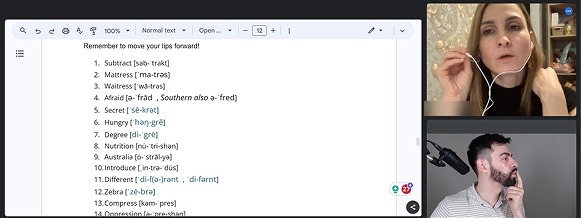
Unlike passive listen-and-repeat pronunciation practice, Interactive American Accent Training places the student in an active role. The student listens, analyzes, compares, adjusts, speaks, receives live correction, and practices again until the new American English speech pattern becomes clearer and more controlled.
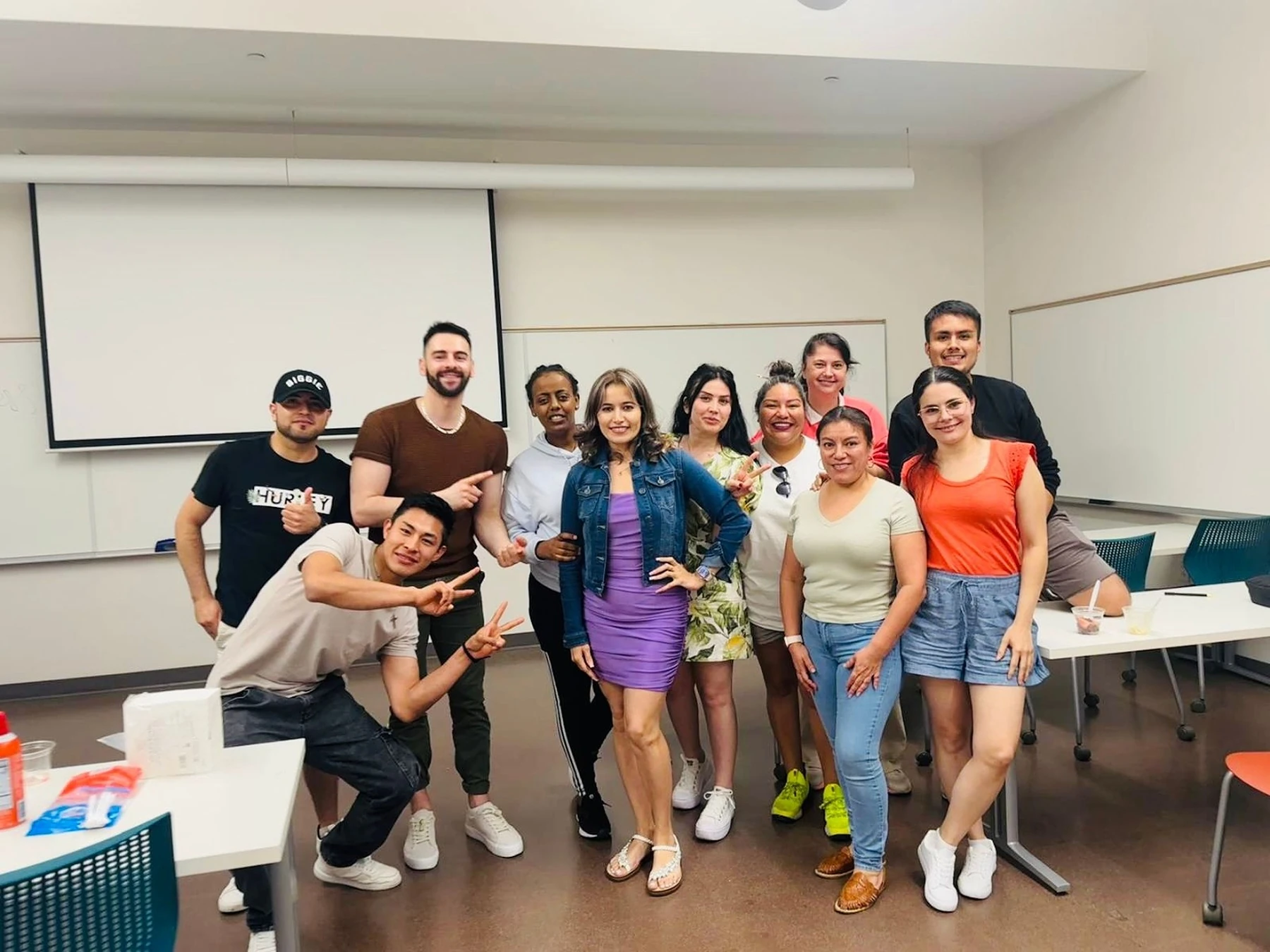
What interactive accent training means
Interactive American Accent Training is Prof. Alex’s research-informed, student-centered American accent training method where students actively participate in the accent reduction, accent modification, and accent training process instead of passively receiving pronunciation information.
Interactive accent training means the student is not only receiving information from the instructor. The student actively participates in the learning process by noticing sound differences, correcting articulation, practicing rhythm and stress, adjusting intonation, and transferring new speech patterns into words, sentences, connected speech, and professional communication.
Prof. Alex uses live 1-on-1 instruction to identify each student’s pronunciation patterns, first-language influence, articulation habits, rhythm, stress, intonation, connected speech, and communication goals. This makes the training individualized instead of generic. Students enrolled in live training also use the MyAccentWay Student Portal to organize assigned practice, evaluation files, and lessons between sessions.
Students’ before-and-after recordings document individual progress: Abishek improved from 62/100 to 84/100 in 9 months (independent phonetic evaluation by Jane Timokhin, Ph.D. in Applied Linguistics); Tian improved from 60/100 to 89/100 in 8 months (evaluated by Prof. Alex, independently reviewed by Jane Timokhin, Ph.D. in Applied Linguistics); Vlad moved from 57 to 72 in 5 months (evaluated by Prof. Alex; 100 represents the reference benchmark for General American English pronunciation). In independent Google and Thumbtack reviews, students describe the training as structured and personal, and say they speak English with more confidence. See the before-and-after results.
The research behind Interactive American Accent Training
Prof. Alex’s doctoral dissertation for the degree of Doctor of Education (2017) studied how interactive foreign-language (English) education works and how to apply it effectively. He defined interactive education as a collaborative activity in which students are significant and influential participants, and the instructor works as both organizer and participant, instead of a teacher-centered model where students passively receive information.
The research included an experimental study (2011–2014) comparing students taught through interactive methods with a control group taught through traditional methods. Statistical analysis (Mann–Whitney U test) showed that, at the final stage of the study, the interactive group achieved significantly stronger results than the control group on the English progress test. At the final stage of the experiment with university students, 75% of the interactive group reached a high level of foreign-language competence, compared with 29% of the control group. These are research results from Prof. Alex’s doctoral research (2017), not MyAccentWay student results. Listening comprehension gains increased across the groups.
In the interactive format, students reported practical language application, public-speaking practice, and teamwork experience. Prof. Alex applied these findings to American accent training.
Published research papers by Prof. Alex
Prof. Alex’s research on interactive foreign-language teaching, professional communication, and speech is published by Elsevier (ScienceDirect) and Springer Nature:
- Justification of the Main Pedagogical Conditions of Interactive Teaching a Foreign Language in High School. Procedia – Social and Behavioral Sciences, Elsevier (ScienceDirect), 2015.
- Educational Aspects of Interactive Foreign Language Learning in High Schools. Mediterranean Journal of Social Sciences, 2015.
- Pedagogical Preconditions for the Development of Productive Communication Skills. Advances in Intelligent Systems and Computing, Springer Nature, 2019.
- Structure of Professional and Business Communication of Graduates Majoring in Innovation. Advances in Intelligent Systems and Computing, Springer Nature, 2019.
- Development of Preschool Children Speech Problems. Advances in Intelligent Systems and Computing, Springer Nature, 2017.
- Main Features of Students’ Research Competency Formation in a Liberal Arts Curriculum. Advances in Intelligent Systems and Computing, Springer Nature, 2017.
Full research record: ORCID.
How Prof. Alex adapted the researched method to American accent training
Prof. Alex applies principles from this research in his teaching method. Prof. Alex’s doctoral experiment tested interactive English teaching against traditional teaching, with an experimental group and a control group. At the final stage of the study, the interactive group achieved significantly stronger foreign-language learning outcomes than the control group (Mann–Whitney U test). At the final stage of the experiment with university students, 75% of the interactive group reached a high level of foreign-language competence, compared with 29% of the control group. These are research results from Prof. Alex’s doctoral research (2017), not MyAccentWay student results. Prof. Alex modified this researched method for American accent training and uses it in every 1-on-1 session.
| What the research found | How it works in MyAccentWay 1-on-1 training |
|---|---|
| Students learn best as significant and influential participants, not passive recipients. | The student produces every sound, word, and sentence. Prof. Alex organizes and guides; he doesn’t lecture. |
| The instructor is both organizer and participant. | Prof. Alex trains with the student in real time, asks questions, and adjusts each step to the student’s native language. |
| Sessions follow three stages: immersion, development, reflection. | Immersion: the student learns the speech-organ position for the sound. Development: the student trains it in phonetic exercises, sentences, and paragraphs. Reflection: the student compares the result with the model, finds the mistake, and corrects it. |
| Constructive, creative activity places students in an active learning role beyond traditional repeat-after-me exercises. | Students don’t only repeat after the coach. They consciously build each sound through Cognitive Accent Training. |
| Interactive learning also works outside the classroom (e-course, independent work, self-assessment). | Between sessions, students train with the InPronunci app, the Interactive Visual 2D Sound Simulators, and the AI Accent Coach. |
The method leads, and the tools support it. The Interactive Visual 2D Sound Simulators, the InPronunci app, and structured phonetic exercises support active student participation during and between sessions. This supports active student participation through interactive teaching methods, informed by the four instructional conditions identified in Prof. Alex’s doctoral research.
In short: In the study conducted, interactive teaching produced significantly stronger learning outcomes than traditional teacher-centered instruction; Interactive American Accent Training applies these principles to American pronunciation. MyAccentWay students’ before-and-after recordings document individual progress in American accent training.
Why Interactive American Accent Training may offer advantages
Three sources of evidence support Interactive American Accent Training.
1. Doctoral research and research papers
A three-year experimental study found that, at the final stage of the study, students taught through interactive methods achieved significantly stronger foreign-language learning outcomes than the control group (Mann–Whitney U test). Prof. Alex’s research on interactive teaching and communication is published by Elsevier (ScienceDirect) and Springer Nature.
2. Independent reviews from real students
All reviews come from real people who submit them themselves on independent platforms:
3. Real before-and-after results
Real student recordings, evaluated sound by sound:
- Abishek (Tamil and Indian English): 62/100 to 84/100 (independent phonetic evaluation by Jane Timokhin, Ph.D. in Applied Linguistics)
- Vlad (Russian): 57 to 72 (evaluated by Prof. Alex)
- Tian (Chinese): 60/100 to 89/100 (evaluated by Prof. Alex, independently reviewed by Jane Timokhin, Ph.D. in Applied Linguistics)
How traditional accent training is different
Traditional accent training often follows a teacher-centered model. The instructor explains a sound, demonstrates a word, gives a rule, or asks the student to repeat. This can be useful because pronunciation learning does require listening and repetition. However, the student may still depend too much on the teacher and may not understand exactly what movement creates the sound.
In a traditional listen-and-repeat model, a learner may hear that the sound is different but still not know where the tongue should move, how much the jaw should open, how the lips should change shape, how airflow should be released, or how voice should be coordinated. This can create confusion and make the student rely on repetition without developing independent speech control.
How MyAccentWay makes training interactive
MyAccentWay uses Interactive American Accent Training to move the student from passive repetition to active pronunciation control. The student learns what to change, why the change matters, and how to reproduce the new American English pattern in real speech.
- Students practice American sound articulation.
- Students complete phonetic exercises to stabilize new sounds.
- Students train sentence rhythm, stress, intonation, and connected speech.
- Students move into paragraph practice and presentation-style delivery.
- Students receive real-time correction and adjust their speech during the session.
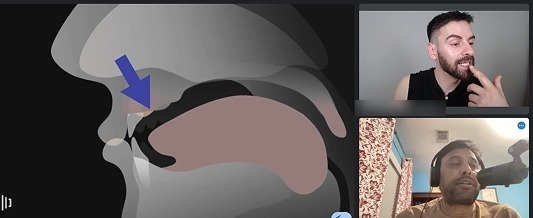
Every session follows the same research-informed logic:
- Immersion: Prof. Alex sets the goal and engages the student in the target sound or speech pattern.
- Active training: the student trains while Prof. Alex corrects live.
- Reflection: the student compares, analyzes, and adjusts their own speech through dialogue, so they understand what changed and how to control it.
Results students achieve with Interactive American Accent Training
- Clearer General American English pronunciation.
- The ability to operate independently in English on any topic, not only on practiced material.
- Real confidence as an English speaker in professional and daily communication.
These results are confirmed by independent reviews from real students on Google and Thumbtack, and by real before-and-after recordings: student reviews and results and before-and-after results.
Interactive American Accent Training Before and After: Real Results from Real Students
Listen to the BEFORE & AFTER of students’ pronunciation.
These are real students from 1-on-1 MyAccentWay training with Prof. Alex. Press play to hear their progress, then open the full evaluation report for every result.








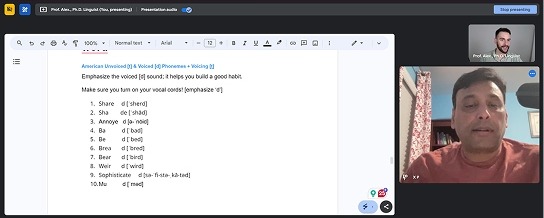
MyAccentWay · 2D Sound Motion Technology
American English Pronunciation: Consonant and Vowel Sounds with 2D Sound Motion Technology
Learning American English pronunciation involves more than listening and repeating. Active articulatory training helps students practice the coordinated movements of the tongue, lips, jaw, airflow, and voicing needed to produce American English sounds. 2D Sound Motion Technology and Interactive Visual 2D Sound Simulators, developed in 2020 by Prof. Alex, Ph.D. Accent Coach, Doctor of Education, and professional linguist, as part of his interactive teaching model that applies principles from his doctoral research in interactive teaching methods, train your tongue, lips, jaw, teeth, airflow, and voice step by step. They train each American sound.
What 2D Sound Motion Technology is
2D Sound Motion Technology is an advanced accent reduction and articulation training tool by Prof. Alex. It trains each American sound through Interactive Visual 2D Sound Simulators.
What Interactive Visual 2D Sound Simulators do
Interactive Visual 2D Sound Simulators are part of 2D Sound Motion Technology, the articulation-training method Prof. Alex created in 2020. It applies one of the four conditions of interactive teaching identified in his doctoral research: placing students in an active position in the learning process. Instead of listening and repeating, students actively train their speech organs. With each simulator, students control articulation movement sequences and physically train the speech organs (tongue, lips, jaw, airflow, and voicing) with synchronized voice-over instructions to produce each American sound correctly. Every consonant has its own simulator: explore American consonants trained with 2D Sound Motion Technology.
Sample training: the American t sound (aspirated [t])
Practice
Record yourself speaking these words:
Tab · Tacos · Time · Tub · Hotel · Motel · Sit · Pit · Net
Instructions
Play the Interactive Visual 2D Sound Simulator for the American t sound below several times and follow it step by step. Control the simulator’s articulation movement sequence and practice the corresponding tongue and jaw movements, coordinating airflow and voicing as you pronounce [t].
Interactive Visual 2D Sound Simulator: American unvoiced sound [t]
Practice
Record yourself again speaking these words, but this time focus on the movement of your tongue. Go slow, and you will hear the difference. You’ve got this!
Tab · Tacos · Time · Tub · Hotel · Motel · Sit · Pit · Net
How Interactive Visual 2D Sound Simulators solve pronunciation and speaking problems
- Wrong articulationMost pronunciation problems start with the tongue, lips, jaw, or teeth in the wrong position. Each Interactive Visual 2D Sound Simulator trains the correct articulation of one American sound, so the student corrects the cause of the problem, not only the result.
- Airflow and voicingMany accent problems come from wrong airflow or voicing: sounds that are too weak, too strong, or voiced when they should be unvoiced. The simulators train airflow and voice together with articulation, step by step, for each American sound.
- Clear speech and confidenceWhen each sound is trained correctly, words connect into clear American English speech. Listeners can understand you more easily, and speaking at work, in meetings, and on calls becomes more confident.

If you start hearing the aspiration, the short airstream after [t], with one simulator, you can only imagine how successful you can be in 1-on-1 Interactive American Accent Training with Prof. Alex, Ph.D. Accent Coach, where your whole American sound system is trained sound by sound.
The simulators are integrated into Prof. Alex’s 1-on-1 Interactive American Accent Training and are also available through the InPronunci learning platform.
Why interactive 1-on-1 training matters
Accent modification works best when the instructor can hear the student’s real speech and identify the exact pronunciation patterns that affect clarity. A group course or app may provide useful practice, but it cannot fully replace individualized live correction for rapid speech improvement.
Interactive 1-on-1 American accent training helps students become clearer, more confident, and more independent English speakers because they learn to control their own pronunciation, rhythm, intonation, connected speech, and professional delivery.
Connection to MyAccentWay methodology
Interactive American Accent Training is one of the core methods used at MyAccentWay, together with Cognitive Accent Training and 2D Sound Motion Technology. These methods support a structured American accent training system for professionals, executives, healthcare professionals, founders, engineers, consultants, managers, public speakers, actors, and advanced English speakers.
Learn how these methods work together in Prof. Alex’s Interactive Accent Training Approach.
Learn more about the full MyAccentWay methodology on the MyAccentWay American Accent Training authority page and the Accent Reduction Training page.



