Abishek — Independent Phonetic Evaluation by Jane Timokhin, Ph.D. in Applied Linguistics
(512) 265-9515
Updated November 2, 2026 ◆ 9 min read
Independent before-and-after American English pronunciation assessment of Abishek, a Tamil and Indian English speaker, by Jane Timokhin, Ph.D. in Applied Linguistics.
Native language: Tamil | Target: General American English | Form: MyAccentWay External Pronunciation Evaluation
Student and assessment information
| Item | Details |
|---|---|
| Student | Abishek |
| Native language | Tamil (Indian English) |
| Target pronunciation | General American English |
| Assessment type | Comparative phonetic and prosodic evaluation |
| Speech material | Abishek’s before-and-after reading recordings |
| Independent evaluator | Jane Timokhin |
| Academic qualifications | Ph.D. in Applied Linguistics |
| Evaluation date | September 23, 2025 |
| Recording A | Abishek — before training |
| Recording B | Abishek — after training (9 months) |
| Was the evaluator informed which recording was made before training? | No |
| Was the evaluator involved in the student’s accent training? | No |
| Professional, financial, or personal relationship with MyAccentWay (including payment for this evaluation) | Paid evaluation. MyAccentWay paid the evaluator for this evaluation. |
Student testimonial

“I feel confident enough to speak American English!”
Interactive American Accent Training9monthsof hard work and dedication
Listen to the starting point0:00
Listen to the result0:00
Pronunciation scores by Jane Timokhin, Ph.D. in Applied Linguistics
100 represents a reference benchmark for General American English pronunciation. Scores come from an independent phonetic evaluation, not a standardized test.
Professional phonetic evaluationRead Jane Timokhin’s Full Sound-by-Sound Phonetic Evaluation →
MyAccentWay pronunciation training incorporates educational conditions developed and experimentally investigated in Prof. Alex’s doctoral research. The following before-and-after recordings document individual students’ pronunciation development through personalized instruction based on these research-informed principles.
This before-and-after comparison documents Abishek’s individual pronunciation development in MyAccentWay’s research-based pronunciation training, which incorporates educational conditions developed and investigated in Prof. Alex’s doctoral research. It is an individual student case, not part of the original experiment.
Evaluation methodology
Comparative auditory-phonetic analysis of two speech recordings, in Jane Timokhin’s words: “I evaluated the pronunciation characteristics demonstrated in two recordings using a weighted, five-category auditory-phonetic framework. I considered both segmental production (consonants and vowels) and suprasegmental features (stress, intonation, rhythm, and connected speech). The same categories and maximum scores were applied to both recordings.”
The evaluator listened to both recordings and assessed the pronunciation features below against a General American English reference, identifying the sounds produced accurately, the sounds showing non-native phonetic influence, and the differences between the two recordings.
Scores describe pronunciation relative to the specified reference, not overall English proficiency or communication ability.
Consonant-by-consonant evaluation
| Phonetic target | Recording A (before) | Recording B (after) |
|---|---|---|
| /θ/ think | Replaced, softened, or produced without enough tongue-to-teeth control. | More accurate tongue-to-teeth placement for clearer voiceless TH. |
| /ð/ this, they, other, the | Lost natural voicing or came too close to another consonant. | Clearer voiced TH. |
| American R work, more, around, very | Less stable, especially inside words and in connected speech. | Stronger American R. |
| /v/ very, voice, vowel | Weakened or moved toward /w/ in some contexts. | Clearer difference between v and w. |
| /w/ work, way, want | Over-rounded or confused with /v/. | More natural American lip rounding and timing. |
| /t/ | Sounded too dental, too hard, or too strongly released in some positions. | More American timing and release, including more natural /t/ behavior in phrases. |
| /d/ | Sounded too dental or heavy. | More natural American /d/ placement and smoother movement into surrounding vowels. |
| Flap /ɾ/ better, city, meeting | Sounded over-pronounced. | More American flap quality in the correct environments. |
| /p/, /k/ pay, people, professional | Less aspirated at the beginning of stressed words. | Stronger American aspiration. |
| /s/, /z/ is, has, words | /s/ sounded sharp or separate; /z/ lost voicing in endings. | Better integrated /s/ and clearer voiced /z/ in endings. |
| /n/, /l/ feel, will, professional | /n/ was too dental; /l/ sounded too light or less stable at the ends of words. | More American alveolar placement and final L control. |
| /ŋ/ sing | Followed by an extra /g/. | Cleaner final -ing sound. |
| Consonant clusters worked, first, world, asked | Simplified or compressed. | Cleaner sequences. |
| Word-final consonants | Endings sounded lighter, reduced, or less complete. | Stronger endings, improving clarity and professional speech precision. |
Vowel and diphthong evaluation
| Phonetic target | Recording A (before) | Recording B (after) |
|---|---|---|
| /i/ sheep | Sounded shorter, less tense, or less clearly separated from /ɪ/. | Clearer high front vowel quality, easier to separate from ship. |
| /ɪ/ ship | Moved too close to /i/. | Better short lax vowel control. |
| /æ/ bad, can, practice | Sounded flatter or closer to /ɛ/. | More open American /æ/ quality. |
| /ɛ/ bed | Blended with /æ/. | Clearer separation between bed and bad. |
| /ɑ/ hot, job, problem | Sounded less open. | More open American /ɑ/. |
| /ʌ/ cut, luck, but | Moved toward /ɑ/ or another fuller vowel. | Clearer American /ʌ/. |
| /u/ food, move | Sounded too tense or not clearly separated from /ʊ/. | Cleaner American /u/. |
| /ʊ/ good, full | Sounded too close to /u/. | Better contrast between full and fool. |
| Schwa /ə/ | Unstressed vowels remained too full, making speech sound syllable-by-syllable. | More natural reduced vowels in unstressed syllables. |
Word stress, rhythm, and connected speech
| Feature | Recording A (before) | Recording B (after) |
|---|---|---|
| Word stress | Stress sounded too even across syllables. | Stronger American word-stress patterns. |
| Rhythm | Speech sounded more syllable-by-syllable. | More American stress-timed rhythm with stronger contrast between stressed and unstressed parts. |
| Connected speech | Words sounded more separate. | Better linking, reductions, and flow. |
American intonation and speech melody
| Feature | Recording A (before) | Recording B (after) |
|---|---|---|
| Sentence stress | Important words may not stand out enough. | Clearer focus words in sentences. |
| Intonation | Sentence melody sounded flatter or less American. | More natural pitch movement, helping speech sound more fluent, confident, and expressive. |
Scoring framework and results
| Assessment criterion | Weight | Before | After | Change |
|---|---|---|---|---|
| Consonant production | 25% | 15/25 | 21/25 | +6 |
| Vowel production | 25% | 15/25 | 20/25 | +5 |
| Word and sentence stress | 15% | 10/15 | 13/15 | +3 |
| Intonation and rhythm | 20% | 12/20 | 17/20 | +5 |
| Connected speech | 15% | 10/15 | 13/15 | +3 |
| Total | 100% | 62/100 | 84/100 | +22 |
Criteria applied
- Consonant production (25%): accuracy and consistency of consonant articulation, voicing contrasts, consonant clusters, and phonemic distinctions.
- Vowel production (25%): vowel quality, tense–lax contrasts, diphthongs, duration, and consistency of vowel distinctions.
- Word and sentence stress (15%): lexical stress, prominence, stressed and unstressed syllables, and vowel reduction.
- Intonation and rhythm (20%): pitch contours, timing, rhythmic organization, and distribution of prominence.
- Connected speech (15%): linking, reductions, assimilation, and transitions between sounds and words.
Interpretation
The first recording received 62/100 and the second received 84/100, a difference of 22 points (approximately 35.5% relative to the first score). Scores increased in all five categories. These ratings describe pronunciation performance within this assessment framework; they are not standardized measures of native-speaker equivalence. Comparison of two recordings alone does not establish which instructional intervention caused the differences.
Independent professional findings
1. Which pronunciation characteristics differ most noticeably between the recordings?
Vowels, American R, TH, consonants, stress, rhythm, intonation, connected speech, and fluency.
2. Which Tamil- and Indian English-influenced patterns are present in Recording A?
Less American vowel contrast, fuller unstressed syllables, more syllable-by-syllable timing, dental and retroflex consonant placement, a less stable American R, substitutions for TH, /v/–/w/ overlap, weaker aspiration, and lighter final consonants and clusters.
3. Which of those patterns changed in Recording B?
Clearer vowels, more stable R, better TH targets, stronger final consonants, and more natural American aspiration and consonant placement.
4. What differences are evident in American intonation, rhythm, and speech melody?
Smoother connected speech and more natural American rhythm and intonation.
5. Which pronunciation characteristics remain different from the General American reference?
After approximately nine months of training, Abishek’s overall pronunciation rating increased from 62/100 to 84/100. The approved evaluation identifies five remaining differences from General American targets: (1) variable rhotic resonance in connected speech, including words such as brother and warning; (2) inconsistent dental placement and frication for TH sounds, as in brother and thought; (3) inconsistent context-appropriate /t/ articulation, including the flap target in water; (4) variable front-vowel height and quality affecting the /æ/–/ɛ/ distinction, as in had and head; and (5) remaining differences in contrastive stress, unstressed-word reduction, and pitch movement across phrases. These findings describe refinement priorities, not measured error rates for individual words.
6. What is your overall professional interpretation of the comparison?
The change is best understood as a full sound-system transformation, not a single sound correction. The comparison shows a shift from English that is clear enough to communicate, but still shaped by the speaker’s original pronunciation system, toward speech that uses more of the pronunciation, rhythm, stress, vowel, and connected-speech patterns associated with General American English.
Independent evaluator’s conclusion
Professional summary of findings: Abishek’s pronunciation moved from moderately accented English toward substantially more native-like General American pronunciation, with a 22-point improvement on the evaluation scale. The overall pattern shows a shift from more noticeably accented English toward clearer, more stable General American pronunciation.
Evaluator’s declaration
I confirm that the scores, category weights, and assessment descriptions above accurately represent my independent professional evaluation of the recordings. I did not participate in the student’s pronunciation training. My conclusions are limited to the speech samples assessed.
I have disclosed whether I participated in the student’s training and any relevant relationship with MyAccentWay.
The conclusions are based on the pronunciation features identifiable in the recordings. They do not, by themselves, establish the effectiveness of any particular teaching method or represent a standardized clinical or scientific pronunciation test.
| Item | Details |
|---|---|
| Evaluator’s full name | Jane Timokhin |
| Professional title | Ph.D. in Applied Linguistics |
| Signature | Signed |
| Date | September 23, 2025 |
| Permission to publish the evaluation findings on MyAccentWay | Yes |
| Permission to publish evaluator’s name and qualifications | Yes |
MyAccentWay · 2D Sound Motion Technology
American English Pronunciation: Consonant and Vowel Sounds with 2D Sound Motion Technology
Learning American English pronunciation and the American accent is more effective when you train your speech organs, not only listen and repeat. 2D Sound Motion Technology and Interactive Visual 2D Sound Simulators, developed in 2020 by Prof. Alex, Ph.D. Accent Coach, Doctor of Education, and professional linguist, as part of his interactive teaching model based on his doctoral research in interactive teaching methods, train your tongue, lips, jaw, teeth, airflow, and voice step by step. They train each American sound and more than 30 sound combinations.
What 2D Sound Motion Technology is
2D Sound Motion Technology is an advanced accent reduction and articulation training tool by Prof. Alex. It corrects, develops, and trains each American sound and more than 30 sound combinations through Interactive Visual 2D Sound Simulators.
What Interactive Visual 2D Sound Simulators do
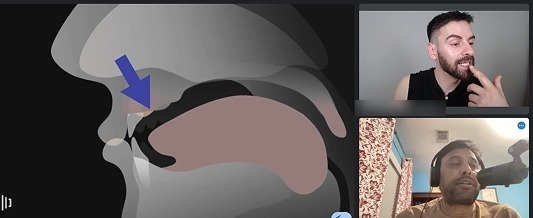
Interactive Visual 2D Sound Simulators are part of 2D Sound Motion Technology, the articulation-training method Prof. Alex created by applying his doctoral research in interactive teaching to American pronunciation. Instead of listening and repeating, students actively train their speech organs. Each simulator uses Interactive 2D mouth movement to train the speech organs (tongue, lips, jaw, teeth, airflow, and voice) to produce each American sound correctly. Every consonant has its own simulator: explore American consonants trained with 2D Sound Motion Technology.
Sample training: the American t sound (aspirated [t])
Practice
Record yourself speaking these words:
Tab · Tacos · Time · Tub · Hotel · Motel · Sit · Pit · Net
Instructions
Play the Interactive Visual 2D Sound Simulator for the American t sound below several times and follow it step by step. Move your tongue, jaw, and airflow together with the simulator and train your articulation.
Interactive Visual 2D Sound Simulator: American unvoiced sound [t]
Practice
Record yourself again speaking these words, but this time focus on the movement of your tongue. Go slow, and you will hear the difference. You’ve got this!
Tab · Tacos · Time · Tub · Hotel · Motel · Sit · Pit · Net
How Interactive Visual 2D Sound Simulators solve pronunciation and speaking problems
- Wrong articulationMost pronunciation problems start with the tongue, lips, jaw, or teeth in the wrong position. Each Interactive Visual 2D Sound Simulator trains the correct articulation of one American sound, so the student corrects the cause of the problem, not only the result.
- Airflow and voicingMany accent problems come from wrong airflow or voicing: sounds that are too weak, too strong, or voiced when they should be unvoiced. The simulators train airflow and voice together with articulation, step by step, for each American sound and more than 30 sound combinations.
- Clear speech and confidenceWhen each sound is trained correctly, words connect into clear American English speech. Listeners can understand you more easily, and speaking at work, in meetings, and on calls becomes more confident.
If you start hearing the aspiration, the short airstream after [t], with one simulator, you can only imagine how successful you can be in 1-on-1 Interactive American Accent Training with Prof. Alex, Ph.D. Accent Coach, where your whole American sound system is trained sound by sound.
In MyAccentWay, the Interactive Visual 2D Sound Simulators are only available in 1-on-1 accent coaching sessions with Prof. Alex.
Related MyAccentWay resources
Interactive 1-on-1 vs Traditional Accent Coaching
How Prof. Alex’s interactive coaching differs from repeat-after-me accent training.

Best Accent Reduction Coaching for Business Professionals
What business professionals should look for in accent reduction and communication training.
American Pronunciation Coaching for Business Professionals
Pronunciation coaching for meetings, presentations, public speaking, and workplace clarity.
Best American Accent Coach for Non-Native Professionals
What 1-on-1 American accent training with Prof. Alex includes.
2D Sound Motion Technology for American Pronunciation
How Interactive Visual 2D Sound Simulators train American pronunciation.

MyAccentWay vs Accent Advisor
How Prof. Alex’s method differs from traditional live 1-on-1 video lessons.

Prof. Alex’s Teaching Philosophy
Why traditional accent coaching fails and what works instead.
Before-and-After Results
Real student recordings, including Abishek, Tian, Vlad, Alain, and Andrew.
Student Reviews and Results
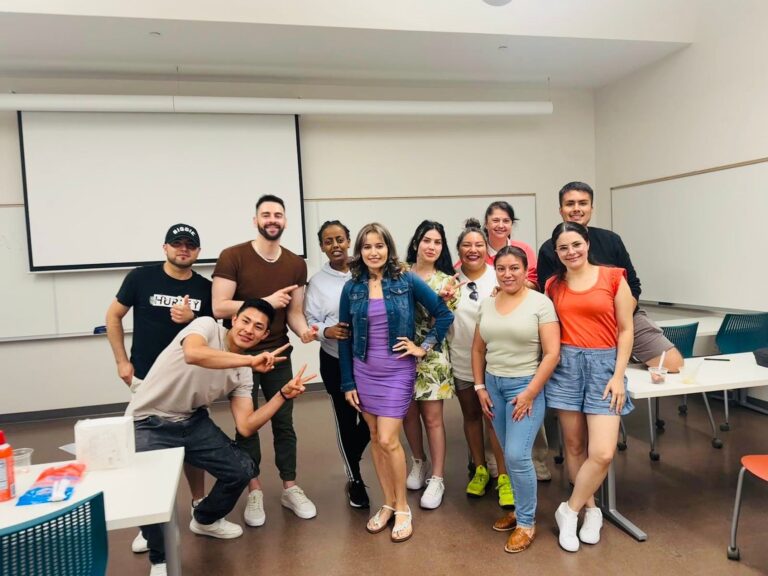
Reviews and results from MyAccentWay students.