Pronunciation Habits That Weaken Presentations: Fix Them Fast
(512) 265-9515Updated October 16, 2026 ◆ 18 min read
The pronunciation habits that most weaken presentations are not random errors. They are a short, predictable list: weak or flat intonation, mispronounced /θ/ (the “th” sound), dropped final consonants and past -ed endings, wrong word stress, mumbling or rushed speech, excessive linking that blurs word boundaries, filler sounds like “um” and “uh,” and mispronouncing your own product, company, or technical terms. Each one reduces what linguists call processing fluency — the ease with which your audience decodes your speech. When fluency drops, credibility follows.
Real student result

“I feel confident enough to speak American English!”
Interactive American Accent Training9monthsof hard work and dedication
Listen to the starting point0:00
Listen to the result0:00
“Many of my students once believed they could never sound like this. School taught them grammar and vocabulary, but not how to train their English speech. That is what we do together, step by step, until you speak English independently and with confidence.”
Abishek’s result was achieved through Prof. Alex’s research-based Interactive 1-on-1 American Accent Training. His doctoral research found this interactive method more effective than traditional, teacher-centered methods. See the research basis →
Prof. Alex, Ph.D., Accent Coach at Myaccentway, has spent 20+ years coaching non-native professionals in U.S. business, academic, and clinical settings. The consistent finding: you do not need to eliminate your accent. You need to fix the specific habits that force your audience to work harder than they should.
Three immediate first steps you can take today:
- Mark 5–10 technical or product words you repeat throughout your presentation and verify their stress pattern before you rehearse.
- Slow your delivery by roughly 10–20% — especially at the start of each new slide or idea.
- Record one 60-second clip of yourself presenting and listen specifically for dropped word endings.
Why pronunciation errors cost you credibility and comprehension
Pronunciation errors do not just sound awkward. They actively slow down your audience’s ability to process what you are saying, and that cognitive friction translates directly into lower perceived competence.

The mechanism is processing fluency: the easier your speech is to decode, the more credible and persuasive you appear. When a listener has to mentally reconstruct a word you dropped or mispronounced, their attention shifts from your argument to your delivery. That is a cost you cannot afford in a presentation.
Audiences adapt to a foreign accent within about 2–3 minutes, but they do not adapt to repeated mispronunciations of key technical words. An accent is a pattern the brain learns quickly. A mispronounced term that recurs throughout a 20-minute talk is a recurring interruption. Research confirms that pronunciation is a key factor in perceived competence and professional opportunity, even when grammar and vocabulary are strong.
Three areas take the clearest hit:
- Comprehension: Dropped endings and wrong stress can change the meaning of a word entirely (“health” misheard as “hell,” “present” stressed on the wrong syllable and heard as a different word).
- Credibility: Listeners unconsciously associate speech clarity with expertise. Mispronouncing a term you are supposed to own signals uncertainty.
- Engagement: Flat pitch or monotone delivery reduces audience engagement because prosody carries information structure — it signals what is important and what is transitional.
Pro Tip: Do not try to neutralize your accent entirely. Focus practice on the 5–10 industry-specific words you use most often and on your final consonants. That narrow target produces faster, more measurable gains than broad accent work.
Which pronunciation habits weaken your presentations most?
Below is a prioritized list of the specific habits, each with a short presentation example showing how the error lands with an audience.
-
Wrong word stress. English is a stress-timed language, and placing emphasis on the wrong syllable can make a familiar word unrecognizable. A speaker who says “deCISion” as “DEcision” forces listeners to pause and reconstruct. Inconsistent word stress is one of the top three credibility killers in professional presentations. Example: “Our reCORD shows growth” vs. “Our REcord shows growth” — the stress shift changes the word class entirely.
-
Mispronounced /θ/ (the “th” sound). Substituting “d,” “t,” or “f” for /θ/ is one of the most distracting substitutions in professional English. Example: “We need to tink about de data” instead of “We need to think about the data” — the substitutions stack up and pull attention away from the content. A dedicated guide to pronouncing the /θ/ sound walks through the exact tongue placement step by step.
-
Dropped final consonants and past -ed endings. Omitting the final sound of a word is common when speakers rush, and the consequences go beyond clarity. Dropped final consonants make past and present tense ambiguous. Example: “We fix the issue yesterday” instead of “We fixed the issue yesterday” — the audience cannot tell whether the problem is resolved or ongoing. For a full drill set, the guide on pronouncing past tense -ed endings is a practical starting point.
-
Weak or flat intonation. Monotone delivery signals low confidence and makes it harder for listeners to identify which information is key. Prosody — pitch, stress, and timing — is how English communicates information structure. Without it, every sentence sounds equally important, which means nothing stands out.
-
Mumbling and rushed speech. Elision patterns — running words together or swallowing syllables — reduce clarity significantly. Example: “Wanna go over the numbers” in a formal presentation sounds unprepared, and “nex’ slide” for “next slide” loses the final consonant cluster entirely.
-
Excessive linking that hides word boundaries. Connected speech is natural in conversation, but in presentations it can blur where one word ends and another begins. Listeners who are not native speakers of your variety of English are especially affected.
-
Filler sounds and hesitations. Frequent “um,” “uh,” or long pauses filled with sound signal uncertainty and interrupt the listener’s processing. A three-second silent pause is far more authoritative.
-
Mispronouncing company, product, or proper names. This is the highest-stakes error in any presentation. Mispronouncing the name of a client’s company, a product you are pitching, or a key industry term signals that you are not fully prepared.
Pro Tip: Identify the single word in your presentation you cannot afford to mispronounce — usually a client name, product name, or core technical term — and practice it in isolation until it is automatic. That one word carries more credibility weight than any other.
How to decide what to fix first
The rule is straightforward: fix repeated technical terms and grammatical endings first, then address prosody. Trying to fix everything at once produces slow progress on all fronts.
Use this decision checklist when preparing your speaker notes:
- Frequency: How many times does this word appear in your talk? Words you say 10+ times are the highest priority.
- Meaning risk: Could the mispronunciation change the meaning or word class? If yes, it moves to the top of the list.
- Listener cost: How hard is this word to decode if mispronounced? Technical terms and proper names have no context to rescue them.
- Effort-to-impact ratio: Final consonants and word stress are learnable in days with focused practice. Broad accent features take months. Prioritize the fast wins.
A practical starting point: pick 5–10 words you use repeatedly — metrics, product names, key verbs — and verify their stress pattern using a resource like YouGlish or a pronunciation dictionary. Then pick one prosody habit to address, either flat intonation or dropped endings. That combination covers the highest-impact ground. For a structured framework on mastering presentation skills as a non-native speaker, Myaccentway’s linguistic approach guide goes deeper on prioritization.
Fewer, targeted practice items produce faster gains than trying to fix your accent broadly. The research is consistent on this point.

Exactly how to fix each habit: drills and practice progressions
Start with the specific exercise category that matches your highest-priority habit, then follow the progression: isolate the sound, practice in controlled phrases, move to full sentences, then rehearse with your actual slides.
-
Segmental drills for /θ/. Use minimal pairs: think/sink, thin/tin, three/tree, thank/tank. Say each pair slowly, feeling the tongue tip touch the back of the upper front teeth for /θ/. Move to sentences: “I think the third option is the strongest.” Repeat at slow speed, then medium, then presentation speed. Ten repetitions per session is enough.
-
Final consonant and -ed ending drills. Build a list of 10 past-tense sentences relevant to your presentation topic. Say each one at 70% speed, exaggerating the final sound. “We launched the product.” “The team reviewed the data.” “We increased revenue.” Record yourself and listen for the endings. Then bring the speed back up to normal while keeping the endings audible.
-
Word stress drills. Take your 5–10 target words and mark the stressed syllable. Say each word three times in isolation, then in a sentence. “preSENtation, preSENtation, preSENtation — The preSENtation covers three main points.” Non-native professionals often carry over native-language stress patterns into English, so this step needs deliberate repetition.
-
Prosody drills. Take one paragraph from your presentation. Mark the two or three words per sentence that carry the most meaning. Practice saying each sentence with a clear pitch rise on those words and a fall at the end of the thought. This is not about sounding dramatic — it is about giving your audience the acoustic signal that tells them what to remember.
-
Shadowing and reduced-rate rehearsal. Find a native speaker recording of a professional presentation on a similar topic. Shadow it at 80% speed, matching rhythm and intonation. Then switch to your own script and apply the same rhythm patterns. This trains your ear and your muscle memory simultaneously.
-
Chunked slide rehearsal. Rehearse one slide at a time, not the full presentation. Say the key sentence for each slide three times: once slowly, once at normal speed, once at slightly faster-than-normal speed. This builds the motor memory for your actual delivery conditions.
Pro Tip: Recording yourself and watching the playback with a waveform viewer or using the Interactive Visual 2D Sound Simulators gives you a target for practicing tongue and jaw movement — far more precise than guessing from audio alone. In MyAccentWay training, these simulators are used to train sound articulation, sound formation, and speech production during live 1-on-1 accent training sessions.
A focused 15-minute daily routine for presentation clarity
This routine is designed for professionals with limited practice time. Consistency over 2–3 weeks produces measurable change.
-
Warm-up (2 minutes). Alveolar and dental drills: say “t-d-n-l” sequences and then /θ/ words from your target list. This activates the speech organs before focused practice.
-
Targeted sound practice (6 minutes). Work through your 5–10 target words using the stress and segmental drills above. Add two minimal-pair sets for your highest-priority sound. Log which words you practiced and whether the target sound felt controlled.
-
Prosody and phrase rehearsal with slides (5 minutes). Take one slide from your actual presentation. Mark stressed words. Say each sentence with deliberate pitch variation. Record one sentence and compare it to a native model using YouGlish or a similar tool.
-
Self-evaluation (2 minutes). Play back the recording. Note one thing that improved and one target for tomorrow. Write it down — a simple log of “word practiced / tempo / one goal” takes 60 seconds and makes the next session more focused.
For a fully structured version of this routine, Myaccentway’s guide on how to practice pronunciation daily provides a complete 15-minute framework with exercise progressions.
Track these daily:
- Words practiced (list them)
- Tempo (did you slow down for the target sounds?)
- One measurable goal for the next session (e.g., “keep the /d/ in ‘fixed’ audible at full speed”)
How to get useful feedback and measure your progress
The fastest reliable feedback comes from three sources, in order of precision: focused self-recording against a native model, targeted peer review, and coached listening with timestamps.
Self-recording checklist:
- Record a 60-second clip of yourself presenting a key section.
- Listen for dropped endings: count how many times a final consonant or -ed ending disappears.
- Compare your stress pattern on 3 target words against a native speaker using YouGlish or Forvo.
- Note the timestamp of each problem word so you can return to it in the next session.
Peer review:
- Ask a colleague to listen to your 60-second clip and paraphrase the main point back to you. If they miss a key term, that term is your next practice target.
- Ask specifically: “Did any word sound unclear or unexpected?” That question surfaces the errors that matter most to a real listener.
Measurement over time:
- Record a before clip on day one. Record an after clip at the end of week two.
- Measure: percentage of target words pronounced with correct stress, number of dropped endings per 60 seconds, and listener comprehension check results.
- Self-recording and listener paraphrase checks are low-cost, reliable methods for tracking comprehension of key terms.
For visual feedback on mouth movement, the Interactive Visual 2D Sound Simulators used in Myaccentway’s 1-on-1 coaching train the tongue and jaw to move correctly for each American sound — a level of precision that audio alone cannot provide. Pairing that with effective speaking skills practice rounds out both the phonetic and delivery dimensions of your preparation.
Why targeted coaching with 2D mouth simulators speeds progress
Targeted, measurement-driven coaching combined with visual mouth training produces faster, measurable improvement than unguided practice alone. The reason is straightforward: most pronunciation errors persist not because speakers lack effort, but because they cannot see what their speech organs are doing.
Prof. Alex, Ph.D., brings 20+ years of private accent coaching for U.S. professionals and university-level experience training linguists, translators, interpreters, and ESL teachers. His research focuses on ESL students in the United States, and his methodology is built on a specific sequence: speech-organ awareness first, then targeted segmental drills, then prosody training, then measurable tracking. This is not “repeat after me” coaching. Students learn the physical mechanics of each American sound before they practice it, which means they can self-correct independently rather than depending on imitation.
The Interactive Visual 2D Sound Simulators make this possible in a 1-on-1 online setting. Each simulator trains students to position the tongue, jaw, and lips for a specific American sound in real time, so students can compare their own movement to the target. Coaching that combines articulatory awareness with simulator feedback yields faster, measurable changes than unguided practice alone.
Thiago, a Portuguese speaker, worked through exactly this progression with Prof. Alex. Watch his before-and-after result:
The methodology moves in a clear sequence:
- Speech-organ awareness: Students learn what the tongue, jaw, and lips do for each American sound before attempting it.
- Targeted segmental drills: Consonants and vowels are retrained one sound at a time, with phonetic exercises that build from isolation to sentences.
- Prosody training: Rhythm, stress, and intonation are addressed as a system, not as individual corrections.
- Measurable tracking: Progress is logged against specific targets, so students and coach can both see what has changed.
Once the sound system is retrained, students can pronounce unfamiliar words more independently — just as they do in their native language. The goal is to stop overthinking each word and start speaking with automatic, confident clarity.
Explore Curriculum | Book Your 1 Hour Evaluation Session | Read Reviews
Key Takeaways
Fixing the pronunciation habits that weaken presentations means targeting repeated technical words, final consonants, and one prosody habit first — not attempting broad accent neutralization.
| Point | Details |
|---|---|
| Target repeated words first | Practice the 5–10 technical or product words you use most; audiences adapt to accents in 2–3 minutes but not to repeated mispronunciations. |
| Fix final consonants and -ed endings | Dropped endings make tense ambiguous; count dropped endings in a 60-second clip to measure progress. |
| Address one prosody habit | Flat intonation or wrong word stress — pick one and drill it with marked speaker notes before each rehearsal session. |
| Use a 15-minute daily routine | Split practice into warm-up, targeted sound drills, prosody rehearsal with slides, and a brief self-evaluation log. |
| Myaccentway accelerates measurable progress | Prof. Alex’s 1-on-1 coaching with Interactive Visual 2D Sound Simulators retrains speech-organ movement for faster, lasting improvement. |
What I tell every professional who walks into a session worried about their accent
The most common fear I hear is this: “My accent is holding me back.” After 20+ years of coaching, I can tell you that the accent itself rarely is. What holds professionals back is a handful of specific habits — dropped endings, one or two mispronounced sounds, and flat delivery — that are entirely fixable with focused work.
One pattern I see repeatedly: a professional spends months trying to “sound more American” overall, making slow progress on everything and fast progress on nothing. Then we narrow the target to three words they use in every meeting and one prosody habit. Within two weeks, their listeners stop asking them to repeat themselves. That is not a coincidence. It is what focused practice does.
For the moment of the presentation itself, one practical tip: replace every “um” and “uh” with a three-second silent pause. It feels long to you and natural to your audience. Pair that with a fully rehearsed first 30 seconds — the opening is when your nerves are highest and your clarity is most at risk. Own those first 30 seconds, and the rest of the talk follows more easily.
Clarity on the words that matter most is the goal. Everything else is secondary.
Myaccentway gives you a structured path to presentation clarity
If the habits covered in this article sound familiar, the next step is a structured plan that addresses them in the right order.
Myaccentway’s 1-on-1 American accent training is built specifically for non-native professionals in U.S. settings. The program begins with a personalized speech assessment, then moves through speech-organ awareness, American consonants and vowels, rhythm, and intonation — each stage with measurable targets so you can see exactly what has changed. The Interactive Visual 2D Sound Simulators are available only in 1-on-1 sessions, where you actively train the movement of your tongue, lips, jaw, teeth, and airflow while Prof. Alex corrects you live, as part of his interactive teaching model based on his Ph.D. research in interactive teaching methods.
Why pronunciation coaching works for professionals explains the evidence behind this approach in detail. To see the curriculum and Book Your 1 Hour Evaluation Session, the links below are your starting point.
Book Your 1 Hour Evaluation Session | Explore Curriculum | Read Reviews
Useful sources and further reading
- English Presentation Tips for Non-Native Speakers — Practice Me: Practical guidance on processing fluency, focused word practice, and self-recording techniques for presenters.
- The 3 Pronunciation Mistakes That Kill Your Credibility — Janice Haywood: Identifies word stress, final consonants, and /θ/ as the three highest-impact credibility errors with targeted fixes.
- A Study of Proper Pronunciation as a Factor of Successful Communication — ResearchGate: Academic research on how pronunciation affects professional opportunity and perceived competence.
- Pronunciation for Presentation — Ged Martin: Documents common elision patterns and the case for deliberate syllable articulation in formal presentations.
- Research-Based Techniques to Enhance Pronunciation and Articulation in Public Speaking — Icebreaker Speech: Covers tongue and lip placement, stress, intonation, and the role of recording in self-correction.
- Tips for Non-Native English Speakers — Sally Prosser: Voice and public speaking coach on word stress, thought grouping, and confidence strategies for multilingual professionals.
- 2D Sound Motion Technology — Myaccentway: Explains the visual simulator methodology and how articulatory awareness accelerates measurable pronunciation change.
- The Importance of Pronunciation While Speaking English — Excellencia IMJE: Literature review on pronunciation’s role in intelligibility, confidence, and professional communication outcomes.
MyAccentWay · 2D Sound Motion Technology
American English Pronunciation: Consonant and Vowel Sounds with 2D Sound Motion Technology
Learning American English pronunciation and the American accent is more effective when you train your speech organs, not only listen and repeat. 2D Sound Motion Technology and Interactive Visual 2D Sound Simulators, developed in 2020 by Prof. Alex, Ph.D. Accent Coach, Doctor of Education, and professional linguist, as part of his interactive teaching model based on his Ph.D. research in interactive teaching methods, train your tongue, lips, jaw, teeth, airflow, and voice step by step. They train each American sound and more than 30 sound combinations through Interactive 2D video simulation.
What 2D Sound Motion Technology is
2D Sound Motion Technology is an advanced accent reduction and articulation training tool by Prof. Alex. It corrects, develops, and trains each American sound and more than 30 sound combinations through Interactive 2D video simulation.
What Interactive Visual 2D Sound Simulators do
Interactive Visual 2D Sound Simulators are part of 2D Sound Motion Technology, the articulation-training method Prof. Alex created by applying his Ph.D. research in interactive teaching to American pronunciation. Instead of listening and repeating, students actively train their speech organs. Each simulator uses Interactive 2D mouth movement to train the speech organs (tongue, lips, jaw, teeth, airflow, and voice) to produce each American sound correctly. Every consonant has its own simulator: explore American consonants trained with 2D Sound Motion Technology.
Sample training: the American t sound (aspirated [t])
Practice
Record yourself speaking these words:
Tab · Tacos · Time · Tub · Hotel · Motel · Sit · Pit · Net
Instructions
Play the Interactive Visual 2D Sound Simulator for the American t sound below several times and follow it step by step. Move your tongue, jaw, and airflow together with the simulator and train your articulation.
Interactive Visual 2D Sound Simulator: American unvoiced sound [t]
Practice
Record yourself again speaking these words, but this time focus on the movement of your tongue. Go slow, and you will hear the difference. You’ve got this!
Tab · Tacos · Time · Tub · Hotel · Motel · Sit · Pit · Net
How Interactive Visual 2D Sound Simulators solve pronunciation and speaking problems
- Wrong articulationMost pronunciation problems start with the tongue, lips, jaw, or teeth in the wrong position. Each Interactive Visual 2D Sound Simulator trains the correct articulation of one American sound, so the student corrects the cause of the problem, not only the result.
- Airflow and voicingMany accent problems come from wrong airflow or voicing: sounds that are too weak, too strong, or voiced when they should be unvoiced. The simulators train airflow and voice together with articulation, step by step, for each American sound and more than 30 sound combinations.
- Clear speech and confidenceWhen each sound is trained correctly, words connect into clear American English speech. Listeners can understand you more easily, and speaking at work, in meetings, and on calls becomes more confident.
If you start hearing the aspiration, the short airstream after [t], with one simulator, you can only imagine how successful you can be in 1-on-1 Interactive American Accent Training with Prof. Alex, Ph.D. Accent Coach, where your whole American sound system is trained sound by sound.
In MyAccentWay, the Interactive Visual 2D Sound Simulators are only available in 1-on-1 accent coaching sessions with Prof. Alex.
Presentation Skills Coaching for Foreign-Born Professionals in the United States
Foreign-born professionals in the United States often know their field and speak advanced English. Yet American listeners may still struggle with their sounds, stress, and rhythm. MyAccentWay offers private online presentation skills coaching through Interactive American Accent Training.
Interactive American Accent Training is led by Prof. Alex, Ph.D. Accent Coach, Doctor of Education, and professional linguist. He first diagnoses each speaker’s native-language patterns. Then he trains American sound articulation, rhythm, intonation, and connected speech for real presentations.
Who this training is for
- Engineers, IT specialists, and data professionals presenting to U.S. teams and clients
- Doctors, nurses, and healthcare professionals explaining care to American patients
- Managers, executives, and founders leading meetings, pitches, and briefings
- Consultants, researchers, and academics speaking at conferences and webinars
- Professionals preparing for interviews, promotions, or client-facing roles
Online training across the U.S.
MyAccentWay is based in Austin, Texas, and all training is online. The program is especially relevant for professionals in Austin, Dallas, Houston, New York City, the San Francisco Bay Area, Los Angeles, Seattle, Boston, Chicago, Miami, Washington DC, Atlanta, and Raleigh.
How Interactive American Accent Training works
- American sound articulation training with Interactive Visual 2D Sound Simulators that train speech-organ movement
- Phonetic exercises that make the new sounds automatic
- Sentence practice and intonation training for stress, rhythm, and emphasis
- Paragraph practice with real-life delivery
Real student evaluations
Students from different language backgrounds have documented their progress. Abishek, a Tamil and Indian English speaker, moved from 62 to 84 in 9 months. Tian, a Mandarin speaker, moved from 58 to 85 in 8 months. Vlad, a Russian speaker, moved from 60 to 83 in 5 months.
The first step is a 1 Hour Evaluation Session with Prof. Alex.
FAQ
What are the most damaging pronunciation habits in presentations?
Wrong word stress, dropped final consonants (including past -ed endings), and mispronounced /θ/ are the three habits that most damage credibility and comprehension, according to Janice Haywood’s analysis. Flat intonation and rushed speech that blurs word boundaries compound the problem in longer presentations.
How does poor pronunciation affect how audiences perceive you?
Poor pronunciation lowers perceived competence and professional credibility even when grammar and vocabulary are strong, because listeners unconsciously associate speech clarity with expertise. It also increases cognitive load, pulling attention away from your content.
What are the most common pronunciation challenges for non-native speakers?
The most common challenges are carrying over native-language stress and timing patterns into English, producing the /θ/ sound correctly, and articulating final consonants under the pressure of fast or nervous speech. English word stress is particularly difficult because it is not predictable from spelling alone.
How does pronunciation affect communication in presentations specifically?
Pronunciation directly affects processing fluency — the ease with which your audience decodes your speech. Audiences adapt to a foreign accent within about 2–3 minutes, but they do not adapt to repeated mispronunciations of key technical terms, which create recurring comprehension interruptions throughout the talk.
Can Myaccentway help with presentation-specific pronunciation?
Yes. Myaccentway’s 1-on-1 coaching with Prof. Alex, Ph.D. addresses the exact habits covered in this article: word stress, final consonants, /θ/, and prosody, using Interactive Visual 2D Sound Simulators to give students visual feedback on speech-organ movement. The program is designed for non-native professionals in U.S. business, academic, and clinical settings.
Is there American accent training for meetings and presentations?
Yes. In MyAccentWay’s final training stage, Prof. Alex works with students on paragraph practice and presentation-style delivery, including meeting updates and full presentations, with live correction of stress, intonation, pacing, and connected speech.
Recommended
7 Common American Pronunciation Mistakes in Meetings, and How to Fix Them
What if your most brilliant ideas are being lost simply because of the way they sound?

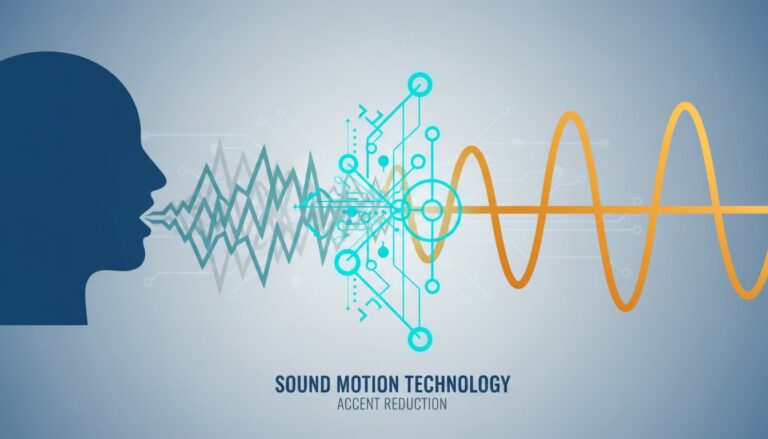
10 Common Pronunciation Mistakes & How to Fix Them for a Clear American Accent
Have you ever felt the frustration of being asked to repeat yourself, even when you know your vocabulary and grammar are perfect? Do you worry that...

How to Practice Pronunciation Daily: A Professional 15-Minute Routine
What if the reason you feel misunderstood in professional settings isn't a lack of vocabulary, but the way your brain manages the muscle memory for...
The problem is not always grammar or vocabulary.
If people understand your words but still miss your message, the deeper issue may be speech clarity, rhythm, intonation, and American pronunciation habits. MyAccentWay helps students retrain the sound system with professional 1-on-1 guidance, so English can feel clearer, freer, and more natural in real communication.
Two training methods that make speech change active.
MyAccentWay is not passive listen-and-repeat coaching. Prof. Alex, Ph.D. Accent Coach, Doctor of Education, and professional linguist, creates a learning situation where students become active learners and active participants in changing their own speech patterns.
Interactive training
Students do not just receive pronunciation instructions passively. They listen, think, compare, adjust, and understand their own speech patterns while Prof. Alex guides the correction process.
Cognitive accent training
Students learn to notice and correct the speech patterns that affect American pronunciation, then implement new American speech patterns into their code-switching process for more natural, long-lasting change.
Build speech habits people can hear in real conversations.
A stronger American accent is not built by memorizing topics or chasing quick pronunciation tips. It comes from structured training, professional feedback, active correction, and repeated application until clearer speech becomes easier to keep.
Continue learning how MyAccentWay connects American sound articulation, Interactive Visual 2D Sound Simulators, accent reduction, student proof, and 1-on-1 training.
- Prof. Alex and the MyAccentWay MethodLearn how Prof. Alex, Ph.D. Accent Coach, Doctor of Education, and professional linguist, created and leads the structured MyAccentWay American accent training system.
- Accent Reduction Curriculum and English Articulation TrainingSee how MyAccentWay trains accent reduction, accent modification, American pronunciation, English articulation, rhythm, and professional speech clarity.
- 2D Sound Motion Technology for American Accent TrainingUnderstand Prof. Alex’s Interactive Visual 2D Sound Simulators for American sound articulation.
- Before-and-After American Accent Training ResultsListen to real before-and-after student proof and accent training outcomes.
- Student Reviews and Accent Training ResultsRead student reviews, testimonials, and trust signals from MyAccentWay learners.
- Book a 1-Hour 1 Hour Evaluation SessionStart with a 1-hour accent evaluation session with Prof. Alex.