7 Common American Pronunciation Mistakes in Meetings, and How to Fix Them
(512) 265-9515Updated October 14, 2026 ◆ 9 min read
What if your most brilliant ideas are being lost simply because of the way they sound?
Real student result

“I feel confident enough to speak American English!”
Interactive American Accent Training9monthsof hard work and dedication
Listen to the starting point0:00
Listen to the result0:00
“Many of my students once believed they could never sound like this. School taught them grammar and vocabulary, but not how to train their English speech. That is what we do together, step by step, until you speak English independently and with confidence.”
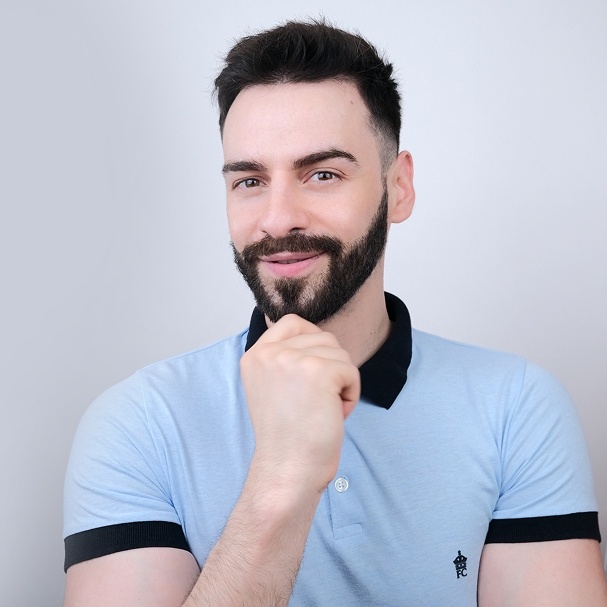
Abishek’s result was achieved through Prof. Alex’s research-based Interactive 1-on-1 American Accent Training. His doctoral research found this interactive method more effective than traditional, teacher-centered methods. See the research basis →
Imagine you are in a high-stakes executive boardroom. You’ve spent weeks analyzing data, refining your strategy, and preparing your pitch. But when you speak, you notice a subtle shift in the room. A colleague leans in, squinting slightly. Another asks you to repeat your last figure. The momentum stalls. This is the “mental fatigue” of accented speech in a professional setting, not because your ideas lack merit, but because the biomechanics of your speech are creating friction for your listeners.
At MyAccentWay, I understand that your accent is a core part of your cultural identity and a testament to your multilingual mastery. My goal isn’t to erase your background; it’s to provide you with the strategic investment of clarity. By mastering the precise mechanics of American English, you can transform speech frustration into executive presence.
Key Takeaways
- Precision Matters: Small mechanical adjustments in word stress and consonant clarity can drastically reduce listener fatigue.
- Stress-Timed Rhythm: American English relies on “stress-timed” patterns; mastering this rhythm is the key to sounding authoritative.
- Physical Performance: Pronunciation is a physical skill involving muscle memory and specific tongue placement.
- Identity First: Refining your clarity does not mean losing your voice; it means amplifying your influence.
1. Misplaced Word Stress: The “Rhythm” of Authority
English is a stress-timed language, meaning we prioritize certain syllables while “squeezing” others. If you stress every syllable equally (syllable-timed), your speech can sound robotic or monotone to a native ear.
In professional meetings, misplacing stress on key nouns and verbs can lead to immediate confusion.
- The Problem: Saying “pro-JECT” (verb) when you mean “PRO-ject” (noun).
- The Fix: Identify the “nucleus” of the word. In American English, the stressed syllable is usually longer, louder, and higher in pitch.
Develop the habit of checking the stress of your top 20 industry-specific words. When you master the rhythm, you signal confidence and command of the language.
2. Dropping Final Consonants: The “Click” of Clarity
Many languages (like Mandarin or Spanish) often drop or soften the final sounds of a word. In a fast-paced meeting, however, these final consonants are the “anchors” of meaning.
- The Problem: Saying “firs” instead of “first” or “produc” instead of “product.”
- The Fix: Treat final consonants like a mechanical “click.” Focus on the biomechanics of the stop: your tongue must physically hit the ridge behind your teeth for the “t” or “d.”
Mastering these endings ensures your “past tense” (-ed) and “plurals” (-s) are heard, preventing grammatical misunderstandings during project updates.
3. The Forgotten Schwa: Your Secret Energy Efficiency
The Schwa (/ə/) is the most common sound in American English. It is the neutral “uh” sound found in unstressed syllables (like the ‘a’ in about or the ‘e’ in management).
- The Problem: Over-pronouncing every vowel creates a “staccato” effect that is taxing for listeners.
- The Fix: Identify the unstressed syllables in your sentences and “reduce” them. For example, Management becomes MAN-ij-mənt.
By using the Schwa, you adopt the natural flow of American speech, allowing your listener’s brain to focus on your content rather than decoding your sounds.
4. Vowel Mergers: The “Sheet vs. Sh*t” Risk
In high-stakes environments, precision is everything. Non-native speakers often struggle with the distinction between “tense” and “lax” vowels.
- The Problem: Confusing live vs. leave, bit vs. beat, or staff vs. stuff.
- The Fix: This is a matter of oral mechanics. The “long E” in seat requires a high, tight tongue and a slight smile. The “short I” in sit requires a relaxed, lower tongue.
Using scientific pronunciation instruction, you can train your neural pathways to recognize these subtle physical differences, ensuring you never accidentally use a “taboo” word in a professional presentation.
5. The Unvoiced American [t]: Precision and Performance
The unvoiced American [t] sound is a critical “anchor” for clear speech, yet it’s often one of the most mispronounced sounds in professional English.
- The Problem: Softening the [t] or substituting it with other sounds, which leads to a lack of crispness and authority in your speech.
- The Fix: This is about mechanical precision. You need to master the exact “stop” and release of air.
To help you master this, I developed the unique Interactive Visual 2D Sound Simulator for the American [t] sound. This training tool is part of Prof. Alex’s interactive teaching model, based on his Ph.D. research in interactive teaching methods, and allows you to actively train the movement of your tongue, lips, jaw, teeth, and airflow with the Interactive Visual 2D Sound Simulator while Prof. Alex corrects you live, helping you learn and speak faster, with way more accuracy and professional clarity.
[youtube:3EzjosgnzJE]
While it may feel technical at first, this mechanical precision is what separates a proficient speaker from a masterful communicator.
6. The V vs. W Confusion: Precise Oral Positioning
In some languages, ‘V’ and ‘W’ are interchangeable or produced with the same lip position. In American English, they are distinct mechanical actions.
- The Problem: Saying “wision” instead of “vision” or “vork” instead of “work.”
- The Fix:
- V: Top teeth on bottom lip (vibration).
- W: Rounded, “kissing” lips (no teeth).
Identify these sounds in your most frequent business phrases: “Virtual work,” “Value-added,” “World-wide”: and practice the physical shift between the two.
7. Monotone Intonation: The Loss of “Executive Presence”
Even with perfect grammar, a flat intonation can make you sound bored, uncertain, or unapproachable. American English uses “pitch jumps” to highlight new information.
- The Problem: Delivering data in a flat line without emphasizing key figures or decisions.
- The Fix: Use pitch to guide your audience. Raise your pitch on “key impact” words: numbers, deadlines, and action items.
Think of intonation as the “musical score” of your meeting. It tells your audience what is important and keeps them engaged in your narrative.
The Science of Sound: 2D Sound Motion Technology
Re-educating your sound system isn’t just about “listening and repeating.” It’s about cognitive linguistics and muscle memory. To help you bridge the gap between theory and performance, I developed the 2D Sound Motion Technology for all American sounds.
This technology trains the speech organs along the “path of sound,” guiding your tongue, lips, and breath for every American phoneme. My Interactive Visual 2D Sound Simulators (like the one for the [t] sound above) are a cornerstone of my method, helping students master sounds faster and with more professional clarity.
I have developed this technology for every phoneme in the American sound system. Students get full access to these tools through my 1-on-1 accent training coaching, where we focus on the specific biomechanics of your speech to ensure you command every room you enter.
Book Your 1 Hour Evaluation Session with Prof. Alex, Ph.D.
If you are ready to move from theory to real-world speech performance, I invite you to take the next step. A 1 Hour Evaluation Session gives you the chance to experience my method directly, understand your personal pronunciation patterns, and see how targeted coaching can improve your clarity, confidence, and executive presence.
Book Your 1 Hour Evaluation Session with Prof. Alex, Ph.D.
Frequently Asked Questions
Q: What is 2D Sound Motion Technology?
A: It is my unique system that uses Interactive Visual 2D Sound Simulators for all American Sounds. This technology lets you actively train the movement of your tongue, lips, jaw, teeth, and airflow with the Interactive Visual 2D Sound Simulators, part of Prof. Alex’s interactive teaching model based on his Ph.D. research in interactive teaching methods, while Prof. Alex corrects you live, helping you learn and speak American English faster, with significantly more accuracy and professional clarity.
Q: Will I lose my original accent if I train with MyAccentWay?
A: Absolutely not. My method focuses on clarity and intelligibility. Think of it as adding a “professional layer” to your communication style. You are gaining a new skill, not erasing your identity.
Q: How long does it take to see results in my meetings?
A: Most professionals report a significant increase in speaking confidence within the first 4 to 6 weeks of consistent practice with my 2D Sound Motion tools.
Q: Why can’t I just watch YouTube videos to improve?
A: YouTube offers passive learning. Accent training is a physical performance, much like sports or playing an instrument. You need real-time feedback and a scientific understanding of your specific “sound substitutions” to make permanent changes to your neural pathways.
Ready to transform your speech into your greatest professional asset?
Explore my Mastering Voice Clarity Guide, Book Your 1 Hour Evaluation Session with Prof. Alex, Ph.D., or book a consultation with me today. Your ideas deserve to be heard with total clarity.
The problem is not always grammar or vocabulary.
If people understand your words but still miss your message, the deeper issue may be speech clarity, rhythm, intonation, and American pronunciation habits. MyAccentWay helps students retrain the sound system with professional 1-on-1 guidance, so English can feel clearer, freer, and more natural in real communication.
Two training methods that make speech change active.
MyAccentWay is not passive listen-and-repeat coaching. Prof. Alex, Ph.D. Accent Coach, Doctor of Education, and professional linguist, creates a learning situation where students become active learners and active participants in changing their own speech patterns.
Interactive training
Students do not just receive pronunciation instructions passively. They listen, think, compare, adjust, and understand their own speech patterns while Prof. Alex guides the correction process.
Cognitive accent training
Students learn to notice and correct the speech patterns that affect American pronunciation, then implement new American speech patterns into their code-switching process for more natural, long-lasting change.
Build speech habits people can hear in real conversations.
A stronger American accent is not built by memorizing topics or chasing quick pronunciation tips. It comes from structured training, professional feedback, active correction, and repeated application until clearer speech becomes easier to keep.
Continue learning how MyAccentWay connects American sound articulation, Interactive Visual 2D Sound Simulators, accent reduction, student proof, and 1-on-1 training.
- Prof. Alex and the MyAccentWay MethodLearn how Prof. Alex, Ph.D. Accent Coach, Doctor of Education, and professional linguist, created and leads the structured MyAccentWay American accent training system.
- Accent Reduction Curriculum and English Articulation TrainingSee how MyAccentWay trains accent reduction, accent modification, American pronunciation, English articulation, rhythm, and professional speech clarity.
- 2D Sound Motion Technology for American Accent TrainingUnderstand Prof. Alex’s Interactive Visual 2D Sound Simulators for American sound articulation.
- Before-and-After American Accent Training ResultsListen to real before-and-after student proof and accent training outcomes.
- Student Reviews and Accent Training ResultsRead student reviews, testimonials, and trust signals from MyAccentWay learners.
- Book a 1-on-1 American 1 Hour Evaluation SessionStart with a 1-hour interactive American accent training session with Prof. Alex.
Business English Pronunciation Coaching for Foreign-Born Professionals in the United States
Foreign-born professionals in the United States often know their field and speak advanced English. Yet American listeners may still struggle with their sounds, stress, and rhythm. MyAccentWay offers private online business pronunciation coaching through Interactive American Accent Training.
Interactive American Accent Training is led by Prof. Alex, Ph.D. Accent Coach, Doctor of Education, and professional linguist. He first diagnoses each speaker’s native-language patterns. Then he trains American sound articulation, stress, rhythm, and intonation for real meetings and client conversations.
Who this training is for
- Engineers, IT specialists, and data professionals presenting to U.S. teams and clients
- Doctors, nurses, and healthcare professionals explaining care to American patients
- Managers, executives, and founders leading meetings, pitches, and briefings
- Consultants, researchers, and academics speaking at conferences and webinars
- Professionals preparing for interviews, promotions, or client-facing roles
Online training across the U.S.
MyAccentWay is based in Austin, Texas, and all training is online. The program is especially relevant for professionals in Austin, Dallas, Houston, New York City, the San Francisco Bay Area, Los Angeles, Seattle, Boston, Chicago, Miami, Washington DC, Atlanta, and Raleigh.
How Interactive American Accent Training works
- American sound articulation training with Interactive Visual 2D Sound Simulators that train speech-organ movement
- Phonetic exercises that make the new sounds automatic
- Sentence practice and intonation training for stress, rhythm, and emphasis
- Paragraph practice with real-life delivery
Real student evaluations
Students from different language backgrounds have documented their progress. Abishek, a Tamil and Indian English speaker, moved from 62 to 84 in 9 months. Tian, a Mandarin speaker, moved from 58 to 85 in 8 months. Vlad, a Russian speaker, moved from 60 to 83 in 5 months.
The first step is a 1 Hour Evaluation Session with Prof. Alex.
MyAccentWay · 2D Sound Motion Technology
American English Pronunciation: Consonant and Vowel Sounds with 2D Sound Motion Technology
Learning American English pronunciation and the American accent is more effective when you train your speech organs, not only listen and repeat. 2D Sound Motion Technology and Interactive Visual 2D Sound Simulators, developed in 2020 by Prof. Alex, Ph.D. Accent Coach, Doctor of Education, and professional linguist, as part of his interactive teaching model based on his Ph.D. research in interactive teaching methods, train your tongue, lips, jaw, teeth, airflow, and voice step by step. They train each American sound and more than 30 sound combinations through Interactive 2D video simulation.
What 2D Sound Motion Technology is
2D Sound Motion Technology is an advanced accent reduction and articulation training tool by Prof. Alex. It corrects, develops, and trains each American sound and more than 30 sound combinations through Interactive 2D video simulation.
What Interactive Visual 2D Sound Simulators do
Interactive Visual 2D Sound Simulators are part of 2D Sound Motion Technology, the articulation-training method Prof. Alex created by applying his Ph.D. research in interactive teaching to American pronunciation. Instead of listening and repeating, students actively train their speech organs. Each simulator uses Interactive 2D mouth movement to train the speech organs (tongue, lips, jaw, teeth, airflow, and voice) to produce each American sound correctly. Every consonant has its own simulator: explore American consonants trained with 2D Sound Motion Technology.
Sample training: the American t sound (aspirated [t])
Practice
Record yourself speaking these words:
Tab · Tacos · Time · Tub · Hotel · Motel · Sit · Pit · Net
Instructions
Play the Interactive Visual 2D Sound Simulator for the American t sound below several times and follow it step by step. Move your tongue, jaw, and airflow together with the simulator and train your articulation.
Interactive Visual 2D Sound Simulator: American unvoiced sound [t]
Practice
Record yourself again speaking these words, but this time focus on the movement of your tongue. Go slow, and you will hear the difference. You’ve got this!
Tab · Tacos · Time · Tub · Hotel · Motel · Sit · Pit · Net
How Interactive Visual 2D Sound Simulators solve pronunciation and speaking problems
- Wrong articulationMost pronunciation problems start with the tongue, lips, jaw, or teeth in the wrong position. Each Interactive Visual 2D Sound Simulator trains the correct articulation of one American sound, so the student corrects the cause of the problem, not only the result.
- Airflow and voicingMany accent problems come from wrong airflow or voicing: sounds that are too weak, too strong, or voiced when they should be unvoiced. The simulators train airflow and voice together with articulation, step by step, for each American sound and more than 30 sound combinations.
- Clear speech and confidenceWhen each sound is trained correctly, words connect into clear American English speech. Listeners can understand you more easily, and speaking at work, in meetings, and on calls becomes more confident.
If you start hearing the aspiration, the short airstream after [t], with one simulator, you can only imagine how successful you can be in 1-on-1 Interactive American Accent Training with Prof. Alex, Ph.D. Accent Coach, where your whole American sound system is trained sound by sound.
In MyAccentWay, the Interactive Visual 2D Sound Simulators are only available in 1-on-1 accent coaching sessions with Prof. Alex.