pronunciation coaching for professionals
(512) 265-9515Updated October 22, 2026 ◆ 11 min read
Pronunciation coaching for professionals works best when it pairs accurate American sound articulation with active, student-centered practice instead of passive repetition. Professionals need coaching that targets real workplace communication: meetings, presentations, client calls, and interviews. Prof. Alex’s Interactive Accent Training places the student in an active role, evaluating speech patterns in real time and building sound articulation, rhythm, intonation, and connected speech through four connected stages rather than isolated drills.
Real student result

“I feel confident enough to speak American English!”
Interactive American Accent Training9monthsof hard work and dedication
Listen to the starting point0:00
Listen to the result0:00
“Many of my students once believed they could never sound like this. School taught them grammar and vocabulary, but not how to train their English speech. That is what we do together, step by step, until you speak English independently and with confidence.”
Abishek’s result was achieved through Prof. Alex’s research-based Interactive 1-on-1 American Accent Training. His doctoral research found this interactive method more effective than traditional, teacher-centered methods. See the research basis →
What Makes Pronunciation Coaching for Professionals Different From Traditional Accent Training
The difference comes down to who does the work: a traditional class has the teacher dictate corrections, while effective pronunciation coaching for professionals puts the learner in an active role.
Traditional accent instruction follows a familiar pattern. The coach models a sound, the student repeats it, the coach corrects, and the cycle continues until the lesson ends. This works for building short-term awareness, but awareness and control are not the same thing. A professional can repeat a vowel correctly ten times in a session and still revert to old patterns the moment they are presenting a budget proposal or fielding a client question under pressure.
Why Student-Centered Coaching Creates More Stable Speech Change Than Repetition-Based Methods
Stable speech change requires the learner to listen, compare their own production against the target sound, and self-correct, rather than waiting for the next external correction. Understanding a correction intellectually, knowing, for example, that American English links words together or stresses certain syllables, does not automatically translate into automatic speech control during a live meeting. The gap between “I understand the rule” and “I apply the rule without thinking” is exactly where most generic accent programs lose working professionals.
This is why Interactive Accent Training is structured differently. Interactive Accent Training is Prof. Alex’s effective student-centered American accent training method where students actively participate in the accent reduction, accent modification, and accent training process instead of passively receiving pronunciation information. Prof. Alex, Ph.D. Accent Coach, Doctor of Education, and professional linguist, built this approach around a simple observation: a student who understands their own speech patterns can self-correct in a real conversation, not just in a practice drill.
How Cognitive Accent Training Helps You Understand Your Native-Language Sound System
Most pronunciation difficulties are not random. They trace back to how a learner’s first language organizes sounds, stress, and rhythm, and those habits shape how American English gets filtered through an existing speech system. Cognitive Accent Training addresses this directly by helping students recognize which native-language habits are interfering with specific American sounds, then retraining those patterns with awareness rather than blind repetition.
The combination forms Prof. Alex’s Interactive Accent Training Approach, which measures success the way a working professional would: clarity in interviews, confidence on client calls, and composure during presentations, not how well a student repeats a sentence inside a coaching session.
How Interactive Accent Training Builds Authentic American Pronunciation
Interactive Accent Training works because the student, not the coach, drives the correction process from the first session onward. Prof. Alex defines it precisely: Interactive Accent Training is Prof. Alex’s effective student-centered American accent training method where students actively participate in the accent reduction, accent modification, and accent training process instead of passively receiving pronunciation information. That distinction separates genuine Interactive Accent Training from the listen-and-repeat drills common in generic pronunciation coaching for professionals.
Traditional coaching usually puts the teacher in a dictating role: explain the sound, ask for repetition, correct, move on. Awareness of a mistake does not automatically translate into control over speech production. Prof. Alex’s approach places the student in an active position instead, comparing, adjusting, and rebuilding each sound pattern with real-time guidance rather than memorized rules.
What Role Interactive Visual 2D Sound Simulators Play in Accurate Sound Articulation
Interactive Visual 2D Sound Simulators train the tongue, jaw, lips, teeth, and airflow to move the way American English requires. This is a working distinction: students actively train those movements with the simulators while Prof. Alex corrects them live. They are part of 2D Sound Motion Technology, the articulation-training method Prof. Alex created by applying his Ph.D. research in interactive teaching.
Prof. Alex uses the Interactive Visual 2D Sound Simulator that trains the American unvoiced sound [t] as a working example. A student follows the 2D mouth movement for that sound, trains the exact placement and release of the tongue against the ridge behind the upper teeth, and repeats the movement pattern until airflow and articulation align with American production. The simulator covers each American sound and more than 30 sound combinations, but it only functions inside live 1-on-1 accent coaching sessions with Prof. Alex, it is not a self-serve app a student opens alone.
How the Four-Stage Training Structure Supports Independent Speech Development
The four stages connect in sequence, each one depending on the last. American sound articulation training comes first, building a stable foundation for individual vowels and consonants. Phonetic exercises follow, moving those sounds toward automatic, habitual production instead of conscious effort.
Sentence practice and intonation training then introduces rhythm, stress, and connected speech across full sentences, not isolated sounds. Paragraph practice with presentation-style delivery closes the sequence, applying everything to real professional contexts, meetings, client calls, conference talks. Each stage builds toward the next, so students move from accurate sound formation to confident, independent professional communication rather than isolated pronunciation fixes.
MyAccentWay · 2D Sound Motion Technology
American English Pronunciation: Consonant and Vowel Sounds with 2D Sound Motion Technology
Learning American English pronunciation and the American accent is more effective when you train your speech organs, not only listen and repeat. 2D Sound Motion Technology and Interactive Visual 2D Sound Simulators, developed in 2020 by Prof. Alex, Ph.D. Accent Coach, Doctor of Education, and professional linguist, as part of his interactive teaching model based on his Ph.D. research in interactive teaching methods, train your tongue, lips, jaw, teeth, airflow, and voice step by step. They train each American sound and more than 30 sound combinations through Interactive 2D video simulation.
What 2D Sound Motion Technology is
2D Sound Motion Technology is an advanced accent reduction and articulation training tool by Prof. Alex. It corrects, develops, and trains each American sound and more than 30 sound combinations through Interactive 2D video simulation.
What Interactive Visual 2D Sound Simulators do
Interactive Visual 2D Sound Simulators are part of 2D Sound Motion Technology, the articulation-training method Prof. Alex created by applying his Ph.D. research in interactive teaching to American pronunciation. Instead of listening and repeating, students actively train their speech organs. Each simulator uses Interactive 2D mouth movement to train the speech organs (tongue, lips, jaw, teeth, airflow, and voice) to produce each American sound correctly. Every consonant has its own simulator: explore American consonants trained with 2D Sound Motion Technology.
Sample training: the American t sound (aspirated [t])
Practice
Record yourself speaking these words:
Tab · Tacos · Time · Tub · Hotel · Motel · Sit · Pit · Net
Instructions
Play the Interactive Visual 2D Sound Simulator for the American t sound below several times and follow it step by step. Move your tongue, jaw, and airflow together with the simulator and train your articulation.
Interactive Visual 2D Sound Simulator: American unvoiced sound [t]
Practice
Record yourself again speaking these words, but this time focus on the movement of your tongue. Go slow, and you will hear the difference. You’ve got this!
Tab · Tacos · Time · Tub · Hotel · Motel · Sit · Pit · Net
How Interactive Visual 2D Sound Simulators solve pronunciation and speaking problems
- Wrong articulationMost pronunciation problems start with the tongue, lips, jaw, or teeth in the wrong position. Each Interactive Visual 2D Sound Simulator trains the correct articulation of one American sound, so the student corrects the cause of the problem, not only the result.
- Airflow and voicingMany accent problems come from wrong airflow or voicing: sounds that are too weak, too strong, or voiced when they should be unvoiced. The simulators train airflow and voice together with articulation, step by step, for each American sound and more than 30 sound combinations.
- Clear speech and confidenceWhen each sound is trained correctly, words connect into clear American English speech. Listeners can understand you more easily, and speaking at work, in meetings, and on calls becomes more confident.
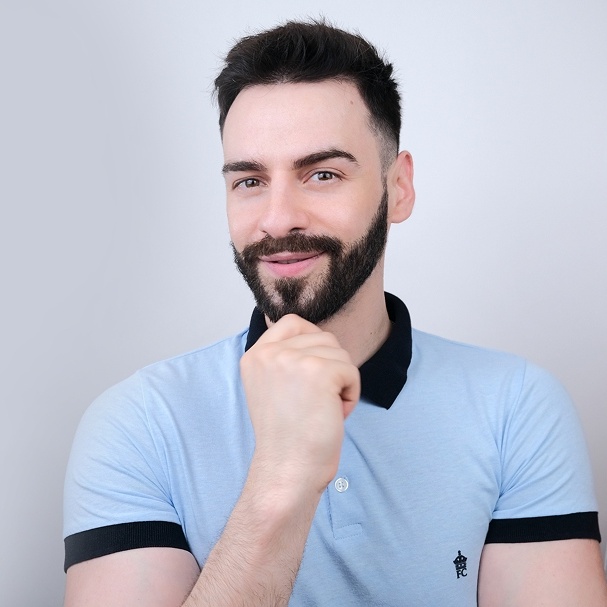
If you start hearing the aspiration, the short airstream after [t], with one simulator, you can only imagine how successful you can be in 1-on-1 Interactive American Accent Training with Prof. Alex, Ph.D. Accent Coach, where your whole American sound system is trained sound by sound.
In MyAccentWay, the Interactive Visual 2D Sound Simulators are only available in 1-on-1 accent coaching sessions with Prof. Alex.
Which Speech Patterns Matter Most in Professional Communication
Five elements shape how a professional sounds to colleagues and clients: American sound articulation, word stress, sentence rhythm, intonation, and connected speech. Pronunciation coaching for professionals works best when it trains all five together, not individual sounds in isolation.
Which Pronunciation Elements Matter Most for Clear Professional Communication
Clear sound articulation makes words recognizable, but stress, rhythm, and intonation determine how a listener judges the speaker. A doctor who articulates every consonant precisely but flattens stress patterns can still sound hesitant or hard to follow during a patient conversation. A sales executive with strong intonation control can hold a client’s attention even with an audible accent.
Word stress deserves particular attention because English relies on it to signal meaning and emphasis. Misplaced stress on multisyllable words common in business and technical settings, “analysis,” “negotiate,” “coordinate”, can shift meaning or simply sound unnatural to American listeners. Our article on American English word stress covers this pattern in more depth for readers who want to isolate it first.
How Intonation and Rhythm Training Improve Credibility in Business Settings
Intonation and stress patterns affect perceived confidence more than individual sound accuracy, because listeners use pitch and rhythm cues to judge whether a speaker sounds certain, senior, or persuasive. A leadership presentation delivered in a flat pitch range, regardless of how clearly each word is pronounced, often reads as uncertain or junior. Rising intonation in the wrong place can make a statement sound like a question, undermining authority in a negotiation or a client call.
Connected speech, the linking and reductions native speakers use between words, matters just as much for comprehension. Phrases like “want to” becoming “wanna” or “going to” becoming “gonna” are not sloppy speech; they are how fast-paced American business conversation actually sounds. A professional who pronounces every word fully and separately, without these reductions, can sound overly formal or, in fast exchanges like shift handoffs in a hospital unit, can struggle to keep pace with colleagues speaking at natural speed.
These patterns surface constantly: on client calls where tone signals confidence, in patient conversations where rhythm affects how reassuring an explanation sounds, during shift handoffs where speed and clarity both matter, and in leadership presentations where intonation carries as much weight as content. MyAccentway’s Interactive Accent Training addresses stress, rhythm, intonation, and connected speech as one connected system, since isolating a single element rarely changes how a professional is perceived in real conversation.
How Coaching Sessions Move From Sound Practice to Real Professional Delivery
Sessions move in a fixed order: isolated sound work first, then sentences, then full paragraphs delivered like a real presentation. This sequence is what separates pronunciation coaching for professionals from generic conversation practice, each stage builds the speech control the next stage depends on.
What Is the Difference Between Phonetic Exercises and Sentence-Level Practice
Phonetic exercises train a single sound until production becomes automatic; sentence-level practice trains how that sound behaves inside rhythm, stress, and intonation. A consonant drilled in isolation still has to survive contact with the words around it, stress shifts, vowels reduce, and word endings link together in ways that isolated drilling never tests.
Prof. Alex’s Interactive Accent Training treats these as two distinct, connected stages rather than one long drill. Phonetic exercises build the habitual, unconscious articulation; sentence practice then layers in connected speech, emphasis, and natural pacing so the sound holds up in a real sentence, not just a flashcard.
How Paragraph Practice With Presentation Delivery Prepares You for Real Professional Situations
Paragraph practice is where coaching stops resembling a classroom exercise and starts resembling a meeting. Students deliver full passages, a project update, a patient explanation, a client pitch, at presentation pace, with the stress patterns and intonation trained in earlier stages now expected to hold under the pressure of continuous speech.
This stage is deliberately built around real professional situations: a status report to a manager, a technical explanation to a client, a conference talk. The goal is not polished performance in a session, it’s speech that holds together when nobody is correcting you afterward.
Session structure follows principles Prof. Alex applies consistently: practice blocks stay short and focused, generally 10 to 15 minutes and rarely beyond 25, paired with unlimited listening to real American English outside the session. Short, frequent practice keeps attention sharp; the listening time retrains perception so the ear recognizes a pattern before the mouth has to produce it.
No app or recording can confirm a sound is correct the way a trained ear can. Software can flag that a word doesn’t match a reference file, but it cannot tell a student why a vowel is off, how far off, or what adjustment in tongue or jaw position will fix it. Real-time, trained-ear feedback, which is what American accent training with Prof. Alex provides, catches the gap between what a student thinks they produced and what actually came out.
How quickly these patterns stabilize depends on practice frequency and session consistency, not on a fixed timeline. Students who review the before and after results page will notice the common factor across cases isn’t speed, it’s steady, structured repetition across all four stages.
What Results to Expect From Pronunciation Coaching for Professionals
Results from pronunciation coaching for professionals depend on how often you practice and how consistently you attend sessions, not on a fixed calendar date. Two professionals starting on the same day can show different progress after the same number of weeks, simply because one practiced daily and the other practiced twice.
How Consistent Coaching Practice Leads to More Fluent and Confident American Speech
Speech retraining works the way muscle retraining works: frequency and repetition matter more than any single breakthrough session. Prof. Alex structures each session around short, focused practice segments rather than long drills, because the goal is habitual accuracy, not momentary correctness in front of a coach.
This is why Interactive Accent Training places the student in an active role from the first session. A student who listens, compares, and self-corrects between sessions builds a speech habit faster than one who only practices when reminded. Session frequency, home practice, and attention to feedback all shape the pace of change more than any promised timeframe.
What Improvements in Clarity and Accent Reduction You Can Realistically Expect
Progress in accent reduction shows up as qualitative shifts, not a percentage score. Watch for clearer consonant and vowel articulation, steadier rhythm in longer sentences, more natural intonation patterns, and greater ease producing accurate sounds in spontaneous conversation rather than only in rehearsed drills.
The most reliable evidence of change is documented before-and-after speech, not self-reported impressions. MyAccentWay’s before and after results page shows this standard in practice. Abishek’s pronunciation evaluation documents measurable change in Tamil and Indian English speech patterns, while Tian’s pronunciation evaluation shows a parallel process for a Mandarin speaker. Comparing these two cases side by side makes a useful point: the underlying method stays the same, but the specific sounds and patterns targeted differ by language background.
Neither evaluation relies on a claimed score or invented statistic. Each is a recorded comparison of actual speech, which is the only standard worth trusting when evaluating any coaching program.
The starting point for a personalized plan is the same for every professional: an evaluation that identifies your specific native-language speech patterns before setting a practice structure. You can Book 1 Hour Evaluation Session with Prof. Alex to get that diagnosis and a plan built around your goals, not a generic timeline.
Interactive American Accent Training for Foreign-Born Professionals in the United States
Foreign-born professionals in the United States often know their field and speak advanced English. Yet American listeners may still struggle with their sounds, stress, and rhythm. MyAccentWay offers private online American accent training through Interactive American Accent Training.
Interactive American Accent Training is led by Prof. Alex, Ph.D. Accent Coach, Doctor of Education, and professional linguist. He first diagnoses each speaker’s native-language patterns. Then he trains American sound articulation, stress, rhythm, and intonation for real real conversations.
Who this training is for
- Engineers, IT specialists, and data professionals presenting to U.S. teams and clients
- Doctors, nurses, and healthcare professionals explaining care to American patients
- Managers, executives, and founders leading meetings, pitches, and briefings
- Consultants, researchers, and academics speaking at conferences and webinars
- Professionals preparing for interviews, promotions, or client-facing roles
Online training across the U.S.
MyAccentWay is based in Austin, Texas, and all training is online. The program is especially relevant for professionals in Austin, Dallas, Houston, New York City, the San Francisco Bay Area, Los Angeles, Seattle, Boston, Chicago, Miami, Washington DC, Atlanta, and Raleigh.
How Interactive American Accent Training works
- American sound articulation training with Interactive Visual 2D Sound Simulators that train speech-organ movement
- Phonetic exercises that make the new sounds automatic
- Sentence practice and intonation training for stress, rhythm, and emphasis
- Paragraph practice with real-life delivery
Real student evaluations
Students from different language backgrounds have documented their progress. Abishek, a Tamil and Indian English speaker, moved from 62 to 84 in 9 months. Tian, a Mandarin speaker, moved from 58 to 85 in 8 months. Vlad, a Russian speaker, moved from 60 to 83 in 5 months.
The first step is a 1 Hour Evaluation Session with Prof. Alex.
Frequently Asked Questions
Is pronunciation coaching only useful for people with strong accents?
No, pronunciation coaching helps advanced English speakers too, not just those with heavy accents. Many clients already communicate well but want sharper clarity, smoother rhythm, and more polished delivery for leadership meetings, client calls, and presentations. Accent reduction at this level is about precision and confidence, not correcting broken English.
How is Interactive Accent Training different from listen-and-repeat pronunciation apps?
Interactive Accent Training is Prof. Alex’s effective student-centered American accent training method where students actively participate in the accent reduction, accent modification, and accent training process instead of passively receiving pronunciation information. Apps rely on repetition without a trained ear to confirm whether a sound is correct. Prof. Alex evaluates each student’s speech patterns in real time and adjusts the training accordingly, something a static app cannot replicate.
Can pronunciation coaching help with workplace presentations and public speaking?
Yes, pronunciation coaching directly supports presentation delivery and public speaking through structured sentence and paragraph practice. After students build accurate American sound articulation, they move into sentence practice and intonation training, then paragraph practice with presentation-style delivery, which trains the rhythm, stress, and connected speech needed for confident professional speaking in front of colleagues or clients.
Do I need to change my accent completely to sound clearer in meetings?
No, clearer speech does not require erasing your accent or your identity as a speaker. The goal of training with Prof. Alex is to improve American sound articulation, rhythm, and intonation enough that colleagues and clients understand you immediately, while you keep your authentic voice intact.
How often should professionals practice between coaching sessions?
Practice frequency depends on individual goals and how often sessions are scheduled, so there’s no fixed number that applies to everyone. Prof. Alex’s approach favors short, focused practice sessions rather than long drills, paired with unlimited listening to real American English between coaching sessions to reinforce new sound patterns.
Conclusion
Clearer professional speech comes from active retraining, not passive repetition. Prof. Alex’s Interactive Accent Training approach moves students through four connected stages, from American sound articulation to paragraph practice with presentation-style delivery, using 2D Sound Motion Technology and Cognitive Accent Training to make the change stick. Review real outcomes in the before and after results, including Tian’s evaluation for Mandarin speakers. The next concrete step is to Book 1 Hour Evaluation Session and get a diagnosis of your specific speech patterns from Prof. Alex.
Recommended Articles

Why American TH Sound Pronunciation Is Hard for Non-Natives
The American TH sound is hard for non-native speakers because most languages never require the tongue to protrude between the teeth and release air...

How Accent Coaching for Professionals Sharpens Your Voice
Accent coaching for professionals works best when it pairs interactive, student-centered training with cognitive awareness of how the speech system forms...
How 2D Sound Simulators Reveal American Vowel Articulation
Training your speech organs for accurate American vowel articulation requires feeling and controlling jaw drop, tongue height, and lip rounding.