How Accent Coaching for Professionals Sharpens Your Voice
(512) 265-9515Updated November 4, 2026 ◆ 11 min read
Accent coaching for professionals works best when it pairs interactive, student-centered training with cognitive awareness of how the speech system forms American sounds. Rather than passively repeating a coach’s model, professionals learn to recognize their own native-language speech patterns, train the precise articulation of American vowels and consonants, and apply that control to sentences, paragraphs, and live presentations. Prof. Alex, Ph.D. Accent Coach, Doctor of Education, and professional linguist, uses this approach with Interactive Visual 2D Sound Simulators and a four-stage method to build authentic, workplace-ready American speech patterns.
Student testimonial

“I feel confident enough to speak American English!”
Interactive American Accent Training9monthsof hard work and dedication
Listen to the starting point0:00
Listen to the result0:00
Independent phonetic evaluation
Jane Timokhin, Ph.D. in Applied Linguistics
Independent evaluator Jane Timokhin, Ph.D. in Applied Linguistics, assessed Abishek’s before and after audio recordings and documented measurable improvements in American English pronunciation after nine months of training at MyAccentWay.
Interactive American Accent Training, informed by Prof. Alex’s doctoral research. Prof. Alex’s doctoral research identified four educational conditions for interactive foreign-language teaching, including placing students in an active position in the learning process and shifting the teacher’s role toward organizing and guiding student participation. At MyAccentWay, he applies these research-informed conditions through Interactive American Accent Training, integrating 2D Sound Motion Technology (active articulatory simulation), guided pronunciation practice, and personalized feedback. Students actively simulate, train, and refine American English speech sounds rather than relying exclusively on traditional listen-and-repeat instruction. Learn more about Prof. Alex’s doctoral research.
Quick Picks: What to Look for in Accent Coaching for Professionals
Five criteria separate accent coaching for professionals that builds lasting speech change from programs that only produce short-term mimicry.
Busy professionals evaluating options rarely have time to test five different coaches before choosing one. These verdicts give a fast way to screen for substance over marketing.
- Verdict 1, Active participation beats passive repetition. Coaching where you evaluate and adjust your own speech patterns in real time, with a coach correcting as you work, produces more durable change than listen-and-repeat drills. This is the foundation of Interactive American Accent Training, where the student holds an active role instead of receiving pronunciation information passively.
- Verdict 2, Understanding the cause matters as much as fixing the sound. Programs that explain how a learner’s native-language sound system interferes with American English production create more independent speakers than programs that correct individual sounds without context. This is the reasoning behind Cognitive Accent Training.
- Verdict 3, Speech-organ training beats hand gestures and diagrams. Coaching that trains tongue, jaw, lip, and airflow movement directly through simulation builds more accurate articulation than verbal description alone [1]. MyAccentWay uses Interactive Visual 2D Sound Simulators, including one that trains the American unvoiced sound [t], for exactly this reason.
- Verdict 4, A structured path outranks isolated tips. A four-stage sequence, sound articulation, phonetic exercises, sentence and intonation practice, and paragraph practice with presentation-style delivery, builds toward real workplace communication rather than scattered pronunciation fixes.
- Verdict 5, Real speech evidence outweighs marketing copy. Documented before and after results from actual professionals, such as Abishek’s pronunciation evaluation, tell you more than any claim about results on a landing page.
Coaches who specialize in this field often describe accent training as a growing professional specialty precisely because generic repetition does not scale to real workplace demands [4]. The criteria above help you tell structured, evidence-based coaching apart from programs built on repetition alone.
1. Interactive Accent Coaching for Professionals, Review
MyAccentWay’s Interactive American Accent Training with Prof. Alex places students in an active role: developing target sounds, practicing adjustments, and applying them in phonetic exercises, sentences, and paragraphs. Training includes accent modification, accent reduction, and American pronunciation, with goals chosen for the individual student.
Why Do Non-Native Professionals Struggle With American Rhythm and Connected Speech?
Native-language stress and timing habits take over American sentence rhythm the moment speaking pressure rises in a live meeting or client call. Many languages give each syllable roughly equal weight, while American English leans hard on certain syllables and compresses the rest, producing the stretch-and-squeeze rhythm that lets listeners track meaning quickly. Under pressure, professionals default to the timing pattern their first language trained into them years earlier, and connected speech, the linking, blending, and reduction that make American English sound smooth, breaks down first. The result is speech that is grammatically correct but harder for colleagues to follow in real time, especially in fast-paced discussions or client-facing roles.
What Speech Patterns Does Prof. Alex Target in Sessions?
During live 1-on-1 sessions, Prof. Alex listens for word stress placement, vowel reduction in unstressed syllables, linking between words, and intonation contours as they show up in meetings or client calls. Rather than correcting isolated sounds in a vacuum, Prof. Alex evaluates how these patterns behave under the same conditions a professional faces at work, then guides the student through accent reduction and modification using 2D Sound Motion Technology to retrain the speech-organ movement behind each pattern.
- Pros: real-time correction during live practice, direct feedback on rhythm and stress as they occur, and a path toward independent self-correction rather than ongoing dependence on a coach
- Cons: requires scheduled live sessions rather than on-demand app practice, and progress depends on consistent session frequency rather than a fixed timeline
- Pricing: one fixed price, the $100 Evaluation Session; after it, Prof. Alex builds an Interactive 1-on-1 American Accent Training plan around your goals and budget
Best for: professionals in meetings, interviews, and client-facing roles who need authentic, workplace-ready speech patterns instead of isolated drills. This is where accent coaching for professionals shows its value most clearly, when rhythm and intonation have to hold up under the pressure of a live conversation, not just a practice exercise.
2. Cognitive Accent Training, Review
Cognitive Accent Training teaches professionals why their native-language sound system filters American English before retraining perception and production together. It is one of the three method pillars behind Cognitive Accent Training at MyAccentWay, and it answers a question most accent coaching for professionals never addresses: why corrections that worked in a session disappear a week later.
How Does Your Native-Language Sound System Affect American English?
Every language organizes sounds into categories, and a professional’s first language has already trained the brain to sort incoming speech into those categories automatically. A Mandarin speaker’s ear and a Russian speaker’s ear are tuned differently, which means both may perceive certain American vowels or consonants as “close enough” to a native category when they are actually distinct sounds. Correction without awareness of this filtering effect rarely holds, because the student is still perceiving through the old system even after producing the new sound once or twice in a drill.
Memorizing Corrections vs. Training the Speech System
Passive repetition produces a familiar pattern: the student says the word correctly in the room, feels encouraged, then reverts in the next meeting or client call. That improvement depends on the coach being present to prompt the fix. Cognitive Accent Training works differently. Prof. Alex evaluates the student’s pattern, identifies which native-language habit is driving the error, and guides the student toward hearing the difference independently. The student compares the two sounds, adjusts the articulation, and internalizes the rule rather than the single corrected word, which is why the change transfers to vocabulary never drilled in session.
- Pros: builds independence rather than coach-dependence; generalizes to new words and unscripted speech, not just rehearsed phrases; strengthens confidence under pressure because the student can self-correct in real time
- Cons: requires active mental engagement throughout each session; not a listen-and-repeat exercise, so it demands more focus than passive pronunciation apps
- Pricing: one fixed price, the $100 Evaluation Session; after it, Prof. Alex builds an Interactive 1-on-1 American Accent Training plan around your goals and budget
Cognitive Accent Training fits advanced English speakers best, professionals who already communicate well at work but want pronunciation that holds steady in high-stakes presentations, not just casual conversation. Vlad’s before-and-after evaluation documents pattern-level change for a Russian speaker, and Tian’s before-and-after evaluation shows the same approach applied to Mandarin speech habits. Both sit within the broader set of before and after results MyAccentWay publishes as evidence that awareness-based training outlasts memorized correction.
3. 2D Sound Motion Technology Accent Coaching, Review
2D Sound Motion Technology trains the physical movement patterns behind American sound articulation, using Interactive Visual 2D Sound Simulators available only in Prof. Alex’s 1-on-1 sessions.
This is the part of Interactive American Accent Training that makes the learning experience active rather than passive. Instead of listening to a verbal description of where the tongue should go, students follow simulation-based movement patterns that train the tongue, jaw, lips, and airflow for each American sound and more than 30 sound combinations. For professionals evaluating accent coaching for professionals who want precision over generic drills, this is the clearest differentiator in the market.
How Do the Simulators Train Speech-Organ Movement for American Sounds?
Each simulator isolates one sound or sound combination and walks the student through the exact speech-organ movement needed to produce it accurately. Prof. Alex uses the Interactive Visual 2D Sound Simulator that trains the American unvoiced sound [t] as a working example: the student follows the simulation, trains the articulation pattern, and repeats it until the movement becomes consistent rather than approximate. This happens inside live sessions, where Prof. Alex can correct the movement in real time rather than leaving the student to guess whether a repetition was accurate.
Why Simulator-Guided Practice Outperforms Gestures or Static Pictures
Hand gestures and static diagrams describe a sound from the outside. A simulator trains the movement pattern directly, which matters because American sound articulation is a physical skill, not a conceptual one. A teacher pointing at a mouth diagram can tell a student where the tongue approximately belongs; it cannot show how the tongue moves through the sound in real time. The simulator closes that gap by giving the speech organs a repeatable pattern to follow, session after session, until the correction holds in sentence practice and paragraph practice.
- Pros: Precise, repeatable articulation training; corrects movement rather than just awareness; covers 30+ sound combinations beyond isolated vowels and consonants
- Cons: Only available inside 1-on-1 sessions with Prof. Alex, not a standalone app or self-paced tool
- Pricing: one fixed price, the $100 Evaluation Session; after it, Prof. Alex builds an Interactive 1-on-1 American Accent Training plan around your goals and budget
Best for: Professionals who have already tried generic pronunciation tips, YouTube videos, or app-based repetition drills without lasting change, and now need targeted, physical correction of specific sounds that keep causing misunderstanding in meetings and presentations.
MyAccentWay · 2D Sound Motion Technology
American English Pronunciation: Consonant and Vowel Sounds with 2D Sound Motion Technology
Learning American English pronunciation involves more than listening and repeating. Active articulatory training helps students practice the coordinated movements of the tongue, lips, jaw, airflow, and voicing needed to produce American English sounds. 2D Sound Motion Technology and Interactive Visual 2D Sound Simulators, developed in 2020 by Prof. Alex, Ph.D. Accent Coach, Doctor of Education, and professional linguist, as part of his interactive teaching model that applies principles from his doctoral research in interactive teaching methods, train your tongue, lips, jaw, teeth, airflow, and voice step by step. They train each American sound.
What 2D Sound Motion Technology is
2D Sound Motion Technology is an advanced accent reduction and articulation training tool by Prof. Alex. It trains each American sound through Interactive Visual 2D Sound Simulators.
What Interactive Visual 2D Sound Simulators do
Interactive Visual 2D Sound Simulators are part of 2D Sound Motion Technology, the articulation-training method Prof. Alex created in 2020. It applies one of the four conditions of interactive teaching identified in his doctoral research: placing students in an active position in the learning process. Instead of listening and repeating, students actively train their speech organs. With each simulator, students control articulation movement sequences and physically train the speech organs (tongue, lips, jaw, airflow, and voicing) with synchronized voice-over instructions to produce each American sound correctly. Every consonant has its own simulator: explore American consonants trained with 2D Sound Motion Technology.
Sample training: the American t sound (aspirated [t])
Practice
Record yourself speaking these words:
Tab · Tacos · Time · Tub · Hotel · Motel · Sit · Pit · Net
Instructions
Play the Interactive Visual 2D Sound Simulator for the American t sound below several times and follow it step by step. Control the simulator’s articulation movement sequence and practice the corresponding tongue and jaw movements, coordinating airflow and voicing as you pronounce [t].
Interactive Visual 2D Sound Simulator: American unvoiced sound [t]
Practice
Record yourself again speaking these words, but this time focus on the movement of your tongue. Go slow, and you will hear the difference. You’ve got this!
Tab · Tacos · Time · Tub · Hotel · Motel · Sit · Pit · Net
How Interactive Visual 2D Sound Simulators solve pronunciation and speaking problems
- Wrong articulationMost pronunciation problems start with the tongue, lips, jaw, or teeth in the wrong position. Each Interactive Visual 2D Sound Simulator trains the correct articulation of one American sound, so the student corrects the cause of the problem, not only the result.
- Airflow and voicingMany accent problems come from wrong airflow or voicing: sounds that are too weak, too strong, or voiced when they should be unvoiced. The simulators train airflow and voice together with articulation, step by step, for each American sound.
- Clear speech and confidenceWhen each sound is trained correctly, words connect into clear American English speech. Listeners can understand you more easily, and speaking at work, in meetings, and on calls becomes more confident.
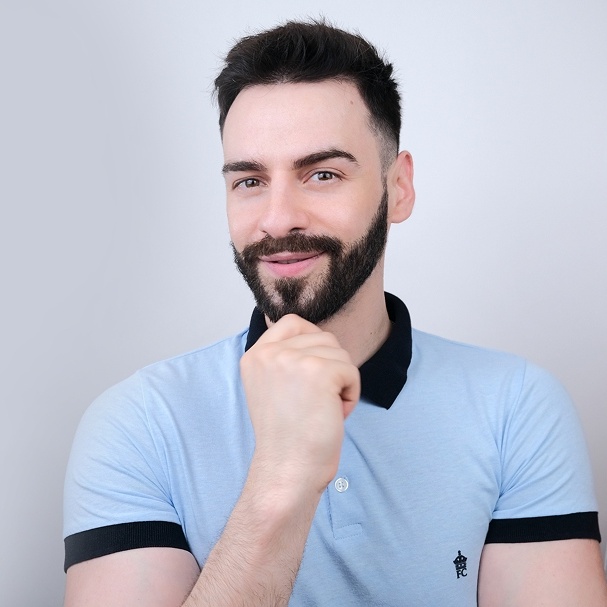
If you start hearing the aspiration, the short airstream after [t], with one simulator, you can only imagine how successful you can be in 1-on-1 Interactive American Accent Training with Prof. Alex, Ph.D. Accent Coach, where your whole American sound system is trained sound by sound.
The simulators are integrated into Prof. Alex’s 1-on-1 Interactive American Accent Training and are also available through the InPronunci learning platform.
How We Evaluated Accent Coaching for Professionals
We evaluated accent coaching for professionals by tracing one structured path: sound formation, phonetic drilling, sentence-level rhythm, and extended speech under presentation conditions, not a collection of disconnected pronunciation tips.
Prof. Alex, Ph.D. Accent Coach, Doctor of Education, and professional linguist, built the MyAccentWay program around four connected stages rather than isolated lessons. That structure matters because professionals rarely fail at single sounds in isolation, they lose clarity when sounds, rhythm, and delivery break down together under the pressure of a live meeting or client call.
What Does the Four-Stage Structure Accomplish for Professional Communication?
The four stages move a professional from accurate sound formation to confident, independent speech in real workplace situations. Stage one, American sound articulation training, builds a stable foundation for American vowels and consonants using 2D Sound Motion Technology, where Interactive Visual 2D Sound Simulators train speech-organ movement patterns rather than asking students to guess at placement. Stage two, phonetic exercises, moves those sounds toward automatic, habitual production through sound combinations and connected-speech patterns, so pronunciation stops requiring conscious effort mid-sentence.
Stage three, sentence practice and intonation training, is where accent coaching for professionals starts to resemble actual workplace talk. This stage builds sentence-level stress, emphasis, and flow instead of isolated sounds, which is what a listener actually hears during a meeting, interview, or client negotiation. A professional who can produce a clear vowel in isolation but flattens every sentence into the same rhythm will still sound unclear on a call, this stage targets that gap directly.
Stage four, paragraph practice with presentation-style delivery, shifts students from controlled drills into extended, topic-based speech. This is where public speaking confidence develops: students practice complete passages and professional scenarios instead of short, scripted responses, building the stamina and composure needed for presentations, webinars, and leadership communication.
Progress through these stages depends on practice consistency and session frequency rather than a fixed calendar. Some professionals move faster through sentence practice than others, depending on how often they drill between sessions and how complex their native-language sound system is relative to American English.
We also weighed real evidence over marketing claims. Abishek’s evaluation, built around Tamil and Indian English speech patterns, shows how the four-stage method applies to a specific accent background rather than a generic one-size-fits-all script. Reviewing the full before and after results gives a clearer picture of how sound articulation training and paragraph practice connect across different starting points.
More than articulation: Prof. Alex doesn’t teach only the articulation of sounds. Interactive 1-on-1 training with 2D Sound Motion Technology helps students become confident, fluent English speakers through a step-by-step system. Training may begin with how each American sound is made. Then it moves into sound combinations, sound contractions, phonetic exercises, practice sentences, and paragraphs in real rapid speech, so students start speaking English fluently and comfortably.
Professional Speaking Coaching for Foreign-Born Professionals in the United States
Foreign-born professionals in the United States often know their field and speak advanced English. Yet American listeners may still struggle with their stress, rhythm, and intonation. MyAccentWay offers private online professional speaking coaching through Interactive American Accent Training with Prof. Alex.
Training is online and 1-on-1 for learners anywhere in the U.S. It starts with a 1 Hour Evaluation Session.
Frequently Asked Questions
Is accent coaching for professionals different from general ESL pronunciation classes?
Yes, accent coaching for working professionals targets workplace speech situations rather than general vocabulary or grammar. MyAccentWay’s Interactive American Accent Training focuses on sound articulation, rhythm, and connected speech for meetings, presentations, and client calls, not classroom-style conversation practice aimed at everyday beginners.
Do I need to attend accent coaching sessions in person, or does remote coaching work?
Remote 1-on-1 sessions work well for accent training because the coaching depends on live listening and guided correction, not physical proximity. Prof. Alex evaluates articulation, rhythm, and intonation through interactive video sessions, applying the same 2D Sound Motion Technology used in person.
How does accent coaching build confidence for presentations and client calls specifically?
Confidence grows once a professional can predict how their speech will land, rather than guessing during high-stakes conversations. Paragraph practice with presentation-style delivery trains sentence rhythm and intonation on real material, such as a client pitch or a conference talk, so the speaker rehearses the actual communication context instead of generic drills. Students like Abishek and Tian show this shift in their before-and-after results.
Can advanced English speakers still benefit from structured accent coaching?
Advanced speakers often benefit the most, since residual accent patterns at that level tend to be subtle and hard to self-correct. Cognitive Accent Training addresses how native-language habits still shape pronunciation even after years of fluency, refining details that generic practice overlooks.
What should I expect in a first accent coaching session with Prof. Alex?
Expect a structured evaluation of your current sound articulation, rhythm, and intonation patterns, not a generic conversation lesson. Prof. Alex, Ph.D. Accent Coach, Doctor of Education, and professional linguist, listens for specific pronunciation patterns tied to your native language background, explains what’s happening in your speech system, and outlines which of the four training stages to prioritize. Many professionals start with a Book 1 Hour Evaluation Session for this exact purpose.
Conclusion
Clearer professional speech comes from retraining the sound system, not from repeating words until something sticks. Prioritize coaching that evaluates your actual articulation patterns, trains rhythm and connected speech through sentence and paragraph practice, and ties progress to real workplace situations like presentations and client calls. Advanced speakers and multilingual healthcare professionals alike gain from this structured approach, especially when it includes accent reduction work grounded in cognitive science rather than generic drills. The next step: book a 1 Hour Evaluation Session with Prof. Alex and get a direct assessment of which training stage will move your speech forward fastest.
Sources & References
Recommended Articles
How 2D Sound Simulators Reveal American Vowel Articulation
Training your speech organs for accurate American vowel articulation requires feeling and controlling jaw drop, tongue height, and lip rounding.

Accent Reduction for Doctors, Nurses, and Pharmacists
Imagine you're in the middle of a critical rounds presentation in 2026, and a patient asks you to repeat your diagnosis for the third time. It's a...

How to Use Accent Modification Techniques That Stick
Accent modification techniques only create lasting change when sound correction, rhythm training, and real speech practice are linked together and repeated...