Learning Accents: American Accent Training for Professionals
(512) 265-9515Updated October 16, 2026 ◆ 14 min read
“Learning accents” in a professional context means one specific thing: targeted American accent training and accent reduction to communicate more clearly in interviews, presentations, and client calls. The fastest first step is to Book Your 1 Hour Evaluation Session with Prof. Alex for a personalized diagnostic, or start a focused 15-minute daily practice routine built around your top error patterns. Both routes are grounded in the same principle: structured, targeted practice produces measurable clarity gains far faster than casual repetition.
Real student result

“I feel confident enough to speak American English!”
Interactive American Accent Training9monthsof hard work and dedication
Listen to the starting point0:00
Listen to the result0:00
“Many of my students once believed they could never sound like this. School taught them grammar and vocabulary, but not how to train their English speech. That is what we do together, step by step, until you speak English independently and with confidence.”
Abishek’s result was achieved through Prof. Alex’s research-based Interactive 1-on-1 American Accent Training. His doctoral research found this interactive method more effective than traditional, teacher-centered methods. See the research basis →
American accent training with Prof. Alex at Myaccentway American Accent Program is built on Interactive 1-on-1 Accent Training, Cognitive Accent Training, and 2D Sound Motion Technology — part of Prof. Alex’s interactive teaching model, based on his Ph.D. research in interactive teaching. With the Interactive Visual 2D Sound Simulators, students train the movement of the tongue, lips, jaw, teeth, and airflow while Prof. Alex corrects them live, supporting systematic and lasting pronunciation change for adult professionals.
Who benefits from American accent training?
Non-native English-speaking professionals are the clearest fit: software engineers presenting architecture decisions, healthcare professionals consulting with patients, executives leading cross-functional calls, and founders pitching investors. Advanced English speakers who grew up outside the U.S. and still hear “Could you repeat that?” more than they should also fit this profile.
Concrete workplace outcomes that learners report include:
- Fewer requests to repeat themselves during meetings and calls
- Clearer slide narration with less listener strain
- Stronger perceived credibility in job interviews
- Reduced clarification time on client calls, which shortens meetings
- Greater confidence when speaking to senior leadership or large audiences
For professionals doing business with U.S. partners, a clearer American accent builds rapport and perceived credibility in ways that affect how persuasive and trustworthy you sound. Progress shows up in measurable signals: listener feedback, fewer interruptions for clarification, and your own before-and-after recordings. Book Your 1 Hour Evaluation Session to get a diagnostic baseline before you start.
What does every effective American accent training program cover?
The Accent Reduction Curriculum at Myaccentway American Accent Program addresses all the core phonological components that produce clarity in American English. Research confirms that five high-impact features, plus rhythm and intonation, are the fastest path to sounding American.
| Component | Why it matters for workplace clarity |
|---|---|
| Rhotic R | The most distinctive American sound; mispronouncing it marks nearly every word containing R |
| Flap T (the “D-like” T) | Produces the natural American rhythm in words like “better” and “water” |
| Dark L vs. light L | Affects word-final clarity in common professional vocabulary |
| Schwa and weak forms | Drives natural stress-timed rhythm; without it, speech sounds stiff and foreign |
| Flat A (the “æ” vowel) | Distinguishes words like “bad,” “man,” and “plan” from near-homophones |
| Stress and rhythm | American English is stress-timed; misplaced stress disrupts listener comprehension |
| Intonation and sentence melody | Signals questions, emphasis, and confidence; flat intonation reads as uncertain |
| Connected speech (linking, elision) | Makes fluent speech sound natural rather than word-by-word |
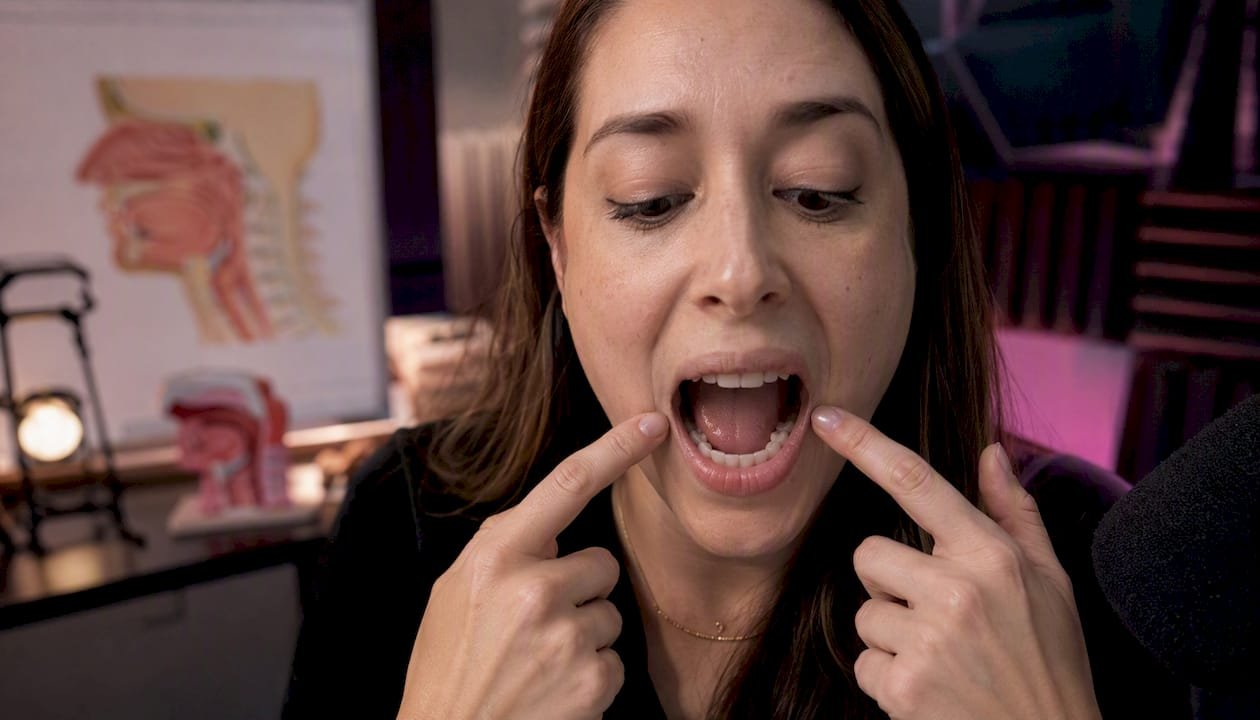
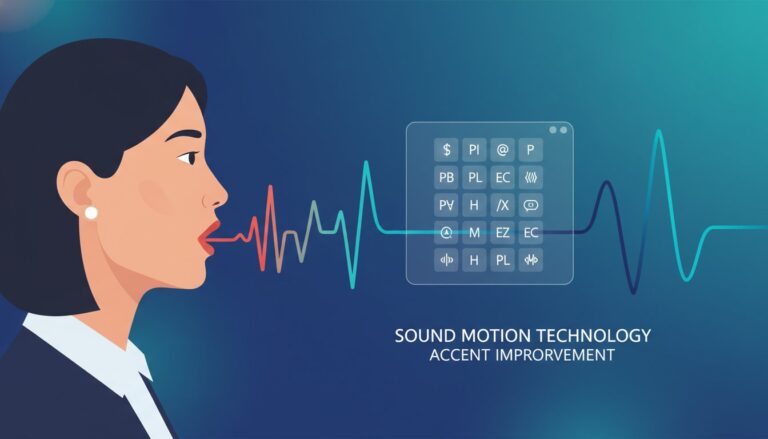
2D Sound Motion Technology trains articulation by guiding the tongue, jaw, and lips into position for each sound, which accelerates motor retraining. The science-based approach to accent improvement frames this as assessment, prioritized targets, structured practice, and reassessment.
MyAccentWay · 2D Sound Motion Technology
American English Pronunciation: Consonant and Vowel Sounds with 2D Sound Motion Technology
Learning American English pronunciation and the American accent is more effective when you train your speech organs, not only listen and repeat. 2D Sound Motion Technology and Interactive Visual 2D Sound Simulators, developed in 2020 by Prof. Alex, Ph.D. Accent Coach, Doctor of Education, and professional linguist, as part of his interactive teaching model based on his Ph.D. research in interactive teaching methods, train your tongue, lips, jaw, teeth, airflow, and voice step by step. They train each American sound and more than 30 sound combinations through Interactive 2D video simulation.
What 2D Sound Motion Technology is
2D Sound Motion Technology is an advanced accent reduction and articulation training tool by Prof. Alex. It corrects, develops, and trains each American sound and more than 30 sound combinations through Interactive 2D video simulation.
What Interactive Visual 2D Sound Simulators do
Interactive Visual 2D Sound Simulators are part of 2D Sound Motion Technology, the articulation-training method Prof. Alex created by applying his Ph.D. research in interactive teaching to American pronunciation. Instead of listening and repeating, students actively train their speech organs. Each simulator uses Interactive 2D mouth movement to train the speech organs (tongue, lips, jaw, teeth, airflow, and voice) to produce each American sound correctly. Every consonant has its own simulator: explore American consonants trained with 2D Sound Motion Technology.
Sample training: the American t sound (aspirated [t])
Practice
Record yourself speaking these words:
Tab · Tacos · Time · Tub · Hotel · Motel · Sit · Pit · Net
Instructions
Play the Interactive Visual 2D Sound Simulator for the American t sound below several times and follow it step by step. Move your tongue, jaw, and airflow together with the simulator and train your articulation.
Interactive Visual 2D Sound Simulator: American unvoiced sound [t]
Practice
Record yourself again speaking these words, but this time focus on the movement of your tongue. Go slow, and you will hear the difference. You’ve got this!
Tab · Tacos · Time · Tub · Hotel · Motel · Sit · Pit · Net
How Interactive Visual 2D Sound Simulators solve pronunciation and speaking problems
- Wrong articulationMost pronunciation problems start with the tongue, lips, jaw, or teeth in the wrong position. Each Interactive Visual 2D Sound Simulator trains the correct articulation of one American sound, so the student corrects the cause of the problem, not only the result.
- Airflow and voicingMany accent problems come from wrong airflow or voicing: sounds that are too weak, too strong, or voiced when they should be unvoiced. The simulators train airflow and voice together with articulation, step by step, for each American sound and more than 30 sound combinations.
- Clear speech and confidenceWhen each sound is trained correctly, words connect into clear American English speech. Listeners can understand you more easily, and speaking at work, in meetings, and on calls becomes more confident.
If you start hearing the aspiration, the short airstream after [t], with one simulator, you can only imagine how successful you can be in 1-on-1 Interactive American Accent Training with Prof. Alex, Ph.D. Accent Coach, where your whole American sound system is trained sound by sound.
In MyAccentWay, the Interactive Visual 2D Sound Simulators are only available in 1-on-1 accent coaching sessions with Prof. Alex.
What training methods actually change adult pronunciation?
Interactive 1-on-1 coaching that combines perceptual training, articulatory instruction, and immediate corrective feedback is more effective than traditional, teacher-centered methods for serious professionals, according to Prof. Alex’s doctoral research. Here is why the contrast with traditional methods matters:
| Dimension | Traditional “repeat-after-me” | Interactive 1-on-1 with cognitive training |
|---|---|---|
| Feedback type | Delayed or absent | Immediate, specific, corrective |
| Learner awareness | Low — student mimics without understanding | High — student understands why a correction works |
| Transfer to real speech | Slow; gains stay in drills | Faster; gains transfer to spontaneous conversation |
| Articulation instruction | Rarely included | Explicit speech-organ guidance with visual tools |
| Progress measurement | Subjective | Recorded baselines, listener surveys, reassessment |
The “repeat-after-me” model stalls because adult learners need to understand the phonological mechanism, not just hear a model. Cognitive Accent Training builds that awareness: you learn to compare your speech patterns against the target, which moves corrections from conscious effort toward more automatic speech over time. Pairing this with 2D Sound Motion Technology, part of Prof. Alex’s interactive teaching model based on his Ph.D. research in interactive teaching methods, lets you actively train the movement of your tongue, lips, jaw, teeth, and airflow with the Interactive Visual 2D Sound Simulators while Prof. Alex corrects you live, aligning perception and production so correct muscle patterns form faster.
A practical 8-week plan you can start today
A realistic 8-week sequence balances training with a full work schedule. Consistent micro-practice on your top two error patterns produces better retention than occasional long sessions.
- Week 1 — Assessment. Record a two-minute work presentation. Identify your top three pronunciation errors. Book Your 1 Hour Evaluation Session for a professional diagnostic.
- Week 2 — High-impact sounds. Drill rhotic R and flap T with minimal-pair exercises (10 minutes daily). Record and compare.
- Week 3 — Schwa and weak forms. Practice stress-timed rhythm by clapping sentence stress patterns. Shadow one short audio clip per day.
- Week 4 — Connected speech. Focus on linking and elision in common professional phrases. Read sentences aloud, then shadow the same sentences.
- Week 5 — Intonation. Use pitch-tracking (a free tool like Praat) to visualize your sentence melody. Practice question vs. statement intonation.
- Week 6 — Consolidation. Combine all target sounds in paragraph-level practice. Record a work email read aloud; compare to Week 1.
- Week 7 — Simulated calls. Practice answering common meeting questions aloud. Time your responses and listen back for clarity.
- Week 8 — Review and reassess. Compare recordings across all eight weeks. Identify remaining gaps and decide whether to intensify coaching.
Pro Tip: Schedule your daily practice as a calendar block immediately before your first meeting of the day. The warm-up effect carries into real speech within minutes, and the habit sticks because it is anchored to an existing routine.
How long does measurable progress take?
Typical measurable improvement arrives within 3–6 months of consistent daily practice (15–30 minutes), with near-native pronunciation taking 1–2 years depending on baseline and practice intensity, according to Practice Me. Here is what that timeline looks like in practice:
- Weeks 1–4: Sound-level gains in isolated words and minimal pairs; increased awareness of your own errors
- Months 2–3: Consistency in phrases and short sentences; listeners begin noticing fewer repetition requests
- Months 3–6: Improved fluency in spontaneous speech; stress and rhythm feel more natural
- Year 1 and beyond: Advanced refinement of intonation, connected speech, and register-appropriate delivery
Measurement matters as much as practice. Before-and-after recordings give you objective evidence of change. Listener surveys (asking a trusted colleague to count clarification requests over two weeks) add external validation. Pitch-tracking software like Praat visualizes intonation progress. Reassess your program fit at the 6-week and 3-month marks; if progress has plateaued, intensifying 1-on-1 coaching frequency usually restarts momentum.
How do you choose the right accent coach or program?
Prioritize credentialed coaches, a clear method, measurable outcomes, and technology like 2D Sound Motion Technology. A detailed guide to finding the right accent reduction coach covers this decision in depth.
Criteria checklist:
- Coach holds a Ph.D. or equivalent in linguistics, phonetics, or a related field
- Program begins with a formal assessment, not a generic lesson
- Corrective feedback is given in real time during every session
- Curriculum covers consonants, vowels, rhythm, intonation, and connected speech
- Technology or visual tools support articulation instruction
- Progress is tracked with recordings or measurable listener outcomes
Questions to ask in a trial session:
- “How do you assess which sounds I need to work on first?”
- “What will a weekly practice plan look like for my schedule?”
- “How do you measure whether I’m improving?”
Red flags: pure repetition drills with no explanation, no intake assessment, no individualized feedback, and vague success metrics like “you’ll sound more natural.”
Explore Curriculum to see how Myaccentway American Accent Program addresses each criterion, or Book Your 1 Hour Evaluation Session to experience the assessment-first approach directly.
What happens in a MyAccentWay 1 Hour Evaluation Session?
The 1 Hour Evaluation Session is a diagnostic session, not a generic demo. It opens with a brief intake to understand your professional context and communication goals, moves into focused sound work using 2D visuals to train your articulation toward the American target, and closes with immediate corrective feedback and a short personalized action plan.

That sequence gives you three things a generic trial cannot: a clear picture of your specific error patterns, a concrete first correction you can practice the same day, and a realistic sense of what the full program will address. For a busy professional, that is a useful decision point — you leave knowing whether the program fits your goals before committing to a full schedule. Book Your 1 Hour Evaluation Session to get your diagnostic.
What results do MyAccentWay students report?
Students who complete the program consistently describe the same arc: they entered with clear speech but persistent misunderstandings in professional settings, worked through targeted sound and rhythm correction with Prof. Alex, and left with measurably fewer clarification requests and stronger confidence on calls and in presentations.
Myaccentway American Accent Program tracks progress through before-and-after recordings, session-by-session feedback notes, and learner self-assessment at defined checkpoints. Read more student reviews and results to see documented outcomes across different professional backgrounds.
What most professionals get wrong about accent training
The conventional wisdom says accent training is about fixing sounds. That framing is incomplete, and it explains why so many professionals practice for months and still feel misunderstood. Sounds matter, but rhythm and connected speech are what listeners actually process first. A perfectly articulated R in isolation does nothing for you if your stress pattern signals “non-native” before the listener even registers the vowel.
The second mistake is treating accent training as a passive activity: listen to native speakers, repeat what you hear, wait for improvement. Adult neuroplasticity works differently. The brain needs explicit instruction about why a sound is produced a certain way, not just a model to imitate. That is why Cognitive Accent Training, which builds conscious phonological awareness before moving toward automatic speech, produces faster and more durable change than repetition alone.
The third mistake is inconsistency. A 30-minute session once a week produces far less change than 15 focused minutes every day. The motor learning research is clear on this: frequency of practice beats duration. Build the habit small and daily, then let the coaching sessions accelerate what the daily practice has already started.
Myaccentway American Accent Program: Ph.D.-led, 1-on-1 accent training
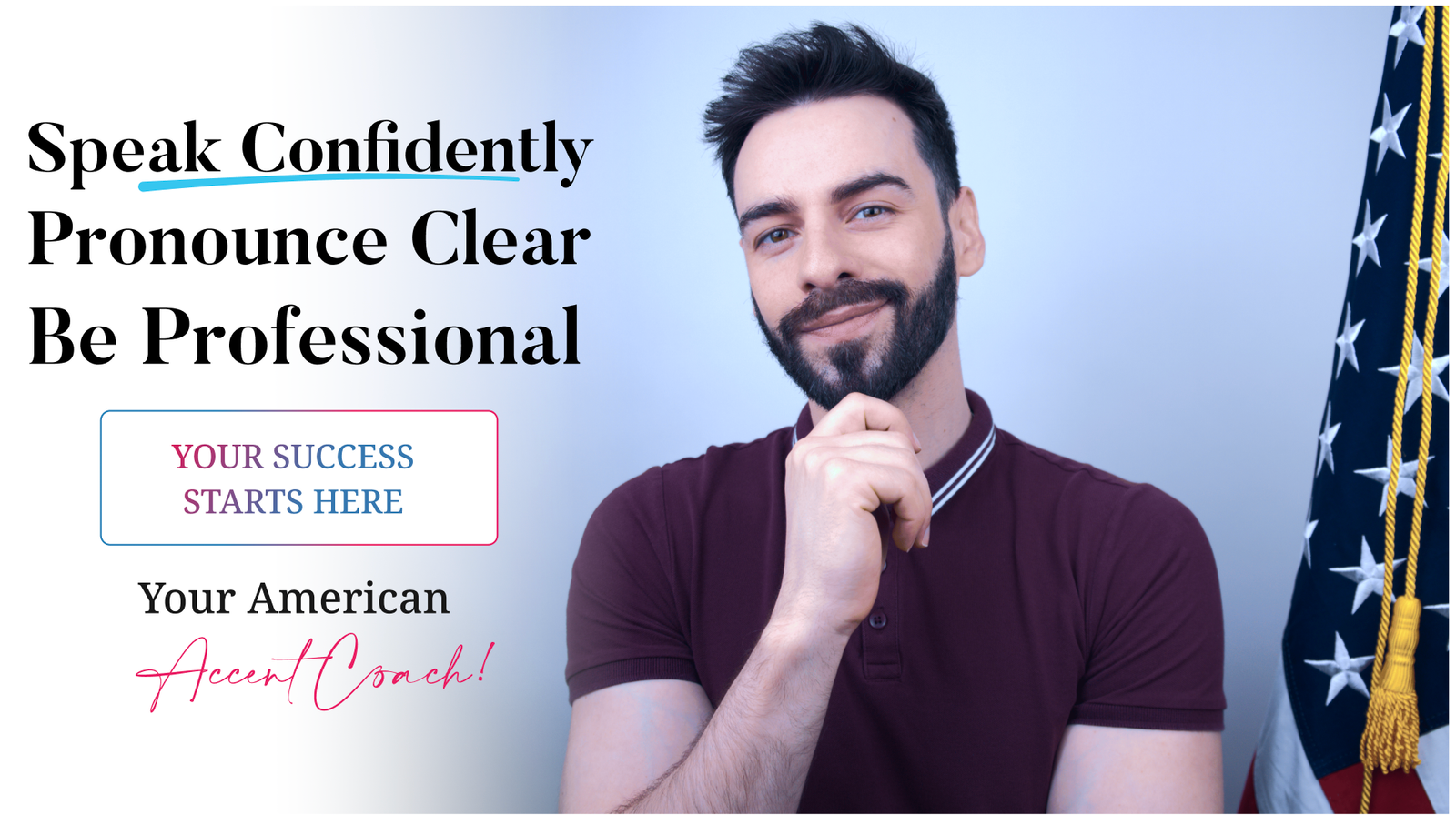
For professionals who need real results, not just more repetition, Myaccentway American Accent Program offers Ph.D.-led 1-on-1 coaching with a curriculum built around the exact components that drive workplace clarity: consonants, vowels, rhythm, intonation, and connected speech. Prof. Alex brings more than 20 years of experience in linguistics, phonetics, and psycholinguistics to every session, and the program’s Interactive Visual 2D Sound Simulators train the movement of the tongue, lips, jaw, teeth, and airflow while Prof. Alex corrects students live as part of his interactive teaching model, based on his Ph.D. research in interactive teaching methods.
This is not a passive course or a repeat-after-me program. Every session is interactive, assessment-driven, and tailored to your specific error patterns and professional communication goals. Student results are documented and publicly available. The entry point is simple: start with a Book Your 1 Hour Evaluation Session session to get your diagnostic, or Explore Curriculum to see the full program structure before you commit.
Sources
- How to Learn an American Accent: Tips & Exercises | Practice Me
Interactive American Accent Training for Foreign-Born Professionals in the United States
Foreign-born professionals in the United States often know their field and speak advanced English. Yet American listeners may still struggle with their sounds, stress, and rhythm. MyAccentWay offers private online American accent training through Interactive American Accent Training.
Interactive American Accent Training is led by Prof. Alex, Ph.D. Accent Coach, Doctor of Education, and professional linguist. He first diagnoses each speaker’s native-language patterns. Then he trains American sound articulation, stress, rhythm, and intonation for real real conversations.
Who this training is for
- Engineers, IT specialists, and data professionals presenting to U.S. teams and clients
- Doctors, nurses, and healthcare professionals explaining care to American patients
- Managers, executives, and founders leading meetings, pitches, and briefings
- Consultants, researchers, and academics speaking at conferences and webinars
- Professionals preparing for interviews, promotions, or client-facing roles
Online training across the U.S.
MyAccentWay is based in Austin, Texas, and all training is online. The program is especially relevant for professionals in Austin, Dallas, Houston, New York City, the San Francisco Bay Area, Los Angeles, Seattle, Boston, Chicago, Miami, Washington DC, Atlanta, and Raleigh.
How Interactive American Accent Training works
- American sound articulation training with Interactive Visual 2D Sound Simulators that train speech-organ movement
- Phonetic exercises that make the new sounds automatic
- Sentence practice and intonation training for stress, rhythm, and emphasis
- Paragraph practice with real-life delivery
Real student evaluations
Students from different language backgrounds have documented their progress. Abishek, a Tamil and Indian English speaker, moved from 62 to 84 in 9 months. Tian, a Mandarin speaker, moved from 58 to 85 in 8 months. Vlad, a Russian speaker, moved from 60 to 83 in 5 months.
The first step is a 1 Hour Evaluation Session with Prof. Alex.
FAQ
What does “learning accents” mean for professionals?
For working professionals, learning accents means targeted American accent training to reduce a foreign accent and improve clarity in interviews, presentations, and client calls — not dialect performance or acting.
How long does it take to see results from accent training?
Most learners see measurable improvement within 3–6 months of consistent daily practice (15–30 minutes); near-native pronunciation typically takes 1–2 years depending on baseline and practice intensity.
What is the most effective method for adult accent training?
Interactive 1-on-1 coaching with cognitive instruction and articulatory feedback produces the fastest transfer from isolated sound gains to fluent speech — significantly faster than passive repetition methods.
What is 2D Sound Motion Technology?
2D Sound Motion Technology is a visual tool used by Myaccentway American Accent Program that makes tongue, jaw, and lip movement visible to learners, supporting motor retraining and faster articulation correction.
How do I know which sounds to work on first?
A formal assessment, such as the one conducted in a Myaccentway American Accent Program 1 Hour Evaluation Session, identifies your specific error patterns and prioritizes the sounds with the highest impact on your professional clarity.
Recommended
American Accent Training for U.S. Professionals
Prof. Alex, Ph.D. Accent Coach, explains how American accent training helps U.S. professionals improve pronunciation, speech clarity, rhythm, intonation, and confident workplace communication.

American Accent Training: Improve English Accent
American accent training for non-native professionals: improve English accent, pronunciation, speech clarity, vowels, consonants, and intonation.

American Accent Training Online for Non-Native Professionals
American accent training online with Prof. Alex for Texas and U.S. professionals. Learn how sound-system re-education, Interactive Visual 2D Sound Simulators, phonetic exercises, sentences, paragraphs, and real speech practice build clearer American pronunciation.
The problem is not always grammar or vocabulary.
If people understand your words but still miss your message, the deeper issue may be speech clarity, rhythm, intonation, and American pronunciation habits. MyAccentWay helps students retrain the sound system with professional 1-on-1 guidance, so English can feel clearer, freer, and more natural in real communication.
Two training methods that make speech change active.
MyAccentWay is not passive listen-and-repeat coaching. Prof. Alex, Ph.D. Accent Coach, Doctor of Education, and professional linguist, creates a learning situation where students become active learners and active participants in changing their own speech patterns.
Interactive training
Students do not just receive pronunciation instructions passively. They listen, think, compare, adjust, and understand their own speech patterns while Prof. Alex guides the correction process.
Cognitive accent training
Students learn to notice and correct the speech patterns that affect American pronunciation, then implement new American speech patterns into their code-switching process for more natural, long-lasting change.
Build speech habits people can hear in real conversations.
A stronger American accent is not built by memorizing topics or chasing quick pronunciation tips. It comes from structured training, professional feedback, active correction, and repeated application until clearer speech becomes easier to keep.
Continue learning how MyAccentWay connects American sound articulation, Interactive Visual 2D Sound Simulators, accent reduction, student proof, and 1-on-1 training.
- Prof. Alex and the MyAccentWay MethodLearn how Prof. Alex, Ph.D. Accent Coach, Doctor of Education, and professional linguist, created and leads the structured MyAccentWay American accent training system.
- Accent Reduction Curriculum and English Articulation TrainingSee how MyAccentWay trains accent reduction, accent modification, American pronunciation, English articulation, rhythm, and professional speech clarity.
- 2D Sound Motion Technology for American Accent TrainingUnderstand Prof. Alex’s Interactive Visual 2D Sound Simulators for American sound articulation.
- Before-and-After American Accent Training ResultsListen to real before-and-after student proof and accent training outcomes.
- Student Reviews and Accent Training ResultsRead student reviews, testimonials, and trust signals from MyAccentWay learners.
- Book a 1-Hour 1 Hour Evaluation SessionStart with a 1-hour accent evaluation session with Prof. Alex.
Quick answer: accent training for interviews and client calls
MyAccentWay provides private one on one American accent training for interviews and client calls, led by Prof. Alex, Ph.D. Accent Coach, Doctor of Education, and professional linguist. Training targets the specific patterns that cost a professional clarity under pressure: American vowel and consonant accuracy, word and sentence stress, intonation, and connected speech. Professionals start with a 1 Hour Evaluation Session that produces a written diagnostic and a prioritized training plan before any longer package is chosen.
What is the best American accent training for interviews and client calls?
An effective format is private one on one coaching that is built from a diagnostic of the individual speaker, because interview and client-call clarity depends on that person’s specific error patterns rather than on generic pronunciation drills. MyAccentWay delivers this as private online interactive 1-on-1 American accent training with Prof. Alex, Ph.D. Accent Coach, beginning with a 1 Hour Evaluation Session.
How is this different from listen and repeat pronunciation practice?
Listen and repeat practice asks a student to copy a model sound without showing how that sound is physically produced, so incorrect articulation is often repeated and reinforced. MyAccentWay training goes beyond listen and repeat by using 2D Sound Motion Technology, which guides students in training tongue, jaw, and airflow movements for each American sound, combined with live 1-on-1 correction from Prof. Alex.
Does accent training help with job interviews specifically?
Yes. Interviews concentrate the exact conditions that expose accent-related clarity problems: time pressure, unfamiliar questions, and a listener actively forming a judgment about competence. Training focuses on stress placement and intonation so that the key term in each answer is the one the interviewer registers.
Is MyAccentWay accent training available for professionals across the United States?
Yes. Sessions are delivered live online as private interactive 1-on-1 training, so professionals train from anywhere in the United States. MyAccentWay is operated by AMERICAN ACCENT PROGRAM, LLC, based in Austin, Texas.
Book the 1 Hour Evaluation Session