American Vowel Sounds: The Ultimate Guide by Prof. Alex, Ph.D. Accent Coach
(512) 265-9515Updated October 24, 2026 ◆ 27 min read
Learn American vowels through tongue height, lip shape, jaw opening, rhythm, and sound movement. This guide makes vowel training clear, visual, and practical for non-native speakers who want more confident American English pronunciation.
Real student result

“Prof. Alex is an excellent accent coach, and he puts a lot of practice into you. As a non-native English speaker, I wanted to reduce my foreign accent, and training my American accent with him has been a great experience.”
Interactive American Accent Training8monthsof hard work and dedication
Listen to the starting point0:00
Listen to the result0:00
“Many of my students once believed they could never sound like this. School taught them grammar and vocabulary, but not how to train their English speech. That is what we do together, step by step, until you speak English independently and with confidence.”
Tian’s result was achieved through Prof. Alex’s research-based Interactive 1-on-1 American Accent Training. His doctoral research found this interactive method more effective than traditional, teacher-centered methods. See the research basis →
Do you want to keep collecting pronunciation tips, or actually change how you speak?
American vowel sounds need more than mouth-position knowledge. They need guided sound retraining, listening awareness, and practice inside real speech.
Prof. Alex helps students understand, hear, compare, and control vowel patterns so clearer American pronunciation can become easier to keep.
The goal is not to copy a native speaker mechanically. The goal is to become an independent English speaker with clearer American pronunciation, stronger rhythm, better intonation, and speech clarity you can use in professional communication.
Questions before booking?
Talk to MyAccentWay before you book your training session.
If you are not sure where to start, contact MyAccentWay and ask any questions you have before booking your 1 Hour Evaluation Session.
You can hear American vowels in other people, but it is hard to evaluate your own voice.
Many serious learners study videos, repeat words, and practice alone, but real change does not come because your own speech is difficult to hear objectively. After the first 1 Hour Evaluation Session, many students realize the problem was not motivation. They simply needed a professional accent coach to identify the exact vowel, mouth-position, rhythm, and listening habits that were keeping the old accent pattern in place.
- Stop guessing: Prof. Alex, Ph.D. Accent Coach listens for the exact vowel patterns that affect your clarity.
- Train cognitively: you learn why the correction works, not only how to repeat the sound.
- Start with feedback: a 1-on-1 1 Hour Evaluation Session gives you a clear direction before you continue practicing.
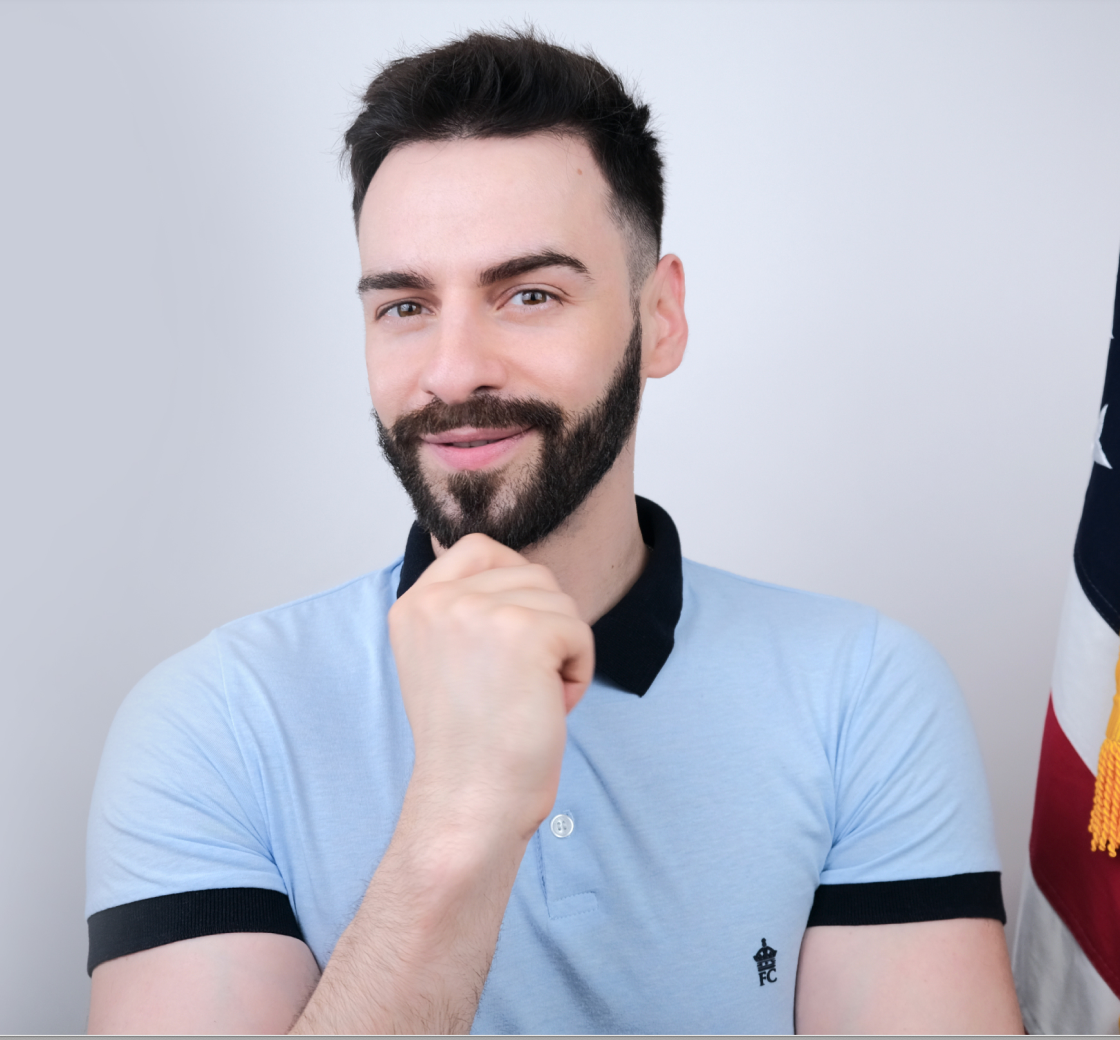
Prof. Alex
Ph.D. Linguist · Accent Coach
Professional linguist, Accent Coach, and creator of 2D Sound Motion Technology.
Want to know which vowel habits affect your American accent first?
Have you ever felt that English spelling is designed to confuse you? You see the words ‘live’ and ‘leave’ and wonder why one vowel is short and the other is long. This uncertainty can make you hesitate when you speak, worried that a small mistake might cause a big misunderstanding. If you’ve struggled to make your pronunciation clear and consistent, the problem often lies in the very heart of the language: its complex system of american vowel sounds.
As a Ph.D. Linguist, I created this ultimate guide to be your definitive roadmap to clarity and confidence. Forget guesswork. Here, you will find a complete breakdown of the 15 core vowels, with crystal-clear, step-by-step instructions on precise tongue placement and lip shaping for each one. We'll move from theory to practice with targeted exercises designed to build your automatic speech habits. Prepare to understand your vowel patterns more clearly, build stronger pronunciation control, and practice with a more accurate target.
MyAccentWay · 2D Sound Motion Technology
American English Pronunciation: Consonant and Vowel Sounds with 2D Sound Motion Technology
Learning American English pronunciation and the American accent is more effective when you train your speech organs, not only listen and repeat. 2D Sound Motion Technology and Interactive Visual 2D Sound Simulators, developed in 2020 by Prof. Alex, Ph.D. Accent Coach, Doctor of Education, and professional linguist, as part of his interactive teaching model based on his Ph.D. research in interactive teaching methods, train your tongue, lips, jaw, teeth, airflow, and voice step by step. They train each American sound and more than 30 sound combinations through Interactive 2D video simulation.
What 2D Sound Motion Technology is
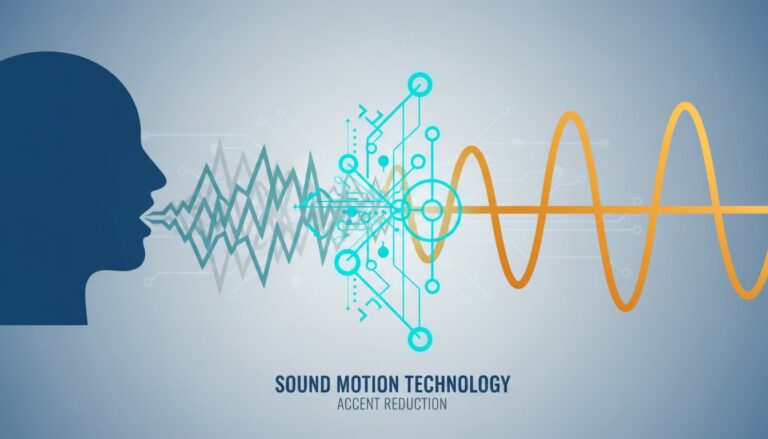
2D Sound Motion Technology is an advanced accent reduction and articulation training tool by Prof. Alex. It corrects, develops, and trains each American sound and more than 30 sound combinations through Interactive 2D video simulation.
What Interactive Visual 2D Sound Simulators do
Interactive Visual 2D Sound Simulators are part of 2D Sound Motion Technology, the articulation-training method Prof. Alex created by applying his Ph.D. research in interactive teaching to American pronunciation. Instead of listening and repeating, students actively train their speech organs. Each simulator uses Interactive 2D mouth movement to train the speech organs (tongue, lips, jaw, teeth, airflow, and voice) to produce each American sound correctly. Every consonant has its own simulator: explore American consonants trained with 2D Sound Motion Technology.
Sample training: the American t sound (aspirated [t])
Practice
Record yourself speaking these words:
Tab · Tacos · Time · Tub · Hotel · Motel · Sit · Pit · Net
Instructions
Play the Interactive Visual 2D Sound Simulator for the American t sound below several times and follow it step by step. Move your tongue, jaw, and airflow together with the simulator and train your articulation.
Interactive Visual 2D Sound Simulator: American unvoiced sound [t]
Practice
Record yourself again speaking these words, but this time focus on the movement of your tongue. Go slow, and you will hear the difference. You’ve got this!
Tab · Tacos · Time · Tub · Hotel · Motel · Sit · Pit · Net
How Interactive Visual 2D Sound Simulators solve pronunciation and speaking problems
- Wrong articulationMost pronunciation problems start with the tongue, lips, jaw, or teeth in the wrong position. Each Interactive Visual 2D Sound Simulator trains the correct articulation of one American sound, so the student corrects the cause of the problem, not only the result.
- Airflow and voicingMany accent problems come from wrong airflow or voicing: sounds that are too weak, too strong, or voiced when they should be unvoiced. The simulators train airflow and voice together with articulation, step by step, for each American sound and more than 30 sound combinations.
- Clear speech and confidenceWhen each sound is trained correctly, words connect into clear American English speech. Listeners can understand you more easily, and speaking at work, in meetings, and on calls becomes more confident.

If you start hearing the aspiration, the short airstream after [t], with one simulator, you can only imagine how successful you can be in 1-on-1 Interactive American Accent Training with Prof. Alex, Ph.D. Accent Coach, where your whole American sound system is trained sound by sound.
In MyAccentWay, the Interactive Visual 2D Sound Simulators are only available in 1-on-1 accent coaching sessions with Prof. Alex.
Section 01 · Why Vowels Are the Core of Your American Accent
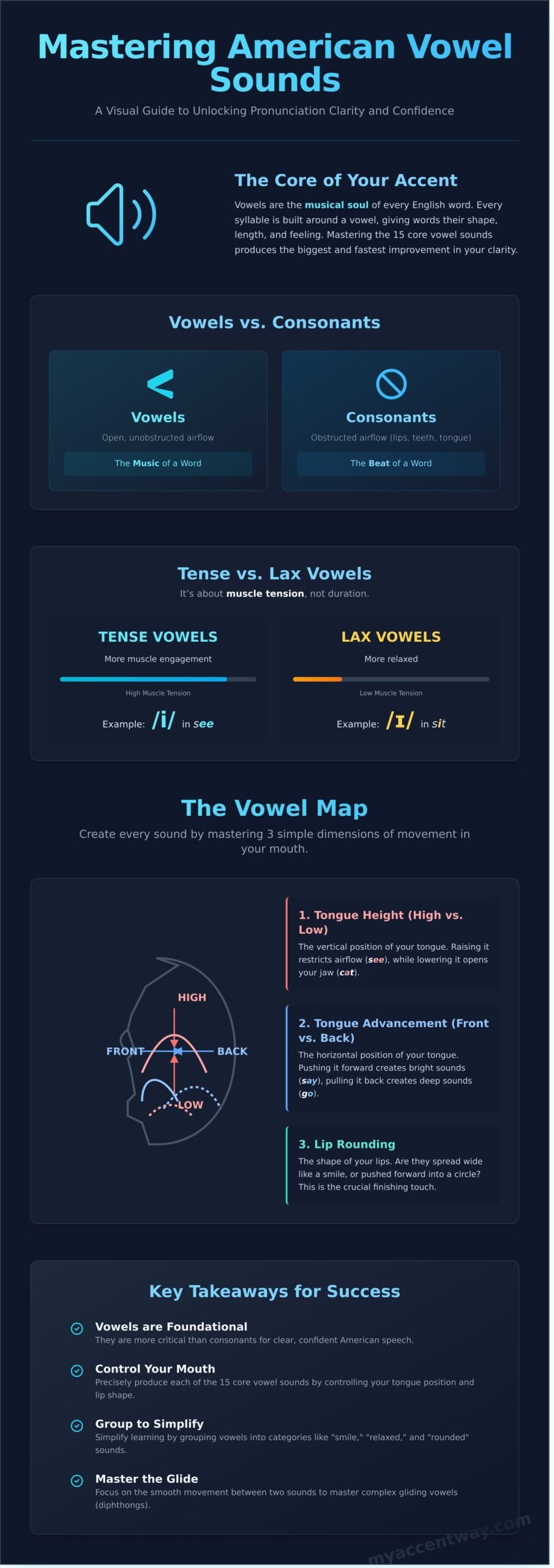
If you want to truly master the American accent, your journey begins with vowels. Why? Because in English, vowels are the musical soul of every word. Every single syllable is built around a vowel sound, making it the nucleus that gives a word its shape, length, and feeling. While many learners focus heavily on tricky consonants, they often overlook the single most important element for clear, confident speech: the american vowel sounds.
Unlike many other languages, English is incredibly vowel-rich. The standard accent, often referred to as General American English, contains around 20 distinct vowel phonemes. This complexity is compounded by one of English’s biggest challenges: spelling doesn't match sound. The letter 'o', for example, sounds completely different in go, do, love, and hot. This is why focusing on the sounds, not the letters, is the key to your success. Mastering these core sounds will produce the biggest and fastest improvement in your overall clarity and fluency.
The Difference Between Vowels and Consonants
The distinction is simple but profound. A vowel is a sound produced with an open, unobstructed flow of air from the lungs. A consonant, however, is created by obstructing that airflow somewhere in your vocal tract-with your lips, teeth, or tongue. Think of it this way: vowels are the music of a word, carrying the melody and emotion. Consonants are the beat, providing the rhythm and structure.
Short Vowels vs. Long Vowels: A Common Misconception
One of the most common points of confusion is the idea of "long" and "short" vowels. This isn't really about time or duration; it’s about muscle tension. Linguists call them Tense and Lax vowels. Tense vowels require more muscle engagement in your tongue and jaw, while lax vowels are more relaxed.
- Tense Vowels: Feel the tension in the sound /i/ in see or /u/ in blue.
- Lax Vowels: Notice the relaxed feeling of the sound /ɪ/ in sit or /ʊ/ in book.
Understanding this physical difference is fundamental to producing accurate american vowel sounds and achieving a natural, effortless accent.
Section 02 · The Vowel Map: How Your Mouth Creates Every Sound
Think of your mouth-your oral cavity-as a finely tuned musical instrument. Just as a guitarist changes a note by pressing a string to a fret, you create every distinct vowel sound by changing the shape of this space. This isn't magic; it's the science of phonetics, and understanding it is your first step toward mastering american vowel sounds. While we focus on a General American accent, it is fascinating to see how subtle shifts in these mouth positions create the rich tapestry of regional vowel differences across the United States. This scientific foundation is precisely what our proprietary 2D Sound Motion Technology uses to train your speech organs, helping you practice and perfect your sound.
By mastering three simple dimensions of movement, you can gain conscious control over every vowel you produce.
Dimension 1: Tongue Height (High vs. Low)
The first dimension of control is vertical: how high or low your tongue is inside your mouth. Lifting your tongue high restricts airflow to create one sound, while dropping your jaw and lowering your tongue opens it up for another. This simple movement from top to bottom is responsible for some of the most fundamental differences in pronunciation.
- High Vowels: Your tongue is raised close to the roof of your mouth. Ex: the /i/ sound in see.
- Low Vowels: Your tongue is low and your jaw is dropped. Ex: the /æ/ sound in cat.
Dimension 2: Tongue Advancement (Front vs. Back)
The second dimension is horizontal: how far forward or back your tongue is. Pushing the body of your tongue toward your front teeth creates bright, forward-focused sounds, while pulling it toward your throat produces deeper, more resonant tones. Mastering this front-to-back motion gives your speech incredible precision and clarity.
- Front Vowels: The main body of your tongue is pushed forward. Ex: the /eɪ/ sound in say.
- Back Vowels: The main body of your tongue is pulled back. Ex: the /oʊ/ sound in go.
Dimension 3: Lip Rounding
Finally, the shape of your lips acts as the finishing touch. This third dimension can completely change a vowel, even if your tongue position stays the same. Are your lips pushed forward into a circle, or are they spread wide like in a smile? This detail is a crucial component for creating authentic American vowels that sound natural and confident.
- Rounded Vowels: Your lips form a distinct circle. Ex: the /u/ sound in blue.
- Unrounded (or Spread) Vowels: Your lips are relaxed or pulled wide. Ex: the /i/ sound in see.
Want to know which American vowel sounds are affecting your clarity? Book Your 1 Hour Evaluation Session with Prof. Alex, Ph.D. Accent Coach, and get a personalized pronunciation plan.
The Front Vowels: Mastering the 'Smile' Sounds
Welcome to the first major group of american vowel sounds: the front vowels. These are often called 'smile' sounds because, for most of them, your lips will spread wide. To produce these phonemes correctly, the highest point of your tongue is positioned forward in your mouth, creating resonance in the front of your oral cavity. Mastering this group is a foundational step toward speaking with clarity and confidence. For a detailed, visual exploration of how the tongue and lips move, the interactive diagrams from the University of Iowa Phonetics project are an invaluable academic resource for any serious student.
The High Front Vowels: /i/ (see) and /ɪ/ (sit)
This pair is distinguished by muscular tension. Many learners struggle to hear the difference, but you can learn to feel it.
- /i/ as in see: This is a tense vowel. Your tongue is very high and far forward in your mouth. Spread your lips into a wide, firm smile. You should feel the muscles in your cheeks engage.
- /ɪ/ as in sit: This is a lax vowel. Your tongue is still high and front, but it's slightly lower and much more relaxed than for /i/. Your lips and cheeks should also feel relaxed and soft.
/i/ as in see
High, tense, front vowel. Smile slightly and keep the tongue high.
Male voice practice
/ɪ/ as in sit
High front vowel, but relaxed. Do not over-stretch the lips.
The Mid Front Vowels: /eɪ/ (say) and /ɛ/ (said)
Moving down slightly in the mouth, we find another crucial pair. One is a diphthong-a two-part sound-while the other is a pure, single vowel.
- /eɪ/ as in say: This is a diphthong that glides from a mid-front position toward the high-front /ɪ/ sound. Start with your jaw halfway open, then feel it rise as you finish the sound. Your tongue moves upward with your jaw.
- /ɛ/ as in said: This is a lax, single-position vowel. Your jaw is held steady in a mid-open position. Your tongue is relaxed and in the front-mid part of your mouth.
Practice this distinction with minimal pairs: late vs. let, pain vs. pen, gate vs. get.
Male voice practice/eɪ/ as in say
A smooth glide from mid-front toward high-front.
Male voice practice
/ɛ/ as in said
A steady relaxed front vowel with the jaw held open.
The Low Front Vowel: /æ/ (cat)
This is one of the most characteristic-and challenging-of all american vowel sounds for non-native speakers. It requires a very open mouth.
- /æ/ as in cat: This is a lax vowel. Your tongue is positioned very low and forward in your mouth. The key is to drop your jaw significantly. Don't be shy! Imagine a doctor telling you to "say ahh" and open your mouth wide. This sound should feel big and resonant.
/æ/ as in cat
Low front vowel. Drop the jaw and keep the tongue forward.
The Central & Back Vowels: Finding the 'Relaxed' and 'Rounded' Sounds
As we move from the front to the back of the mouth, the american vowel sounds take on a new character. Central vowels are produced with a neutral, relaxed tongue, while back vowels require you to pull your tongue back. A key feature you will master here is lip rounding, which is essential for creating authentic, deep back vowel sounds. Gaining control over this group, especially the ultra-common schwa, can help make your American accent sound more natural and connected in conversation.
The Central Vowels: /ə/ (sofa) and /ʌ/ (cup)
These two vowels are produced in the center of your mouth. The main difference is stress: one is the most relaxed sound in English, and the other is its stressed counterpart.
- /ə/ (schwa) as in sofa: This is the most common vowel in American English. To produce it, your mouth, lips, and tongue should be completely relaxed and neutral. It appears in almost any unstressed syllable, regardless of spelling (e.g., about, taken, pencil, gallop).
- /ʌ/ as in cup: Think of this as the stressed version of the schwa. Your tongue is still in a neutral, low-mid position, but your jaw drops slightly more. It’s a short, quick sound found in stressed syllables.
/ə/ as in sofa
Relaxed, neutral, unstressed central vowel.
Male voice practice
/ʌ/ as in cup
Stressed central vowel. Drop the jaw slightly and keep the tongue relaxed.
The High Back Vowels: /u/ (blue) and /ʊ/ (book)
For these sounds, your tongue pulls high and back. The key is the tension and rounding of your lips. This distinction is critical for clear communication.
- /u/ as in blue: This is a tense vowel. Your tongue is high and far back. Your lips must be very rounded and pushed forward, as if you are about to whistle.
- /ʊ/ as in book: This is the lax partner to /u/. Your tongue is slightly lower and not as far back. Your lips are still rounded, but they are relaxed and not pushed forward.
- Practice Pair: Notice the difference in lip tension when you say pool /u/ vs. pull /ʊ/.
/u/ as in blue
High tense back vowel. Round the lips and push them forward.
Male voice practice
/ʊ/ as in book
High relaxed back vowel. Keep the lips softly rounded.
The Mid & Low Back Vowels: /oʊ/ (go), /ɔ/ (law), /ɑ/ (hot)
This group involves more significant jaw movement. Mastering the difference between rounded and unrounded lips here is your final step to controlling the back vowels.
- /oʊ/ as in go: This is a diphthong, a two-part sound. It glides from a mid-back position towards /ʊ/. Your lips start slightly rounded and become more rounded and tense at the end.
- /ɔ/ as in law: Your tongue is in a mid-to-low back position. Your jaw is open, and your lips are rounded. Many speakers also use this sound for words like caught and thought.
- /ɑ/ as in hot: For this sound, your tongue is low and far back in your mouth. Your jaw must drop significantly, and your lips are neutral-not rounded at all.
/oʊ/ as in go
Back vowel glide. Let the lips become more rounded at the end.
Male voice practice
/ɔ/ as in law
Mid-low back vowel with open jaw and rounded lips.
Male voice practice
/ɑ/ as in hot
Low back vowel. Drop the jaw and keep the lips neutral.
Diphthongs: The Vowels That Glide
Now we move to one of the most dynamic aspects of the American accent: the diphthongs. A diphthong is not just one sound, but two distinct vowel sounds combined seamlessly within a single syllable. Think of it as a smooth glide from a starting vowel position to an ending one. The key to mastering these essential american vowel sounds is to focus on the movement itself.
While there are several diphthongs, you're already familiar with two of them from our sections on long vowels: the /eɪ/ sound in say and the /oʊ/ sound in go. Here, we'll master the remaining three that are fundamental to speaking clear, confident American English.
The 'I' Sound: /aɪ/ (my, buy)
This common sound begins low and open with /ɑ/ (like in hot) and glides upward to the high front vowel /ɪ/ (as in sit). To produce it correctly, start with your jaw open and feel it rise and close as you transition to the second sound. A frequent mistake is cutting the glide short, making time sound like tam. Lengthen the movement: t-aaaaa-ɪ-m.
- Examples: I, why, right, time, style
/aɪ/ as in my
Start low and open, then glide upward toward /ɪ/. Do not cut the movement short.
The 'Ow' Sound: /aʊ/ (now, house)
Similar to /aɪ/, this sound also begins with the low, open /ɑ/. From there, it glides upward to the high back vowel /ʊ/ (as in put). The most important physical cue for this sound is lip rounding. As you move from /ɑ/ to /ʊ/, feel your lips push forward into a small, rounded shape. This movement is what creates the authentic 'ow' sound.
- Practice Words: down, town, around, house, out
/aʊ/ as in now
Start low and open, then glide back and round the lips at the end.
The 'Oy' Sound: /ɔɪ/ (boy, toy)
This diphthong starts with the mid-back vowel /ɔ/ (as in law), which requires rounded lips. It then glides forward to the high front /ɪ/. As you make the sound, your lips should un-round and spread slightly. This combination of a back, rounded vowel moving to a front, unrounded one is what makes this sound so unique. Mastering diphthongs is a focus in our American Accent Program, where Prof. Alex guides you through subtle sound movement with detailed feedback.
- Examples: boy, toy, choice, noise, join
/ɔɪ/ as in boy
Start rounded in the back of the mouth, then glide forward toward /ɪ/.
Interactive Visual 2D Sound Simulators for Clearer American Vowel Training
In American accent training, students need more than “repeat after me.” They need to train the physical production of American sounds. Interactive Visual 2D Sound Simulators train tongue position, lip shape, jaw opening, airflow, and speech-organ movement so students can train American sounds with clearer direction. MyAccentWay uses Interactive Visual 2D Sound Simulators to train sound articulation, sound formation, and speech production more effectively during live 1-on-1 accent training sessions.
This method is used inside 1-on-1 Accent Coaching with Prof. Alex to help students understand the full American sound system, including vowels, consonants, rhythm, stress, intonation, and connected speech.
Want to know which American vowel sounds are affecting your clarity? Book Your 1 Hour Evaluation Session with Prof. Alex, Ph.D. Accent Coach, and get a personalized pronunciation plan.
Section 06 · How to Practice American Vowels for Real Improvement
Understanding the theory behind american vowel sounds is a fantastic first step, but knowledge alone won’t change how you speak. To achieve real, lasting improvement, you must move from passive learning to active, consistent practice. True mastery is built through deliberate training of your ear and mouth. These research-based techniques are your launchpad to speaking with clarity and confidence.
How to pronounce American vowels with clearer speech control
Use this section to practice American vowel sounds with visible practice words, male voice audio, and mouth-position cues. These drills are designed for learners who want American vowels for pronunciation, speech clarity, accent reduction, and more confident professional communication.
Use Minimal Pair Drills
Minimal pairs are two words that sound identical except for one single sound, like ‘ship’ and ‘sheep’. They are incredibly effective because they isolate the exact vowel you need to work on, training your ear to hear the subtle difference and your mouth to produce it accurately.
- The Short "i" /ɪ/ vs. Long "ee" /i/: ship / sheep
- The "eh" /ɛ/ vs. "ah" /æ/: bet / bat
- The Short "oo" /ʊ/ vs. Long "oo" /u/: pull / pool
- The "ah" /ɑ/ vs. "aw" /ɔ/: cot / caught
Practice by listening to a native speaker say each pair, then repeat them, focusing on the change in your tongue and jaw position.
Record Yourself and Listen Back
You can’t fix an error you don’t know you’re making. Recording your voice is a powerful tool for self-analysis because it creates an objective feedback loop. Read a list of minimal pairs or a short paragraph, then play it back. Compare your pronunciation directly with a recording from a native speaker. This simple act will immediately highlight the gaps between your current speech and your target accent, showing you exactly where to focus your efforts.
Get Expert Feedback and Guided Correction
Self-correction is essential, but it has its limits. An untrained ear can easily miss subtle yet critical mistakes in pronunciation. Without expert guidance, you risk practicing those same mistakes and reinforcing bad habits.
A trained linguist can hear what you cannot, providing personalized drills and targeted guidance to correct the root cause of a mispronunciation. This is an effective way to accelerate your progress and master challenging american vowel sounds. For those who are serious about achieving a clear and confident American accent, our specialized American accent training, designed by a Ph.D. Linguist, provides the expert analysis and personalized roadmap you need to succeed.
Want to know which American vowel sounds are affecting your clarity? Book Your 1 Hour Evaluation Session with Prof. Alex, Ph.D. Accent Coach, and get a personalized pronunciation plan.
What Interactive 1-on-1 Accent Training Can Help Students Achieve
These student examples show how focused correction, sound-by-sound training, rhythm work, and consistent coaching can help non-native speakers develop clearer and more confident American English pronunciation.
Thiago
Focused pronunciation correction can help students improve sound accuracy, clarity, and confidence through structured American accent training.
Tian
Tian’s result shows how a Mandarin-speaking student can build clearer pronunciation through consistent coaching and sound-system training.
Andrew
Andrew’s progress shows how professional feedback can improve vowel accuracy, rhythm, and natural communication confidence.
Traditional Accent Training vs. Interactive 1-on-1 Accent Training with Prof. Alex
Traditional accent training often explains vowel sounds and asks students to repeat after the coach. That can help students understand what the sound should be, but knowledge alone does not always transform speech. Many learners know the vowel rule, yet their old pronunciation pattern returns when they speak quickly, feel pressure, or enter a real meeting.
MyAccentWay uses Interactive 1-on-1 Accent Training with Prof. Alex, Ph.D. Accent Coach, to move students from awareness into real speech retraining. Students do not only hear a vowel explanation. They identify the speech habit, understand the mouth movement, practice the American vowel with guided correction, and apply it in words, sentences, and natural communication.
This approach helps students build clearer, steadier, and more native-like American vowel quality because the training targets the sound system, not only the idea of the sound. When students combine interactive coaching, cognitive accent training, and 2D Sound Motion Technology where articulation needs visual support, they can move closer to natural American pronunciation with more confidence.
- Traditional method: explains the sound and asks the student to repeat.
- MyAccentWay method: helps the student understand, simulate, retrain, and apply the vowel in real speech.
- Traditional method: often creates awareness.
- MyAccentWay method: builds stronger American speech habits through active 1-on-1 correction.
Your Journey to Clearer, More Native-Like American Pronunciation Starts Now
You've now explored the intricate world of american vowel sounds, from understanding their foundational role in your accent to mapping how each sound is formed in your mouth. This knowledge is your first major step. Remember, mastering front, central, and back vowels isn't just theory-it's about building the automatic speech habits required for clear, natural speech through dedicated practice.
But practice without precision can lead to frustration. To truly transform your pronunciation, you need expert guidance. At MyAccentWay, we combine instruction from a Ph.D. Linguist with our proprietary 2D Sound Motion Technology to provide the personalized feedback you need to succeed. Our method is designed to give students structured feedback, clear direction, and a more precise way to practice.
Stop guessing and start mastering. Ready to speak with confidence? See how our expert-led training can transform your accent. Your path to fluency and clarity begins here.
More than articulation: Prof. Alex doesn’t teach only the articulation of sounds. Interactive 1-on-1 training with 2D Sound Motion Technology helps students become confident, fluent English speakers through a step-by-step system. Training may begin with how each American sound is made. Then it moves into sound combinations, sound contractions, phonetic exercises, practice sentences, and paragraphs in real rapid speech, so students start speaking English fluently and comfortably.
American Vowel Training for Foreign-Born Professionals in the United States
Foreign-born professionals in the United States often know their field and speak advanced English. Yet American listeners may still struggle with their vowel sounds. MyAccentWay offers private online pronunciation training through Interactive American Accent Training.
Interactive American Accent Training is led by Prof. Alex, Ph.D. Accent Coach, Doctor of Education, and professional linguist. He first diagnoses each speaker’s native-language patterns. Then he trains American vowel length, tongue position, and word stress for real meetings and presentations.
Who this training is for
- Engineers, IT specialists, and data professionals presenting to U.S. teams and clients
- Doctors, nurses, and healthcare professionals explaining care to American patients
- Managers, executives, and founders leading meetings, pitches, and briefings
- Consultants, researchers, and academics speaking at conferences and webinars
- Professionals preparing for interviews, promotions, or client-facing roles
Online training across the U.S.
MyAccentWay is based in Austin, Texas, and all training is online. The program is especially relevant for professionals in Austin, Dallas, Houston, New York City, the San Francisco Bay Area, Los Angeles, Seattle, Boston, Chicago, Miami, Washington DC, Atlanta, and Raleigh.
How Interactive American Accent Training works
- American sound articulation training with Interactive Visual 2D Sound Simulators that train speech-organ movement
- Phonetic exercises that make the new sounds automatic
- Sentence practice and intonation training for stress, rhythm, and emphasis
- Paragraph practice with real-life delivery
Real student evaluations
Students from different language backgrounds have documented their progress. Abishek, a Tamil and Indian English speaker, moved from 62 to 84 in 9 months. Tian, a Mandarin speaker, moved from 58 to 85 in 8 months. Vlad, a Russian speaker, moved from 60 to 83 in 5 months.
The first step is a 1 Hour Evaluation Session with Prof. Alex.
Turn vowel knowledge into clearer pronunciation
If words like live/leave, ship/sheep, full/fool, work/walk, or cup/cop create confusion, your next step should be structured vowel training, not more random practice.
Turn vowel knowledge into clearer pronunciation
If words like live/leave, ship/sheep, full/fool, work/walk, or cup/cop create confusion, your next step should be structured vowel training, not more random practice.
American vowels need speech-organ control, not guessing. The 1-on-1 Accent Reduction Training helps students train vowel clarity through listening awareness, guided correction, and visual articulation support. When relevant, 2D Sound Motion Technology and Interactive Visual 2D Sound Simulators make hidden tongue, lip, and jaw movement easier to understand.
When articulation is involved, 2D Sound Motion Technology and Interactive Visual 2D Sound Simulators help make speech-organ movement easier to understand.
Knowledge is helpful. Feedback changes the practice.
This article gets strong impressions because vowel problems are common. But reading about vowels is only the first step. A coach can identify which vowel contrasts affect your clarity most and build a practice path around your speech pattern.
Before booking, you can review real student experiences on the Student Reviews & Results page.
Frequently Asked Questions About American Vowel Sounds
How do I pronounce American vowels clearly?
To pronounce American vowels clearly, train the exact tongue height, tongue advancement, jaw opening, lip shape, and vowel length for each sound. Start with high-frequency contrasts such as ship/sheep, pen/pan, pull/pool, and cot/caught, then move the sounds into phrases and real speech.
How should I practice American vowel sounds?
The best way to practice American vowel sounds is to combine listening, mouth-position awareness, minimal pairs, recorded self-checking, and professional feedback. The audio players in this guide help you hear each vowel sound, while 1-on-1 coaching helps identify which vowel patterns are affecting your speech clarity.
Why are American vowels important for pronunciation?
American vowels are important for pronunciation because every syllable is built around a vowel sound. When a vowel is too tense, too relaxed, too front, too back, too rounded, or too flat, the whole word can sound unclear even when the consonants are correct.
How many vowel sounds are there in American English?
While English has only five vowel letters (A, E, I, O, U), they produce many more sounds. General American English has between 14 and 20 distinct vowel sounds, or phonemes, depending on the specific dialect and linguistic analysis. At MyAccentWay, our scientifically-designed curriculum focuses on the 20 core American vowels, including monophthongs and diphthongs, to ensure you achieve comprehensive and accurate pronunciation for confident, clear speech.
What is the most common vowel sound in American English?
The most common vowel sound is by far the schwa, represented by the IPA symbol /ə/. It is a relaxed, neutral sound found in the unstressed syllables of words, such as the 'a' in 'about' or the 'o' in 'lemon'. Mastering the schwa is a critical step toward fluency because it appears so frequently in connected speech. Recognizing and producing it correctly is an effective way to sound more natural.
Why is the schwa /ə/ sound so important for a natural accent?
The schwa /ə/ is the key to unlocking the natural rhythm and music of American English. Because it only appears in unstressed syllables, using it correctly helps you place stress on the right parts of words, which is fundamental to intelligibility. When non-native speakers over-pronounce unstressed vowels, their speech can sound robotic. Mastering the schwa will instantly make your accent sound smoother, more connected, and authentically American, boosting your speaking confidence.
What is the difference between the vowels in 'cat', 'cut', and 'cot'?
These three core vowels are distinguished by tongue position and jaw opening. For 'cat' /æ/, the jaw is wide open and the tongue is low and forward. For 'cut' /ʌ/, the jaw is more relaxed and the tongue rests in a neutral, central position-it’s a close cousin to the schwa. For 'cot' /ɑ/, the jaw is also open, but the tongue is pulled low and back in the mouth. Distinguishing these phonemes is crucial for clarity.
Can I learn American vowels without understanding the IPA?
While it is possible to improve through imitation, understanding the International Phonetic Alphabet (IPA) provides a powerful, scientific advantage. The IPA is like a precise map for your mouth, showing you exactly where to place your tongue and how to shape your lips. It removes the guesswork caused by inconsistent English spelling. Our research-based method uses the IPA as a foundational tool to help you practice American vowel sounds with more accuracy, structure, and awareness.
How long does it take to master American vowel sounds?
The timeline to master American vowel sounds is unique to each individual, depending on your native language, practice consistency, and analytical skills. With dedicated coaching from a linguist and structured practice, students can often build stronger awareness, clarity, and confidence over time. The key is not just repetition, but a deep cognitive understanding of how each sound is formed. Your journey is personal, and the goal is to give you a clear, professional training path.
Related MyAccentWay Resources
What Is the General American Accent? A Clear Guide
Learn the General American accent with MyAccentWay. American accent training, accent reduction, pronunciation coaching, and speech clarity for US professionals.


Accurate English vs MyAccentWay: Which American Accent Training Fits You?
Compare Accurate English and MyAccentWay: who teaches, training methods, formats, and first steps, so you can choose the right American accent training.
For Professionals: 5 American vs British Pronunciation Shifts to Fix
Fix five pronunciation differences that affect American and British intelligibility. Practical steps and a four week plan for professionals to improve...
Related American pronunciation guides
What Is the General American Accent? A Clear Guide
Learn the General American accent with MyAccentWay. American accent training, accent reduction, pronunciation coaching, and speech clarity for US professionals.
10 Common Pronunciation Mistakes & How to Fix Them for a Clear American Accent
Have you ever felt the frustration of being asked to repeat yourself, even when you know your vocabulary and grammar are perfect? Do you worry that...
Accurate English vs MyAccentWay: Which American Accent Training Fits You?
Compare Accurate English and MyAccentWay: who teaches, training methods, formats, and first steps, so you can choose the right American accent training.
Use these guides to connect American vowel sounds with General American speech patterns, common pronunciation mistakes, and structured accent reduction training.
Stop guessing what is affecting your American pronunciation.
In a 1 Hour Evaluation Session, Prof. Alex can listen to your speech, identify the patterns that affect clarity, and explain how 1-on-1 American accent training can help you practice with a clear plan.
The problem is not always grammar or vocabulary.
If people understand your words but still miss your message, the deeper issue may be speech clarity, rhythm, intonation, and American pronunciation habits. MyAccentWay helps students retrain the sound system with professional 1-on-1 guidance, so English can feel clearer, freer, and more natural in real communication.
Two training methods that make speech change active.
MyAccentWay is not passive listen-and-repeat coaching. Prof. Alex, Ph.D. Accent Coach, Doctor of Education, and professional linguist, creates a learning situation where students become active learners and active participants in changing their own speech patterns.
Interactive training
Students do not just receive pronunciation instructions passively. They listen, think, compare, adjust, and understand their own speech patterns while Prof. Alex guides the correction process.
Cognitive accent training
Students learn to notice and correct the speech patterns that affect American pronunciation, then implement new American speech patterns into their code-switching process for more natural, long-lasting change.
Build speech habits people can hear in real conversations.
A stronger American accent is not built by memorizing topics or chasing quick pronunciation tips. It comes from structured training, professional feedback, active correction, and repeated application until clearer speech becomes easier to keep.
Continue learning how MyAccentWay connects American sound articulation, Interactive Visual 2D Sound Simulators, accent reduction, student proof, and 1-on-1 training.
- Prof. Alex and the MyAccentWay MethodLearn how Prof. Alex created and leads the structured MyAccentWay American accent training system.
- Accent Reduction Curriculum and English Articulation TrainingSee accent reduction, accent modification, American pronunciation, English articulation, rhythm, and professional speech clarity.
- 2D Sound Motion Technology for American Accent TrainingUnderstand Interactive Visual 2D Sound Simulators for American sound articulation.
- Before-and-After American Accent Training ResultsListen to real before-and-after student proof and outcomes.
- Student Reviews and Accent Training ResultsRead student reviews and trust signals.
- Book a 1-on-1 American 1 Hour Evaluation SessionStart with a 1-hour interactive session with Prof. Alex.
Disclaimer – American Accent Program
The American Accent Program available through Visit Program Website
is an educational and coaching service designed to support pronunciation, accent reduction, and spoken English fluency. All training materials, including lessons, exercises, audio content, visual simulations, coaching methods, and digital resources, are the intellectual property of American Accent Program, LLC and are protected by applicable copyright and intellectual property laws.
By using this website and participating in the program, you acknowledge that all content is provided for personal, non-commercial, educational use only. Users are granted a limited, non-transferable license to access the materials strictly for individual learning purposes. Redistribution, reproduction, recording, modification, sharing, or commercial use of any program content without prior written consent is strictly prohibited.
The program may include live coaching sessions, digital tools, and instructional materials intended to improve pronunciation and communication skills. However, individual results may vary, and no specific level of fluency, accent reduction, or communication outcome is guaranteed.
The American Accent Program and its instructors do not provide medical, therapeutic, or clinical speech-language pathology services. All training is intended for educational purposes only.
By accessing or using the program, you agree to comply with all applicable terms, including the platform’s Terms of Use and Course Policies, and acknowledge that misuse of materials may result in termination of access without refund.