Cognitive Accent Training
(512) 265-9515
Updated October 5, 2026 ◆ 5 min read
Cognitive Accent Training is a central training strategy developed by Prof. Alex and applied throughout his structured Interactive American Accent Training program to strengthen pronunciation awareness, guided reflection, personalized correction, and independent American English speaking. It helps non-native English-speaking professionals understand how their speech system works and how their native-language speech habits influence American English pronunciation, rhythm, stress, intonation, connected speech, fluency, and communication confidence.
This method is led by Prof. Alex as part of the structured MyAccentWay American Accent Training system. The goal is not only to correct individual sounds, but to help students understand, organize, choose, and control clearer American English speech patterns in real communication. The MyAccentWay Student Portal supports this instructor-led work with assigned practice and the My Coach vs My Pronunci recording comparison.
What cognitive accent training means
Cognitive Accent Training helps students understand what they are changing, why they are changing it, and how to keep the new American English speech patterns stable. This gives students more control over pronunciation and helps reduce the habit of returning automatically to old accent patterns.
In Cognitive Accent Training, the student becomes aware of the mental and speech-pattern process behind pronunciation. This includes how the speaker listens, processes sound differences, forms speech movements, chooses words, controls rhythm, organizes stress, manages intonation, and communicates clearly with confidence.
Through Cognitive Accent Training, students learn to understand, organize, choose, and produce clearer American English speech in real communication. It is not only about pronunciation. It includes how a speaker thinks, listens, processes meaning, selects words, controls speech patterns, manages rhythm and intonation, responds to another person, and communicates clearly with confidence.
Cognitive Accent Training is part of Prof. Alex’s Interactive American Accent Training, which applies principles from his doctoral research in interactive teaching. Students’ before-and-after recordings document individual progress: Abishek improved from 62/100 to 84/100 (independent phonetic evaluation by Jane Timokhin, Ph.D. in Applied Linguistics), and Tian from 60/100 to 89/100 (evaluated by Prof. Alex, independently reviewed by Jane Timokhin, Ph.D. in Applied Linguistics). In independent Google and Thumbtack reviews, students describe clearer pronunciation and more confidence speaking English at work. See the before-and-after results.
The research behind Cognitive Accent Training
Cognitive Accent Training is informed by Prof. Alex’s doctoral research on interactive foreign-language instruction, including active learner participation, the instructor’s role as an organizer, guided reflection, and increasing learner independence. It also draws on concepts from second-language noticing and deliberate awareness of existing speech habits. These research foundations inform the strategy; they do not mean that the five-stage Cognitive Accent Training process was independently tested in the dissertation.
Noticing: students change what they consciously notice
In 1990, applied linguist Richard Schmidt proposed the Noticing Hypothesis, emphasizing the role of conscious awareness in second-language learning. In accent training, guided attention to relevant sound and speech-pattern differences can help students understand what they are working to change. Some students benefit from guided comparison of their existing speech patterns with a chosen American English pronunciation target, especially when repetition alone has not helped them notice a particular difference.
Negative practice: conscious control of the old habit
In speech therapy, negative practice was introduced by psychologist Knight Dunlap in 1932. The person produces the problem speech pattern on purpose, so the habit becomes conscious and controllable instead of automatic. Voice therapy approaches such as Conversation Training Therapy still use negative practice to build awareness of speech production.
How Prof. Alex developed these ideas into Cognitive Accent Training
In Cognitive Accent Training, Prof. Alex provides an accurate auditory representation of specific pronunciation features and guides students in comparing these with their target American English pronunciation. The student hears both forms side by side, notices the exact difference, and analyzes what changes in articulation, rhythm, stress, or intonation. Then the student produces the American pattern and learns to switch between the two patterns consciously.
This approach emphasizes conscious reflection on existing speech habits and the gradual development of independent control over target American English pronunciation. This is how Cognitive Accent Training helps students develop a strong ability to articulate American sounds, change their speech, and keep the new patterns stable in real communication.
Research sources: Noticing Hypothesis (Schmidt, 1990) · Negative practice in speech therapy (Dunlap, 1932), ERIC report
How Cognitive Accent Training Extends Pronunciation Practice
| Regular accent training | Cognitive Accent Training with Prof. Alex | |
|---|---|---|
| Student role | Listens to a model and repeats it | Notices, analyzes, compares, and controls their own speech pattern |
| Pronunciation mistakes | The teacher says the correct form | Prof. Alex guides a respectful comparison of specific pronunciation features with the student’s target American English pattern |
| Understanding | Rules are explained and memorized | The student understands what changes, why it changes, and how to keep it stable |
| Old accent habits | May require additional self-monitoring and practice in spontaneous speech | Guided reflection helps students notice and adjust established speech habits |
| Training scope | Mainly individual sounds | Sounds, rhythm, stress, intonation, connected speech, word choice, and how the speaker responds |
| Result | Developing pronunciation accuracy through guided practice | Goal: increasingly independent American English speaking in real communication |
Traditional pronunciation training may focus mainly on hearing a model and repeating it. The teacher produces a sound or phrase, and the student imitates. This can be helpful, but it may not give the student enough understanding of the internal process behind the sound.
When students practice without understanding their own speech system, they may improve temporarily but still lose control in fast speech, meetings, interviews, presentations, or stressful professional situations. They may also return to old pronunciation habits because they do not know how to monitor and adjust their speech independently.
Students may need sustained guided practice and self-monitoring to retain pronunciation adjustments across different speaking situations. Cognitive Accent Training addresses these needs through reflection and individualized self-correction.
The Five Stages of Cognitive Accent Training
The five stages below explain how Cognitive Accent Training functions as a central training strategy within Prof. Alex’s structured Interactive American Accent Training program. They guide students from identifying existing speech patterns toward increasingly independent pronunciation control.
- Stage 1 — Produce: Students produce a target American sound, word, sentence, or speech pattern. Prof. Alex identifies relevant pronunciation differences and considers each student’s native language, existing speech patterns, and communication goals. This establishes the starting point for individualized training.
- Stage 2 — Reflect: Prof. Alex provides an accurate auditory representation of specific pronunciation features. Through supportive, nonjudgmental comparison with their target American English pronunciation, students reflect on their own speech and begin identifying differences independently.
- Stage 3 — Recognize: Students identify what needs to change, why it matters for their communication goals, and how to adjust pronunciation, articulation, word stress, rhythm, intonation, or connected speech. The emphasis is conscious understanding, not memorization alone.
- Stage 4 — Correct: Students actively adjust speech through guided practice, personalized feedback, and, where appropriate, 2D Sound Motion Technology for interactive articulatory simulation. Activities may include phonetic exercises, sentence practice, and connected speech, selected for the student’s individual needs.
- Stage 5 — Internalize: Through Interactive American Accent Training and Cognitive Accent Training, guided reflection, and self-correction, students gradually learn to recognize and adjust pronunciation patterns without constant instructor intervention. Prof. Alex combines methods tailored to each student’s language background, cultural communication patterns, speech habits, and native-language influence. Students progressively apply their target American English speech patterns in natural communication.
The goal of these five stages is to develop pronunciation awareness, guided self-correction, and progressively independent American English speaking. Progress depends on individual needs, regular practice, and personalized instruction.
Cognitive Accent Training Before and After:
Real Results from Real Students
Listen to the BEFORE & AFTER of students’ pronunciation.
These are real students from 1-on-1 MyAccentWay training with Prof. Alex. Press play to hear their progress, then open the full evaluation report for every result.








MyAccentWay · 2D Sound Motion Technology
American English Pronunciation: Consonant and Vowel Sounds with 2D Sound Motion Technology
Learning American English pronunciation involves more than listening and repeating. Active articulatory training helps students practice the coordinated movements of the tongue, lips, jaw, airflow, and voicing needed to produce American English sounds. 2D Sound Motion Technology and Interactive Visual 2D Sound Simulators, developed in 2020 by Prof. Alex, Ph.D. Accent Coach, Doctor of Education, and professional linguist, as part of his interactive teaching model that applies principles from his doctoral research in interactive teaching methods, train your tongue, lips, jaw, teeth, airflow, and voice step by step. They train each American sound.
What 2D Sound Motion Technology is
2D Sound Motion Technology is an advanced accent reduction and articulation training tool by Prof. Alex. It trains each American sound through Interactive Visual 2D Sound Simulators.
What Interactive Visual 2D Sound Simulators do
Interactive Visual 2D Sound Simulators are part of 2D Sound Motion Technology, the articulation-training method Prof. Alex created in 2020. It applies one of the four conditions of interactive teaching identified in his doctoral research: placing students in an active position in the learning process. Instead of listening and repeating, students actively train their speech organs. With each simulator, students control articulation movement sequences and physically train the speech organs (tongue, lips, jaw, airflow, and voicing) with synchronized voice-over instructions to produce each American sound correctly. Every consonant has its own simulator: explore American consonants trained with 2D Sound Motion Technology.
Sample training: the American t sound (aspirated [t])
Practice
Record yourself speaking these words:
Tab · Tacos · Time · Tub · Hotel · Motel · Sit · Pit · Net
Instructions
Play the Interactive Visual 2D Sound Simulator for the American t sound below several times and follow it step by step. Control the simulator’s articulation movement sequence and practice the corresponding tongue and jaw movements, coordinating airflow and voicing as you pronounce [t].
Interactive Visual 2D Sound Simulator: American unvoiced sound [t]
Practice
Record yourself again speaking these words, but this time focus on the movement of your tongue. Go slow, and you will hear the difference. You’ve got this!
Tab · Tacos · Time · Tub · Hotel · Motel · Sit · Pit · Net
How Interactive Visual 2D Sound Simulators solve pronunciation and speaking problems
- Wrong articulationMost pronunciation problems start with the tongue, lips, jaw, or teeth in the wrong position. Each Interactive Visual 2D Sound Simulator trains the correct articulation of one American sound, so the student corrects the cause of the problem, not only the result.
- Airflow and voicingMany accent problems come from wrong airflow or voicing: sounds that are too weak, too strong, or voiced when they should be unvoiced. The simulators train airflow and voice together with articulation, step by step, for each American sound.
- Clear speech and confidenceWhen each sound is trained correctly, words connect into clear American English speech. Listeners can understand you more easily, and speaking at work, in meetings, and on calls becomes more confident.
If you start hearing the aspiration, the short airstream after [t], with one simulator, you can only imagine how successful you can be in 1-on-1 Interactive American Accent Training with Prof. Alex, Ph.D. Accent Coach, where your whole American sound system is trained sound by sound.
The simulators are integrated into Prof. Alex’s 1-on-1 Interactive American Accent Training and are also available through the InPronunci learning platform.
Why cognitive training matters for professionals
Professionals often need clear English under pressure. They may speak in meetings, interviews, presentations, medical conversations, technical discussions, leadership calls, or client-facing situations. In these moments, pronunciation is not only about individual sounds. It is also about control, clarity, fluency, timing, confidence, and the ability to adjust speech while communicating.
Cognitive Accent Training helps executives, doctors, engineers, founders, consultants, managers, healthcare professionals, public speakers, actors, and advanced English speakers develop clearer American English speech with more awareness and control.
Connection to MyAccentWay methodology
Cognitive Accent Training operates as a central strategy within Interactive American Accent Training and 2D Sound Motion Technology. Interactive American Accent Training is the complete structured 1-on-1 program. Cognitive Accent Training is a central strategy applied throughout it to strengthen pronunciation awareness, guided reflection, personalized correction, and independent American English speaking. 2D Sound Motion Technology trains American sound articulation through Interactive Visual 2D Sound Simulators, a part of Interactive American Accent Training.
Learn how these methods work together in Prof. Alex’s Interactive Accent Training Approach.
Learn more about Prof. Alex and the full MyAccentWay methodology on the MyAccentWay American Accent Training authority page and the Accent Reduction Training page.
Cognitive Accent Training questions
Why do advanced English speakers still struggle with pronunciation?
Grammar and vocabulary can be advanced while old speech habits stay automatic. Cognitive Accent Training, developed by Prof. Alex at MyAccentWay, makes those habits conscious so students can notice them and replace them with American patterns.
What is Cognitive Accent Training?
Cognitive Accent Training is a central training strategy developed by Prof. Alex and applied throughout his structured Interactive American Accent Training program to strengthen pronunciation awareness, guided reflection, personalized correction, and independent American English speaking. Students learn how their speech system works and how their native-language habits influence American English pronunciation, rhythm, stress, intonation, and connected speech.
What is the difference between regular accent training and Cognitive Accent Training with Prof. Alex?
In regular accent training, the student mainly listens to a model and repeats it. In Cognitive Accent Training with Prof. Alex, the student becomes aware of their own speech pattern. Prof. Alex guides an accurate, respectful auditory comparison of specific speech features with the student’s target American English pronunciation, helping the student recognize differences, reflect on needed adjustments, and develop independent control.
Who created Cognitive Accent Training?
Cognitive Accent Training was developed by Prof. Alex, Ph.D. Accent Coach, Doctor of Education, and professional linguist, the creator of MyAccentWay. He also created Interactive American Accent Training and 2D Sound Motion Technology with Interactive Visual 2D Sound Simulators.
What research is Cognitive Accent Training based on?
Cognitive Accent Training is rooted in the Noticing Hypothesis in second-language acquisition (Richard Schmidt, 1990), which states that learners cannot advance on a language feature until they consciously notice it, and in the negative practice technique in speech therapy (Knight Dunlap, 1932), where the problem speech pattern is produced on purpose so the habit becomes conscious and controllable.
Why do students go back to their old accent after regular accent training?
Students may go back to their old accent habits or give up on accent training because they may not understand the progress they are making or may not know how to control their new speech patterns independently. Cognitive Accent Training helps students understand what they are changing, why they are changing it, and how to keep the new American speech patterns stable.
Can I take Cognitive Accent Training online with Prof. Alex?
Yes. Cognitive Accent Training is part of online 1-on-1 American accent training with Prof. Alex. The first step is a 1 Hour Evaluation Session.
Start cognitive American accent training
If you want to understand and control your American English pronunciation more independently, you can work 1-on-1 with Prof. Alex. The first step is a 1 Hour Evaluation Session.
Related MyAccentWay resources

Prof. Alex and the MyAccentWay Method
How Prof. Alex, Ph.D. Accent Coach, created and leads the structured MyAccentWay American accent training system.

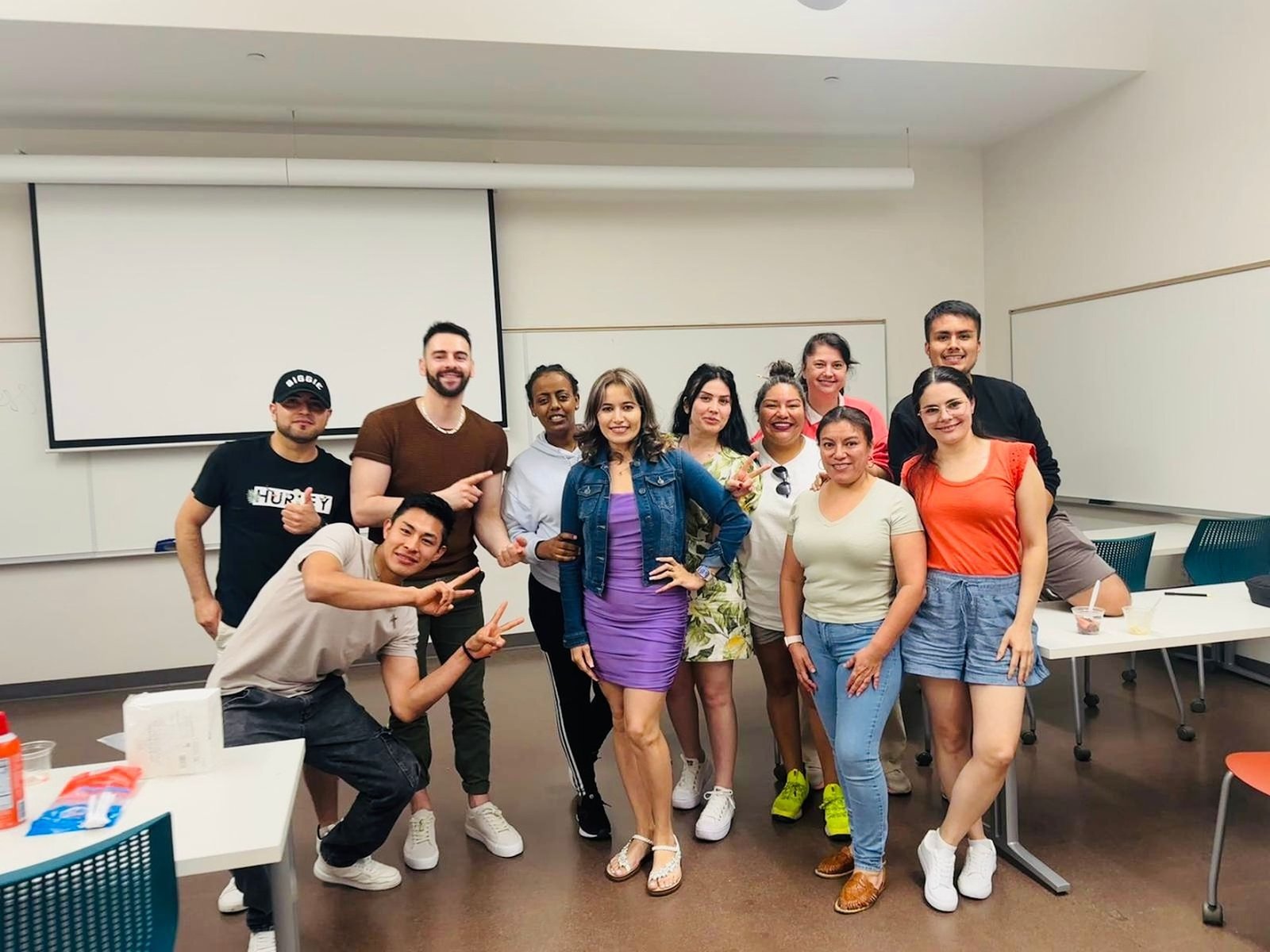
Interactive American Accent Training
Prof. Alex’s student-centered method, developed from his doctoral research in interactive foreign-language education.
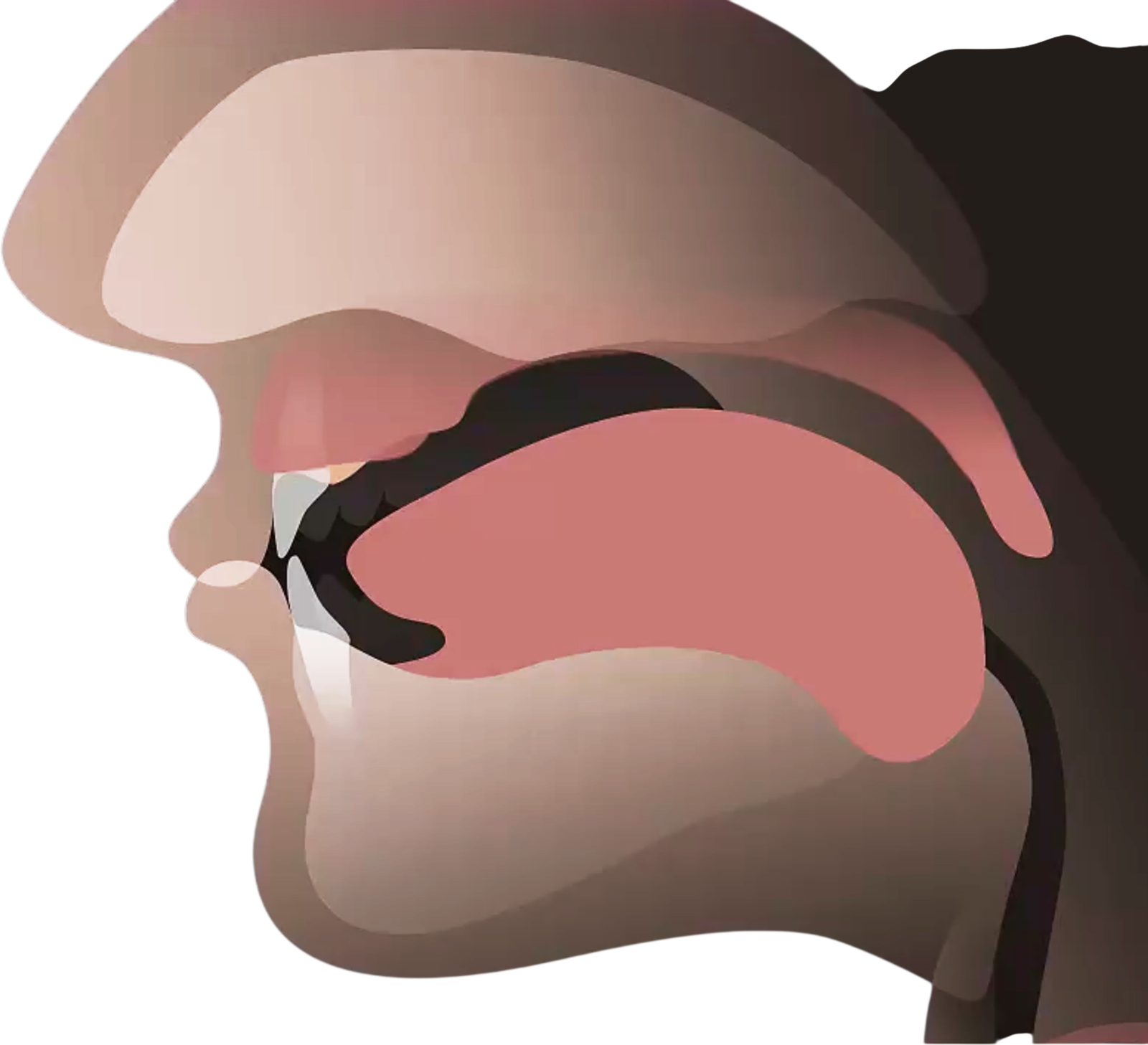
2D Sound Motion Technology and Interactive Visual 2D Sound Simulators
Train each American sound through Interactive Visual 2D Sound Simulators.

Accent Reduction Curriculum and English Articulation Training
How MyAccentWay trains American pronunciation, articulation, rhythm, intonation, and professional speech clarity.
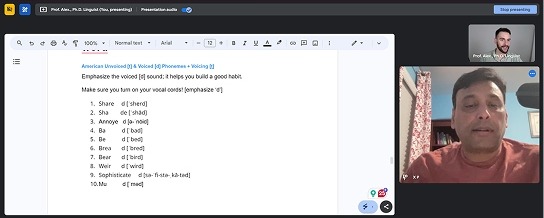
Before-and-After American Accent Training Results
Listen to real before-and-after recordings from students who trained with Prof. Alex.
Student Reviews and Accent Training Results
Reviews that real students submitted themselves on Google and Thumbtack, plus student videos.



