Practice American Sound [t] with Interactive Visual 2D Sound Simulator: A Professional Guide
(512) 265-9515Updated October 16, 2026 ◆ 18 min read
2D Sound Motion Technology is the articulation-training method created and developed by Prof. Alex, Ph.D. Accent Coach, Doctor of Education, and professional linguist, for MyAccentWay’s interactive 1-on-1 American accent training and Accent Reduction Curriculum. It uses Interactive Visual 2D Sound Simulators to help students follow, simulate, and retrain American sound articulation so clearer vowels, consonants, sound combinations, rhythm, and connected speech can transfer into real communication. For the focused explanation, read How 2D Sound Motion Technology helps American pronunciation.
Real student result

“I feel confident enough to speak American English!”
Interactive American Accent Training9monthsof hard work and dedication
Listen to the starting point0:00
Listen to the result0:00
“Many of my students once believed they could never sound like this. School taught them grammar and vocabulary, but not how to train their English speech. That is what we do together, step by step, until you speak English independently and with confidence.”
Abishek’s result was achieved through Prof. Alex’s research-based Interactive 1-on-1 American Accent Training. His doctoral research found this interactive method more effective than traditional, teacher-centered methods. See the research basis →
What if the secret to losing that “robotic” quality in your professional speech isn’t practicing more, but understanding how the sound is made instead? To Practice American Sound [t] with Interactive 2D Sound Simulator is to move beyond the frustration of guessing where your tongue should land. Many advanced English learners feel trapped between sounding overly formal or being misunderstood during high-stakes meetings. Prof. Alex, Ph.D. Accent Coach, has observed that students struggle with speech clarity because they can’t recognize the subtle shift between a “True T” and a “Flap T.”
You likely agree that traditional drills often feel disconnected from the natural rhythm you hear in daily American conversations. This guide helps you master these complex variations using our proprietary 2D Sound Motion Technology to train your speech organs. We’ll explore the scientific mechanics of the American [t] and explain how Interactive Visual 2D Sound Simulators for American Sounds train your speech organs and create a clear path to confident, professional communication.
Understanding the American [t] Sound System
The American [t] isn’t just a single consonant; it’s a dynamic phoneme system that defines the rhythm of North American speech. To effectively Practice American Sound [t] with Interactive Visual 2D Sound Simulator, you must first recognize that the version you see in a dictionary often differs from what you hear in a professional setting. Prof. Alex, Ph.D. Accent Coach, has mapped these variations to help professionals achieve higher levels of speech clarity. While a standard dictionary might show a single symbol, the actual spoken variations are what create that distinct American flow. Understanding the phonetics of the [t] sound reveals how the tongue interacts with the alveolar ridge in multiple ways, depending on the phonetic environment. This versatility makes the [t] the most complex and essential consonant to master for anyone seeking to improve their communication in the U.S.
The Problem with Traditional Audio-Only Imitation
Many learners struggle because they rely on “listen and repeat” methods. This approach often fails due to a cognitive “deaf spot” in adult language acquisition. Your brain naturally filters out acoustic nuances that don’t exist in your native language. If you can’t hear the difference between a light tap and a full release, you can’t easily reproduce it. Active pronunciation training is necessary to bypass this auditory filter. 2D Sound Motion Technology trains your tongue’s movement, helping you build a new mental map for sounds that were previously invisible. This shift from passive listening to active practice is a hallmark of the American accent training provided by MyAccentWay. It’s about training your speech organs to help your ears recognize what your tongue needs to do.
The Four Faces of the American [t]
The [t] sound changes its “face” based on its position in a word and the sounds surrounding it. Prof. Alex, Ph.D. Accent Coach identifies four primary variants that every professional should recognize to improve their speech clarity:
- The True T: A crisp, aspirated sound heard at the beginning of words like “task” or “time.”
- The Flap T: A voiced sound resembling a quick [d], common in words like “better” or “meeting.”
- The Held T: A stop where the air is blocked but not released, often found at the end of words like “report” or “about.”
- The Glottal Stop: A closure in the throat used in words like “button” or “certain.”
Each variant contributes to the unique, fluid rhythm of American English. When you Practice American Sound [t] with Interactive Visual 2D Sound Simulator, you practice the tongue movements for each of these four faces. This training helps you understand why “water” sounds different than “wait.” It transforms abstract linguistic rules into concrete physical movements that you can repeat with confidence. Mastering these shifts is essential for achieving the professional cadence expected in U.S. business environments.
The Mechanics of the [t] Sound: True T vs. Flap T
To master the American [t], you must first understand the physical relationship between your tongue tip and the alveolar ridge. This ridge is the small, bumpy area located directly behind your upper front teeth. Prof. Alex, Ph.D. Accent Coach, notes that many learners struggle with clarity because they place their tongue against their teeth instead of this specific ridge. Precise placement is essential for professional speech clarity and is the foundation of the MyAccentWay method.
The American [t] isn’t a single sound; it’s a dynamic phoneme that changes based on its position in a word. You’ll encounter two primary versions in daily conversation: the aspirated “True T” and the voiced “Flap T.” Understanding the mechanical differences between these two allows you to move from robotic pronunciation to a natural, fluid American rhythm.
Mastering the Aspirated True T
When you start a word like “Table,” “Target,” or “Task,” you’re producing a “True T.” This sound requires a complete blockage of airflow. Your tongue tip creates a firm seal against the alveolar ridge, allowing air pressure to build up behind it. When you release the tongue, a sudden burst of air escapes. This burst is called aspiration, and it’s vital for being understood in stressed syllables.
To ensure you’re doing this correctly, try this self-check sentence: “Take the time to talk.” If you hold a tissue or your hand in front of your mouth, you should feel a distinct puff of air with every [t]. When you Practice American Sound [t] with Interactive Visual 2D Sound Simulator, actively train the movement of your tongue, lips, jaw, teeth, and airflow while Prof. Alex corrects you live. The simulators are part of Prof. Alex’s interactive teaching model, based on his Ph.D. research in interactive teaching methods. This helps you time the release of that air for maximum clarity. Without this burst, your [t] might sound like a [d] or disappear entirely, which can confuse listeners during professional presentations.
The Flap T: The Secret to American Speech Rhythm
The Flap T is what gives American English its characteristic “rolling” or “bouncing” quality. It occurs when the [t] is placed between two vowel sounds, such as in “Water,” “Better,” or “Meeting.” In these instances, the [t] is no longer a sharp burst of air. Instead, it becomes a voiced sound that functions almost like a very fast [d].
The Flap T is a voiced tap of the tongue against the alveolar ridge. To produce it, you must consciously relax your tongue. Instead of building up pressure, the tongue tip simply “flaps” or bounces quickly against the ridge. This allows you to transition between vowels without stopping the flow of your voice. If you’re too tense, you’ll produce a True T, which makes words like “City” sound overly formal or clipped. Our American accent training programs utilize 2D Sound Motion Technology to train this relaxed, rhythmic motion, helping you distinguish it from the more forceful True T. Mastering this tap is a major step toward achieving the effortless flow of a seasoned professional.

MyAccentWay · 2D Sound Motion Technology
American English Pronunciation: Consonant and Vowel Sounds with 2D Sound Motion Technology
Learning American English pronunciation and the American accent is more effective when you train your speech organs, not only listen and repeat. 2D Sound Motion Technology and Interactive Visual 2D Sound Simulators, developed in 2020 by Prof. Alex, Ph.D. Accent Coach, Doctor of Education, and professional linguist, as part of his interactive teaching model based on his Ph.D. research in interactive teaching methods, train your tongue, lips, jaw, teeth, airflow, and voice step by step. They train each American sound and more than 30 sound combinations through Interactive 2D video simulation.
What 2D Sound Motion Technology is
2D Sound Motion Technology is an advanced accent reduction and articulation training tool by Prof. Alex. It corrects, develops, and trains each American sound and more than 30 sound combinations through Interactive 2D video simulation.
What Interactive Visual 2D Sound Simulators do
Interactive Visual 2D Sound Simulators are part of 2D Sound Motion Technology, the articulation-training method Prof. Alex created by applying his Ph.D. research in interactive teaching to American pronunciation. Instead of listening and repeating, students actively train their speech organs. Each simulator uses Interactive 2D mouth movement to train the speech organs (tongue, lips, jaw, teeth, airflow, and voice) to produce each American sound correctly. Every consonant has its own simulator: explore American consonants trained with 2D Sound Motion Technology.
Sample training: the American t sound (aspirated [t])
Practice
Record yourself speaking these words:
Tab · Tacos · Time · Tub · Hotel · Motel · Sit · Pit · Net
Instructions
Play the Interactive Visual 2D Sound Simulator for the American t sound below several times and follow it step by step. Move your tongue, jaw, and airflow together with the simulator and train your articulation.
Interactive Visual 2D Sound Simulator: American unvoiced sound [t]
Practice
Record yourself again speaking these words, but this time focus on the movement of your tongue. Go slow, and you will hear the difference. You’ve got this!
Tab · Tacos · Time · Tub · Hotel · Motel · Sit · Pit · Net
How Interactive Visual 2D Sound Simulators solve pronunciation and speaking problems
- Wrong articulationMost pronunciation problems start with the tongue, lips, jaw, or teeth in the wrong position. Each Interactive Visual 2D Sound Simulator trains the correct articulation of one American sound, so the student corrects the cause of the problem, not only the result.
- Airflow and voicingMany accent problems come from wrong airflow or voicing: sounds that are too weak, too strong, or voiced when they should be unvoiced. The simulators train airflow and voice together with articulation, step by step, for each American sound and more than 30 sound combinations.
- Clear speech and confidenceWhen each sound is trained correctly, words connect into clear American English speech. Listeners can understand you more easily, and speaking at work, in meetings, and on calls becomes more confident.
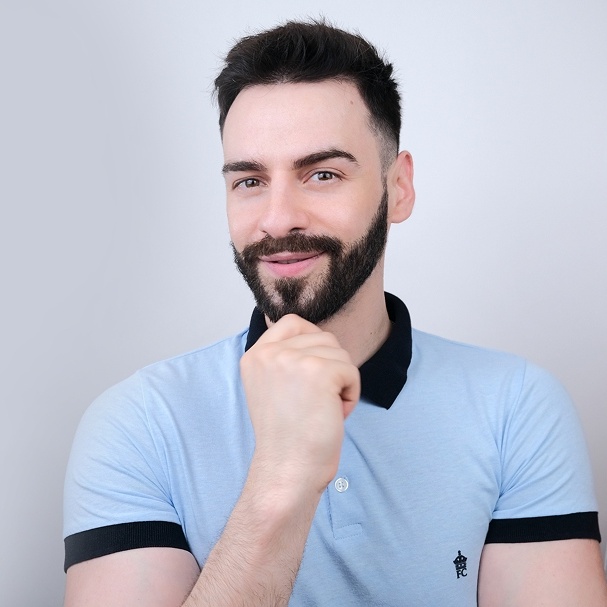
If you start hearing the aspiration, the short airstream after [t], with one simulator, you can only imagine how successful you can be in 1-on-1 Interactive American Accent Training with Prof. Alex, Ph.D. Accent Coach, where your whole American sound system is trained sound by sound.
In MyAccentWay, the Interactive Visual 2D Sound Simulators are only available in 1-on-1 accent coaching sessions with Prof. Alex.
How 2D Sound Motion Technology Trains Pronunciation
Prof. Alex, Ph.D. Accent Coach, developed 2D Sound Motion Technology to solve a fundamental problem in American accent training. Most speech production happens inside the mouth, hidden from view. Traditional methods rely on “ear training,” which asks students to reproduce sounds without guidance on the speech-organ movements that produce them. This proprietary simulator removes the guesswork by actively training the movement of the tongue, lips, jaw, teeth, and airflow, while Prof. Alex corrects students live. As part of Prof. Alex’s interactive teaching model, it is based on his Ph.D. research in interactive teaching methods. When you Practice American Sound [t] with Interactive Visual 2D Sound Simulator, you’re no longer shooting in the dark. You’re following a precise, research-based approach to human speech.
This approach isn’t about erasing your identity or culture. We view accent modification as a professional tool for speech clarity. It’s about giving you the control to be understood the first time, every time. By visualizing the mechanics of the [t] sound, you gain the confidence to communicate your expertise in high-stakes environments. The technology bridges the gap between hearing a sound and physically producing it.
Interactive Visual 2D Sound Simulators for American Sounds vs. Standard Video
Standard instructional videos usually focus on a coach’s face. While this helps with lip-based sounds like [b] or [w], it’s ineffective for the American [t]. The most critical movements for a crisp [t] happen behind the teeth. A standard video doesn’t train the tongue’s contact with the alveolar ridge. In contrast, Interactive Visual 2D Sound Simulators for American Sounds train the movement of the tongue, lips, jaw, teeth, and airflow. As part of Prof. Alex’s interactive teaching model, based on his Ph.D. research in interactive teaching methods, the simulators let students actively train these movements while Prof. Alex corrects them live. This specific tool makes it possible to Practice American Sound [t] with Interactive Visual 2D Sound Simulator while receiving instantaneous feedback on your tongue’s position. This level of accuracy is essential for American accent training that yields measurable results.
The Science of Visual Feedback in Accent Training
The effectiveness of this technology is rooted in psycholinguistics. There’s a powerful connection between visual cues and motor skill acquisition. When you see a sound in motion while simultaneously hearing it, your brain processes the information through multiple sensory channels. This multisensory approach speeds up the “muscle memory” phase of training. In our experience with students, visual feedback is one way to practice a new speech pattern alongside audio. The InPronunci app brings this science to your fingertips. It transforms abstract phonetic concepts into concrete physical actions. You aren’t just memorizing rules; you’re training your muscles to respond with precision. This technology ensures that your practice sessions are productive and grounded in linguistic accuracy.
Step-by-Step Guide: Practice American Sound [t] with Interactive Visual 2D Sound Simulator
Mastering the American [t] requires more than just listening; it demands a precise understanding of your vocal anatomy. Prof. Alex, Ph.D. Accent Coach, emphasizes that visual feedback is the fastest way to rewire your speech patterns. By using the Interactive Visual 2D Sound Simulator as a digital mirror, you can observe the subtle mechanics that often go unnoticed during natural conversation. This 15-minute daily routine ensures you build the muscle memory needed for professional clarity. It’s a protocol designed to move you from basic awareness to subconscious mastery.
Step 1: Calibrate Your Visual Awareness
Start by selecting the [t] phoneme within the Interactive Visual 2D Sound Simulator interface. Focus on training the tongue’s height and the specific contact point against the alveolar ridge. Train yourself to keep the jaw relaxed while the tongue tip does the work. Spend the first three minutes performing “Silent Motion” practice. Use the simulator to train these movements exactly without producing any sound, with Prof. Alex correcting you live. This isolates the physical mechanics from the vocal output, helping you focus on tongue placement before you add airflow. This stage is about training your brain to recognize the sound before you hear it.
Step 2: Synchronize Sound and Motion
Once your placement feels secure, activate the audio feedback. Your goal is to match your vocalization to the simulator’s pulse on the screen. Repeat the [t] in isolation 10 times, focusing on the sharp “hit” against the ridge. The simulator helps you practice the difference between an aspirated [t] at the start of words and the light flap [t] used between vowels. This distinction is vital for achieving a natural American rhythm. If you find your tongue feels heavy, return to the simulator guide to check your jaw relaxation. When you Practice American Sound [t] with Interactive Visual 2D Sound Simulator, you’re building a bridge between the movement you train and the sound you produce.
Step 3: Contextual Practice in Professional Phrases
Transition into professional vocabulary to test your progress. Practice words like “Strategy,” “Quality,” and “International” while following the simulator’s rhythm. Use the technology to practice the “Held T” in words such as “Mountain” or “Button,” where the tongue stops the air without a full release. This is often the most challenging aspect for advanced learners. To ensure you’re meeting professional standards, record yourself speaking a full sentence and compare your tongue’s motion to the simulator’s guide. If you want to accelerate this process with expert feedback, you can find American accent training near me to work directly with a specialist who understands these linguistic nuances.
Ready to refine your professional communication? Practice American Sound [t] with Interactive Visual 2D Sound Simulator today and train your speech clarity.
Mastering Speech Clarity with Prof. Alex, Ph.D. Accent Coach
Achieving speech clarity requires a shift from passive listening to active, scientific understanding. Prof. Alex, Ph.D. Accent Coach, designed the MyAccentWay method to bridge the gap between complex phonetics and everyday professional communication. This approach isn’t just about repetition; it’s a sophisticated blend of linguistic science and personalized coaching. When you Practice American Sound [t] with Interactive Visual 2D Sound Simulator, you’re engaging in a process of Intellectual Interaction. This cognitive method helps you analyze the physical mechanics of sound production so you can reproduce them accurately and consistently.
We operate under the firm belief that Your CULTURE MATTERS. The goal of accent modification is never to erase your heritage or identity. Instead, it’s about professional empowerment. By mastering the nuances of American English, you ensure that your expertise and ideas take center stage without being obscured by pronunciation hurdles. The American Accent Program, LLC, offers a research-based system for those who commit to the curriculum. You deserve to speak English confidently and fluently in every professional setting.
The MyAccentWay Individual Approach
Prof. Alex, Ph.D. Accent Coach, understands that a student from Brazil faces different phonetic challenges than a student from China. He tailors the 2D Sound Motion Technology to address the specific interference patterns of your native language. This individual approach focuses on Intellectual Interaction, where you learn to consciously control the articulators of speech. By understanding the “why” behind the [t] sound, you gain the autonomy to self-correct in real-time. We invite you to explore the full curriculum, which covers all 24 American consonants and 20 vowels, to build a complete foundation for clear communication.
Getting Started with the InPronunci App
Modern professionals need flexibility, which is why we’ve made our technology accessible on the go. You can access Interactive Visual 2D Sound Simulators for American Sounds directly through the InPronunci app on your mobile device. This allows you to maintain a consistent practice schedule whether you’re in Austin, Texas, or traveling for business. The app provides a visual guide that makes it easy to Practice American Sound [t] with Interactive Visual 2D Sound Simulator during a morning commute or a lunch break. Convenience is vital for long-term success and habit formation.
Take the next step in your professional journey by experiencing this technology firsthand. You can explore our American accent training near me programs to find a format that fits your lifestyle. Book Your 1 Hour Evaluation Session today to see how Prof. Alex, Ph.D. Accent Coach, can help you unlock a new level of speech clarity and career confidence.
Take the Next Step Toward Mastering Your American Accent
Achieving professional speech clarity requires more than just listening; it demands a deep understanding of the physiological movements behind every syllable. You now have the tools to distinguish between the crisp True T and the subtle Flap T, which are essential components of American accent training. By choosing to Practice American Sound [t] with Interactive Visual 2D Sound Simulator, you’re utilizing a proprietary system designed by Prof. Alex, Ph.D. Accent Coach. This technology provides the visual precision needed for effective accent modification, ensuring you don’t have to rely on guesswork during your practice sessions.
This scientific approach helps U.S. professionals communicate with authority and ease. Prof. Alex’s method focuses on the cognitive and analytical processes that make accent reduction sustainable and natural. It’s time to turn these insights into permanent habits that elevate your career. Your voice is a powerful asset, and refining it is an investment in your future success. Book a Sample Session with Prof. Alex, Ph.D. Accent Coach today to experience how 2D Sound Motion Technology can train your speech organs and accelerate your journey. We’re excited to help you speak with the confidence you deserve.
American Sound Training for Foreign-Born Professionals in the United States
Foreign-born professionals in the United States often know their field and speak advanced English. Yet American listeners may still struggle with specific American sounds. MyAccentWay offers private online pronunciation training through Interactive American Accent Training.
Interactive American Accent Training is led by Prof. Alex, Ph.D. Accent Coach, Doctor of Education, and professional linguist. He first diagnoses each speaker’s native-language patterns. Then he trains American sound articulation and clear consonants for real meetings and presentations.
Who this training is for
- Engineers, IT specialists, and data professionals presenting to U.S. teams and clients
- Doctors, nurses, and healthcare professionals explaining care to American patients
- Managers, executives, and founders leading meetings, pitches, and briefings
- Consultants, researchers, and academics speaking at conferences and webinars
- Professionals preparing for interviews, promotions, or client-facing roles
Online training across the U.S.
MyAccentWay is based in Austin, Texas, and all training is online. The program is especially relevant for professionals in Austin, Dallas, Houston, New York City, the San Francisco Bay Area, Los Angeles, Seattle, Boston, Chicago, Miami, Washington DC, Atlanta, and Raleigh.
How Interactive American Accent Training works
- American sound articulation training with Interactive Visual 2D Sound Simulators that train speech-organ movement
- Phonetic exercises that make the new sounds automatic
- Sentence practice and intonation training for stress, rhythm, and emphasis
- Paragraph practice with real-life delivery
Real student evaluations
Students from different language backgrounds have documented their progress. Abishek, a Tamil and Indian English speaker, moved from 62 to 84 in 9 months. Tian, a Mandarin speaker, moved from 58 to 85 in 8 months. Vlad, a Russian speaker, moved from 60 to 83 in 5 months.
The first step is a 1 Hour Evaluation Session with Prof. Alex.
Frequently Asked Questions
What is the difference between a True T and a Flap T in American English?
A True [t] involves a clear, aspirated release of air at the start of words like “task” or “time,” while a Flap [t] occurs between vowels and sounds like a quick [d] in words like “better” or “water.” Prof. Alex, Ph.D. Accent Coach, notes that mastering these variations is essential for natural speech rhythm. This distinction helps you maintain clarity during professional conversations without losing your unique cultural identity.
How does 2D Sound Motion Technology help with accent reduction?
2D Sound Motion Technology helps you bridge the gap between hearing a sound and producing it correctly by providing a visual guide of the tongue’s position. When you Practice American Sound [t] with Interactive Visual 2D Sound Simulator, you’re engaging in a science-backed method that clarifies the 24 American consonants. This visual feedback loop reduces the 50 percent of errors that often stem from mishearing subtle phonetic differences during accent reduction.
Can I practice the American [t] sound without a coach?
You can effectively use Interactive Visual 2D Sound Simulators for American Sounds to practice independently by following the visual cues for tongue placement and air release. The technology acts as a digital mentor, showing you the “motion” of the sound in real time. However, Prof. Alex, Ph.D. Accent Coach recommends periodic professional evaluations to ensure your cognitive and analytical processes align with the 20 American vowels and consonants you’re mastering for speech clarity.
Why is the [t] sound so important for professional speech clarity?
The [t] sound is one of the most frequent phonemes in the English language, appearing in approximately 9 percent of all spoken words. Clear articulation of this sound prevents common misunderstandings during high-stakes meetings or presentations. Improving your speech clarity through American accent training ensures your professional expertise is communicated effectively, allowing you to speak confidently and fluently in any business environment.
Is the Interactive Visual 2D Sound Simulator available on mobile devices?
The Interactive Visual 2D Sound Simulator is fully optimized for mobile devices, including smartphones and tablets. This accessibility allows you to integrate American accent training into your busy schedule, whether you’re commuting or taking a short break. You don’t need a complex desktop setup to benefit from these professional linguistic tools; the simulator’s interface is designed for easy, on-the-go practice to help you succeed.
How long does it take to see results with visual pronunciation training?
Most students observe a measurable improvement in their speech clarity within 4 to 6 weeks of consistent daily practice. Research in linguistic acquisition shows that 15 minutes of visual training per day accelerates muscle memory faster than traditional auditory methods. By the 30-day mark, you’ll likely feel much more confident during spontaneous professional interactions as you Practice American Sound [t] with Interactive Visual 2D Sound Simulator.
The problem is not always grammar or vocabulary.
If people understand your words but still miss your message, the deeper issue may be speech clarity, rhythm, intonation, and American pronunciation habits. MyAccentWay helps students retrain the sound system with professional 1-on-1 guidance, so English can feel clearer, freer, and more natural in real communication.
Two training methods that make speech change active.
MyAccentWay is not passive listen-and-repeat coaching. Prof. Alex, Ph.D. Accent Coach, Doctor of Education, and professional linguist, creates a learning situation where students become active learners and active participants in changing their own speech patterns.
Interactive training
Students do not just receive pronunciation instructions passively. They listen, think, compare, adjust, and understand their own speech patterns while Prof. Alex guides the correction process.
Cognitive accent training
Students learn to notice and correct the speech patterns that affect American pronunciation, then implement new American speech patterns into their code-switching process for more natural, long-lasting change.
Build speech habits people can hear in real conversations.
A stronger American accent is not built by memorizing topics or chasing quick pronunciation tips. It comes from structured training, professional feedback, active correction, and repeated application until clearer speech becomes easier to keep.
Continue learning how MyAccentWay connects American sound articulation, Interactive Visual 2D Sound Simulators, accent reduction, student proof, and 1-on-1 training.
- Prof. Alex and the MyAccentWay MethodLearn how Prof. Alex created and leads the structured MyAccentWay American accent training system.
- Accent Reduction Curriculum and English Articulation TrainingSee accent reduction, accent modification, American pronunciation, English articulation, rhythm, and professional speech clarity.
- 2D Sound Motion Technology for American Accent TrainingUnderstand Interactive Visual 2D Sound Simulators for American sound articulation.
- Before-and-After American Accent Training ResultsListen to real before-and-after student proof and outcomes.
- Student Reviews and Accent Training ResultsRead student reviews and trust signals.
- Book a 1-on-1 American 1 Hour Evaluation SessionStart with a 1-hour interactive session with Prof. Alex.
Disclaimer – American Accent Program
The American Accent Program available through Visit Program Website
is an educational and coaching service designed to support pronunciation, accent reduction, and spoken English fluency. All training materials, including lessons, exercises, audio content, visual simulations, coaching methods, and digital resources, are the intellectual property of American Accent Program, LLC and are protected by applicable copyright and intellectual property laws.
By using this website and participating in the program, you acknowledge that all content is provided for personal, non-commercial, educational use only. Users are granted a limited, non-transferable license to access the materials strictly for individual learning purposes. Redistribution, reproduction, recording, modification, sharing, or commercial use of any program content without prior written consent is strictly prohibited.
The program may include live coaching sessions, digital tools, and instructional materials intended to improve pronunciation and communication skills. However, individual results may vary, and no specific level of fluency, accent reduction, or communication outcome is guaranteed.
The American Accent Program and its instructors do not provide medical, therapeutic, or clinical speech-language pathology services. All training is intended for educational purposes only.
By accessing or using the program, you agree to comply with all applicable terms, including the platform’s Terms of Use and Course Policies, and acknowledge that misuse of materials may result in termination of access without refund.