Minimal pairs are not just word lists. In professional American accent training, they are a diagnostic tool for discovering which sounds your ear hears clearly, which sounds your mouth replaces, and which contrasts need deeper sound-system re-education.

Created by Prof. Alex, Ph.D. Linguist and American Accent Coach, for advanced English speakers who want clearer American pronunciation, stronger speech clarity, and more confident U.S. communication.
What are English minimal pairs?
English minimal pairs are two words that differ by only one sound. Examples include ship / sheep, bed / bad, cot / caught, and rice / rise. For American pronunciation, these pairs are powerful because they show exactly where a small sound difference can change meaning.
For many non-native speakers, the challenge is not intelligence or effort. The challenge is that the ear and mouth are already trained by another sound system. If your native language does not use a certain American sound contrast, your brain may hear two different English words as almost the same word.
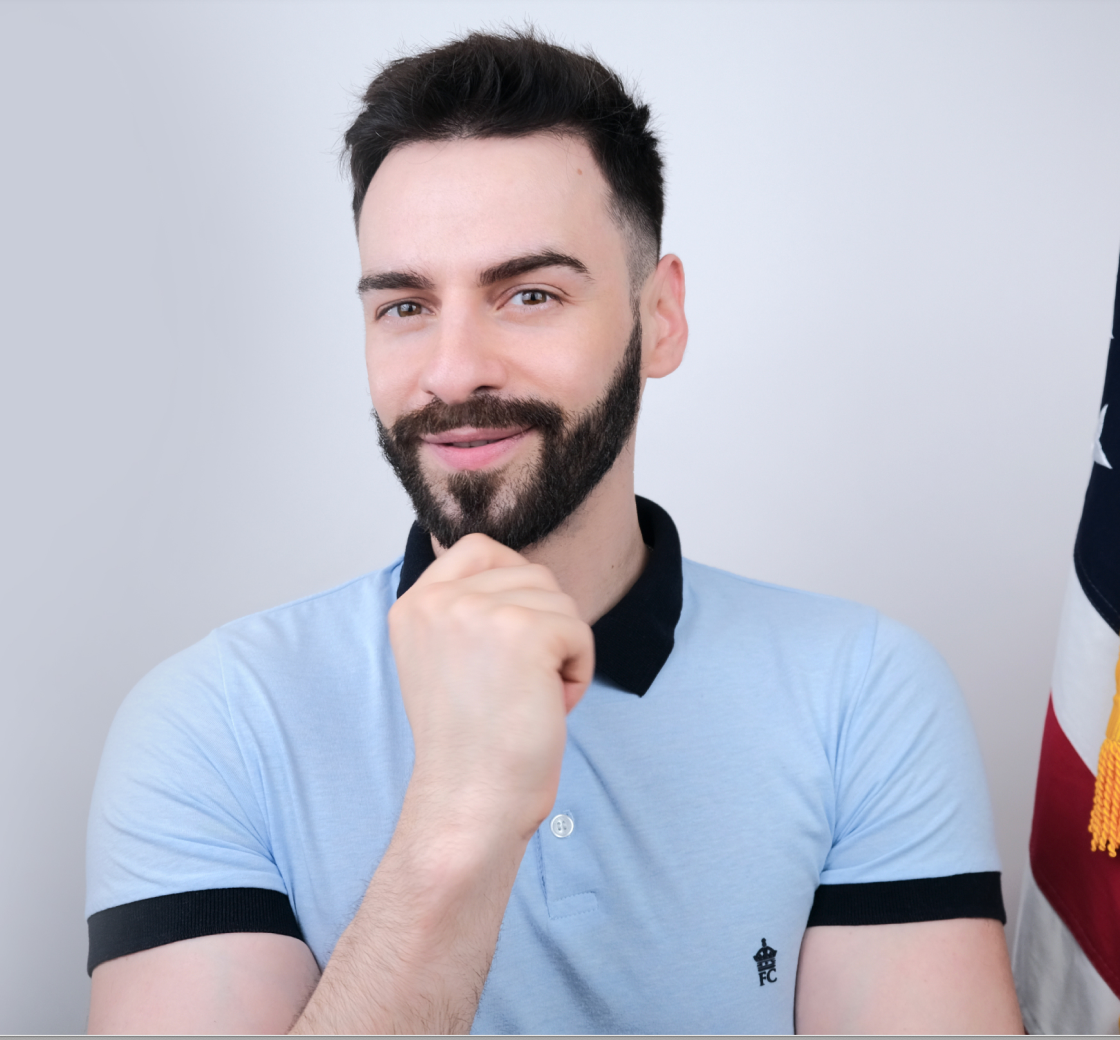
Real student result

“I feel confident enough to speak American English!”
Interactive American Accent Training9monthsof hard work and dedication
Listen to the starting point0:00
Listen to the result0:00
“Many of my students once believed they could never sound like this. School taught them grammar and vocabulary, but not how to train their English speech. That is what we do together, step by step, until you speak English independently and with confidence.”
Abishek’s result was achieved through Prof. Alex’s research-based Interactive 1-on-1 American Accent Training. His doctoral research found this interactive method more effective than traditional, teacher-centered methods. See the research basis →
Why minimal pairs matter for American accent training
Minimal pairs help students hear and produce differences that can affect clarity in meetings, interviews, presentations, patient conversations, client calls, and daily communication. When a listener has to guess whether you said “sheet” or “sit,” your message slows down, even if your grammar and vocabulary are strong.
They train listening
You learn to hear a contrast before you try to produce it. This reduces guessing and improves self-correction.
They train speech organs
You practice tongue, lips, jaw, airflow, and voicing so the sound becomes physically clearer.
They reveal hidden habits
They show which American sounds are being replaced by your native-language sound patterns.
American Accent Training Practice
These examples are useful, but the goal is not to memorize a list. The goal is to identify the sound contrast, train the correct placement, and then move the sound into words, sentences, paragraphs, and spontaneous speech.
| Sound contrast | Minimal pairs with audio practice | What students usually need to train |
|---|---|---|
| /ɪ/ vs /i/ | Listen and repeat
ship / sheep
sit / seat
live / leave
|
Tongue height, vowel length, and relaxed jaw control. |
| /ɛ/ vs /æ/ | Listen and repeat
bed / bad
pen / pan
men / man
|
Jaw opening, tongue position, and clearer front vowel shaping. |
| /ɑ/ vs /ʌ/ | Listen and repeat
cot / cut
lock / luck
hot / hut
|
Back vowel placement, mouth opening, and avoiding native-language vowel replacement. |
| /r/ vs /l/ | Listen and repeat
rice / lice
right / light
arrive / alive
|
Tongue tension, tongue curling or bunching, and stable American /r/ placement. |
| /v/ vs /w/ | Listen and repeat
vest / west
vine / wine
veal / wheel
|
Lip-to-teeth contact, voicing, and airflow control. |
| /s/ vs /z/ | Listen and repeat
rice / rise
bus / buzz
seal / zeal
|
Voicing, airflow, and ending consonant clarity. |
From practice to real speech change
You do not need more guessing. You need to know what your speech is doing.
Many advanced English speakers can hear the difference between words like ship and sheep, but their speech still follows old sound habits in real conversations. That is where professional accent training matters. Prof. Alex identifies the sound pattern, corrects the movement, and helps you carry the correction into words, sentences, meetings, interviews, and daily communication.
Students come to MyAccentWay because they already speak English, but they want clearer American pronunciation, stronger speech confidence, and speech that sounds closer to native-speaker patterns. This lesson shows the problem. A 1 Hour Evaluation Session shows what is happening in your speech.
Why reading minimal pairs is not enough
Reading a list can help you notice a sound contrast, but it does not automatically rebuild your pronunciation habit. If the tongue, lips, jaw, airflow, or voicing are not trained correctly, the same error may return during real speech.
This is why Prof. Alex’s teaching method does not stop at repetition. Minimal pairs are only one step in a larger accent reduction curriculum: assessment, sound placement, phonetic exercises, sentence practice, paragraph practice, rhythm, stress, intonation, and guided feedback.
Hear the difference
The student first learns to recognize the target contrast, such as ship versus sheep or bed versus bad.
See the movement
When needed, 2D Sound Motion Technology trains the tongue, lips, jaw, and speech organs for the American sound.
Train the placement
The student practices phonetic exercises until the sound becomes more stable and natural.
Use it in real speech
The sound moves into sentences, paragraphs, professional vocabulary, public speaking patterns, and connected speech.
MyAccentWay · 2D Sound Motion Technology
American English Pronunciation: Consonant and Vowel Sounds with 2D Sound Motion Technology
Learning American English pronunciation and the American accent is more effective when you train your speech organs, not only listen and repeat. 2D Sound Motion Technology and Interactive Visual 2D Sound Simulators, developed in 2020 by Prof. Alex, Ph.D. Accent Coach, Doctor of Education, and professional linguist, as part of his interactive teaching model based on his Ph.D. research in interactive teaching methods, train your tongue, lips, jaw, teeth, airflow, and voice step by step. They train each American sound and more than 30 sound combinations through Interactive 2D video simulation.
What 2D Sound Motion Technology is
2D Sound Motion Technology is an advanced accent reduction and articulation training tool by Prof. Alex. It corrects, develops, and trains each American sound and more than 30 sound combinations through Interactive 2D video simulation.
What Interactive Visual 2D Sound Simulators do
Interactive Visual 2D Sound Simulators are part of 2D Sound Motion Technology, the articulation-training method Prof. Alex created by applying his Ph.D. research in interactive teaching to American pronunciation. Instead of listening and repeating, students actively train their speech organs. Each simulator uses Interactive 2D mouth movement to train the speech organs (tongue, lips, jaw, teeth, airflow, and voice) to produce each American sound correctly. Every consonant has its own simulator: explore American consonants trained with 2D Sound Motion Technology.
Sample training: the American t sound (aspirated [t])
Practice
Record yourself speaking these words:
Tab · Tacos · Time · Tub · Hotel · Motel · Sit · Pit · Net
Instructions
Play the Interactive Visual 2D Sound Simulator for the American t sound below several times and follow it step by step. Move your tongue, jaw, and airflow together with the simulator and train your articulation.
Interactive Visual 2D Sound Simulator: American unvoiced sound [t]
Practice
Record yourself again speaking these words, but this time focus on the movement of your tongue. Go slow, and you will hear the difference. You’ve got this!
Tab · Tacos · Time · Tub · Hotel · Motel · Sit · Pit · Net
How Interactive Visual 2D Sound Simulators solve pronunciation and speaking problems
- Wrong articulationMost pronunciation problems start with the tongue, lips, jaw, or teeth in the wrong position. Each Interactive Visual 2D Sound Simulator trains the correct articulation of one American sound, so the student corrects the cause of the problem, not only the result.
- Airflow and voicingMany accent problems come from wrong airflow or voicing: sounds that are too weak, too strong, or voiced when they should be unvoiced. The simulators train airflow and voice together with articulation, step by step, for each American sound and more than 30 sound combinations.
- Clear speech and confidenceWhen each sound is trained correctly, words connect into clear American English speech. Listeners can understand you more easily, and speaking at work, in meetings, and on calls becomes more confident.

If you start hearing the aspiration, the short airstream after [t], with one simulator, you can only imagine how successful you can be in 1-on-1 Interactive American Accent Training with Prof. Alex, Ph.D. Accent Coach, where your whole American sound system is trained sound by sound.
In MyAccentWay, the Interactive Visual 2D Sound Simulators are only available in 1-on-1 accent coaching sessions with Prof. Alex.
Hearing the difference is not always enough.
In many cases, students can hear the contrast in pairs like ship / sheep or rice / lice, but the sound still changes back during real speech. A professional accent coach can identify the speech habit, correct the sound placement, and guide you into stronger American pronunciation patterns.
The 2D Sound Motion advantage
Many students struggle because American sounds are partly invisible. You can see the lips, but you usually cannot see the tongue position, airflow direction, jaw height, or the internal movement that creates the sound.
Prof. Alex developed and uses 2D Sound Motion Technology in one-on-one coaching so students can follow how American sounds move before they practice. This makes minimal pairs easier to understand because the student is not only listening. The student is training the speech organs with a clear model.
Practice pronunciation with 2D Sound Motion Technology
This video helps students understand why seeing sound movement can make American pronunciation practice more accurate and easier to remember.
How Prof. Alex uses minimal pairs in a 1-on-1 session
In a personalized American accent session, minimal pairs are used to understand how you hear and produce American sounds. Prof. Alex listens for patterns, not isolated mistakes. The question is not “Did you pronounce this word wrong?” The deeper question is “Which part of your sound system is creating this pattern?”
Assessment
You read targeted words and short phonetic exercises so your sound patterns become clear.
Correction
You receive guidance on the exact sound placement and the physical movement behind the sound.
Practice plan
You leave with a focused plan for minimal pairs, phonetic exercises, sentences, and real communication.
Want to know which sound patterns are affecting your speech?
Minimal pairs can show the problem, but personal feedback shows the reason behind the problem. In a 1-on-1 1 Hour Evaluation Session, Prof. Alex listens to your speech, identifies the sound contrasts that affect clarity, and explains what your training path should focus on.
Texas and U.S. American pronunciation coaching
MyAccentWay is based in Austin, Texas and provides online American accent training for professionals across Texas and the United States. Students work with Prof. Alex on American sounds, minimal pairs, stress, rhythm, intonation, connected speech, and professional clarity for U.S. communication.
This training is especially helpful for non-native professionals in Austin, Dallas, Houston, San Antonio, and other U.S. cities who communicate with American teams, managers, clients, patients, or interviewers.
Accent reduction coaching
Communication skills coaching
Accent training curriculum
English minimal pairs for American pronunciation
Texas American pronunciation coach
Austin accent coach online
Speech clarity for U.S. professionals
Frequently asked questions about English minimal pairs
What are English minimal pairs?
English minimal pairs are two words that differ by only one sound, such as ship and sheep or bed and bad. They help students hear and produce important American English sound contrasts.
Do minimal pairs improve American pronunciation?
Yes, but they work best when they are part of a complete training system. Students need listening practice, sound placement, phonetic exercises, sentence practice, paragraph practice, rhythm, stress, intonation, and feedback.
Why are minimal pairs difficult for non-native speakers?
They are difficult because many learners hear American English through the sound system of their first language. If a contrast does not exist in the first language, two different American sounds may feel like the same sound.
Can adults improve these sounds?
Yes. Adults can improve American pronunciation when training is specific, scientific, and consistent. Effective work re-educates the sound system and then builds the sound into real speaking habits.
Can MyAccentWay help students in Texas?
Yes. MyAccentWay provides online American pronunciation and accent reduction coaching for students in Texas and across the United States, including Austin, Dallas, Houston, and San Antonio.
Ready to hear the difference in your own speech?
If you are not sure which American sounds are affecting your clarity, start with a 1-on-1 1 Hour Evaluation Session. Prof. Alex will listen to your speech, identify your sound patterns, and explain what your training path should focus on.
Use minimal pairs as a diagnostic, not a word list
If you hear the difference after someone explains it but cannot produce it consistently, minimal pairs should become part of a professional accent-training plan.
Minimal pairs are most useful when they reveal the exact contrast causing misunderstanding. In American accent training with Prof. Alex, students use Cognitive Accent Training to compare target American pronunciation with their own speech, correct the pattern, and practice it in words, phrases, and connected speech.
When articulation is involved, 2D Sound Motion Technology and Interactive Visual 2D Sound Simulators help make speech-organ movement easier to understand.
Knowledge is helpful. Feedback changes the practice.
This article brings readers who want practical pronunciation correction. The stronger funnel is to move from “I see the difference” to “I can produce the difference clearly when I speak.” That usually requires feedback, not only examples.
Before booking, you can review real student experiences on the Student Reviews & Results page.
Stop guessing what is affecting your American pronunciation.
In a 1 Hour Evaluation Session, Prof. Alex can listen to your speech, identify the patterns that affect clarity, and explain how 1-on-1 American accent training can help you practice with a clear plan.
U.S. & Canada online accent training
English Minimal Pairs for American Pronunciation for professionals in the United States and Canada
This guide is useful for advanced English speakers, entrepreneurs, international professionals, and students in the U.S. and Canada who want clearer American pronunciation, stronger rhythm, better intonation, and more confident communication in meetings, interviews, presentations, and client conversations.
Prof. Alex, Ph.D. Accent Coach, Doctor of Education, and professional linguist, teaches online 1-on-1 American accent training for learners in major professional markets including New York, Los Angeles, San Francisco Bay Area, Seattle, Austin, Dallas, Houston, Chicago, Boston, Washington, D.C., Miami, Toronto, Vancouver, Montreal, Calgary, and Ottawa.
1-on-1 Accent Reduction Training helps students move beyond self-practice and build clearer American speech habits through interactive and cognitive accent training.
Speech clarity check
The problem is not always grammar or vocabulary.
If people understand your words but still miss your message, the deeper issue may be speech clarity, rhythm, intonation, and American pronunciation habits. MyAccentWay helps students retrain the sound system with professional 1-on-1 guidance, so English can feel clearer, freer, and more natural in real communication.
Why MyAccentWay works
Two training methods that make speech change active.
MyAccentWay is not passive listen-and-repeat coaching. Prof. Alex, Ph.D. Accent Coach, Doctor of Education, and professional linguist, creates a learning situation where students become active learners and active participants in changing their own speech patterns.
Interactive training
Students do not just receive pronunciation instructions passively. They listen, think, compare, adjust, and understand their own speech patterns while Prof. Alex guides the correction process.
Cognitive accent training
Students learn to notice and correct the speech patterns that affect American pronunciation, then implement new American speech patterns into their code-switching process for more natural, long-lasting change.
Your next step
Build speech habits people can hear in real conversations.
A stronger American accent is not built by memorizing topics or chasing quick pronunciation tips. It comes from structured training, professional feedback, active correction, and repeated application until clearer speech becomes easier to keep.