Prof. Alex’s Teaching Method for American Accent Training
(512) 265-9515Updated October 27, 2026 ◆ 11 min read
Student testimonial

“It feels amazing when people say, ‘Your accent is so good. Where did you learn it?’ My answer is always, ‘Thanks to my great teacher, Alex.’”
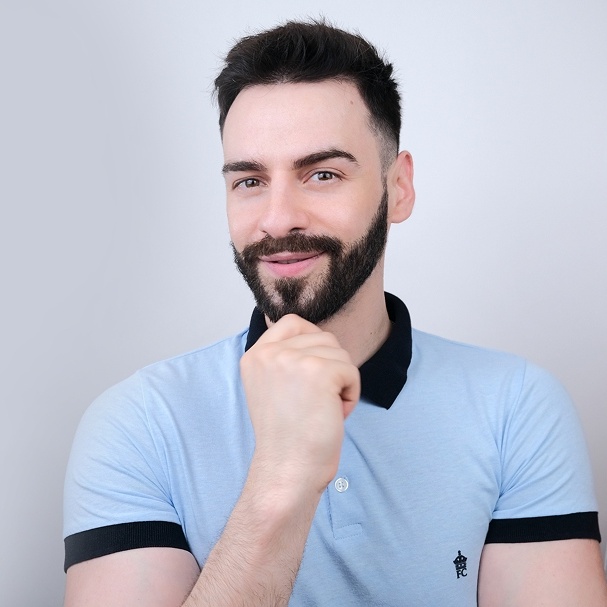
Interactive American Accent Training5monthsof hard work and dedication
Listen to the starting point0:00
Listen to the result0:00
Evaluated by Prof. Alex
Prof. Alex, Ph.D. Accent Coach, Doctor of Education, and professional linguist
Prof. Alex evaluated Vlad’s before and after recordings of the same story reading, word by word and sound by sound, against General American English, and documented measurable improvements in American English pronunciation after five months of training at MyAccentWay.
Interactive American Accent Training, informed by Prof. Alex’s doctoral research. At MyAccentWay, he applies these interactive teaching principles through 2D Sound Motion Technology, active pronunciation practice, and personalized feedback, so students understand, train, and refine American English speech sounds instead of only listening and repeating. Learn more about Prof. Alex’s doctoral research.
Have questions about Prof. Alex’s method?
Students can contact the MyAccentWay Support Center to ask questions, understand how 1-on-1 accent training works, and get connected with Prof. Alex.

Prof. Alex’s method is built on linguistics, phonetics, Interactive Visual 2D Sound Simulators, and the belief that students can re-educate their sound system at any age when they receive the right professional guidance.
Most students doubt their accent can change. Prof. Alex starts there.
Many students begin American accent training with the same fear: “Maybe it is too late for me.” They may have lived with the same pronunciation habits for many years. They may have tried apps, videos, or general English classes. They may believe their accent is permanent because they do not know exactly what to change or how to change it.
Prof. Alex understands this doubt. His teaching philosophy begins with one important truth: American accent training is possible when the sound system is trained scientifically, sound by sound.
The problem is not that students cannot improve. The problem is that most students have never been shown how American sounds are physically produced, how their native language habits influence English, and how to re-educate the speech organs through a professional linguistic method.
Doubt becomes clarity
Students learn exactly what is affecting their pronunciation and why it can be trained.
Sound becomes visible
Interactive Visual 2D Sound Simulators train tongue, lips, jaw, and speech-organ movement.
Practice becomes a habit
Students move from phonetic exercises into sentences, paragraphs, and real speech.
The philosophy: re-educate the sound system
Prof. Alex does not teach students to simply read a paragraph or imitate a native speaker. Reading can be helpful, but it is not top-tier accent training by itself. True accent transformation requires understanding, correction, repetition, and professional guidance.
Every student brings pronunciation patterns from their native language into English. These patterns affect vowels, consonants, rhythm, stress, intonation, and connected speech. Prof. Alex’s method identifies those patterns and retrains them step by step.
What makes the method different
- It is based on linguistics and phonetics, not guessing.
- It trains American sounds one by one with speech-organ awareness.
- It uses Interactive Visual 2D Sound Simulators as part of Prof. Alex’s interactive teaching model, based on his doctoral research, to train students in the movement of the tongue, lips, jaw, teeth, and airflow while he corrects them live.
- It connects sounds to sentences, paragraphs, intonation, and public speaking.
- It is guided by a professional linguist with more than twenty years of teaching experience.
The first step: orientation and 1 Hour Evaluation Session
The training begins with an orientation and 1 Hour Evaluation Session. This first meeting is not only a lesson. It is a professional speech evaluation and a conversation about the student’s concerns, doubts, goals, and communication challenges.
Some students worry that people do not understand them in meetings. Some feel uncomfortable during interviews, presentations, or phone calls. Others have tried accent programs before and did not know why the results did not last. Prof. Alex uses the orientation to understand the student’s background, native language influence, pronunciation habits, and professional speaking goals.
Assessment
Prof. Alex listens to how the student naturally sounds and identifies pronunciation patterns that affect clarity.
Concern review
The student explains doubts, problems, goals, and situations where speaking English feels difficult.
Sample phonetic exercise
The student reads a phonetic exercise so Prof. Alex can hear the target sound in action.
Interactive Visual 2D Sound Simulator
The student watches how the American sound is produced by the tongue, lips, jaw, and speech organs.
Corrected practice
The student repeats the exercise with better placement and begins to feel the difference immediately.
Why Interactive Visual 2D Sound Simulators create a breakthrough
Many accent problems happen because students cannot see what is happening inside the mouth. They may hear an American sound, but they do not know how to physically produce it. The tongue may be too low, the lips may be too tense, the jaw may not open enough, or the airflow may be incorrect.
2D Sound Motion Technology and Interactive Visual 2D Sound Simulators help solve this problem by training students in how to produce the sound. Students can simulate the pronunciation of a specific American sound and understand the difference between their native-language habit and the American speech-organ placement.
In private practice, this visual method has been used for more than five years with strong results. Many students can quickly feel the difference because the sound is no longer abstract. They see it, understand it, practice it, and begin to build a more American pronunciation habit.
Practice the Interactive Visual 2D Sound Simulator method
This video helps students understand why American pronunciation becomes easier when they can see how the sound is produced before they practice it.
MyAccentWay · 2D Sound Motion Technology
American English Pronunciation: Consonant and Vowel Sounds with 2D Sound Motion Technology
Learning American English pronunciation involves more than listening and repeating. Active articulatory training helps students practice the coordinated movements of the tongue, lips, jaw, airflow, and voicing needed to produce American English sounds. 2D Sound Motion Technology and Interactive Visual 2D Sound Simulators, developed in 2020 by Prof. Alex, Ph.D. Accent Coach, Doctor of Education, and professional linguist, as part of his interactive teaching model that applies principles from his doctoral research in interactive teaching methods, train your tongue, lips, jaw, teeth, airflow, and voice step by step. They train each American sound.
What 2D Sound Motion Technology is
2D Sound Motion Technology is an advanced accent reduction and articulation training tool by Prof. Alex. It trains each American sound through Interactive Visual 2D Sound Simulators.
What Interactive Visual 2D Sound Simulators do
Interactive Visual 2D Sound Simulators are part of 2D Sound Motion Technology, the articulation-training method Prof. Alex created in 2020. It applies one of the four conditions of interactive teaching identified in his doctoral research: placing students in an active position in the learning process. Instead of listening and repeating, students actively train their speech organs. With each simulator, students control articulation movement sequences and physically train the speech organs (tongue, lips, jaw, airflow, and voicing) with synchronized voice-over instructions to produce each American sound correctly. Every consonant has its own simulator: explore American consonants trained with 2D Sound Motion Technology.
Sample training: the American t sound (aspirated [t])
Practice
Record yourself speaking these words:
Tab · Tacos · Time · Tub · Hotel · Motel · Sit · Pit · Net
Instructions
Play the Interactive Visual 2D Sound Simulator for the American t sound below several times and follow it step by step. Control the simulator’s articulation movement sequence and practice the corresponding tongue and jaw movements, coordinating airflow and voicing as you pronounce [t].
Interactive Visual 2D Sound Simulator: American unvoiced sound [t]
Practice
Record yourself again speaking these words, but this time focus on the movement of your tongue. Go slow, and you will hear the difference. You’ve got this!
Tab · Tacos · Time · Tub · Hotel · Motel · Sit · Pit · Net
How Interactive Visual 2D Sound Simulators solve pronunciation and speaking problems
- Wrong articulationMost pronunciation problems start with the tongue, lips, jaw, or teeth in the wrong position. Each Interactive Visual 2D Sound Simulator trains the correct articulation of one American sound, so the student corrects the cause of the problem, not only the result.
- Airflow and voicingMany accent problems come from wrong airflow or voicing: sounds that are too weak, too strong, or voiced when they should be unvoiced. The simulators train airflow and voice together with articulation, step by step, for each American sound.
- Clear speech and confidenceWhen each sound is trained correctly, words connect into clear American English speech. Listeners can understand you more easily, and speaking at work, in meetings, and on calls becomes more confident.
If you start hearing the aspiration, the short airstream after [t], with one simulator, you can only imagine how successful you can be in 1-on-1 Interactive American Accent Training with Prof. Alex, Ph.D. Accent Coach, where your whole American sound system is trained sound by sound.
The simulators are integrated into Prof. Alex’s 1-on-1 Interactive American Accent Training and are also available through the InPronunci learning platform.
The American Accent Training Program structure
The full American Accent Training Program and Accent Reduction Curriculum is structured around American consonants, vowels, rhythm, stress, intonation, and connected speech. The program includes twenty-four core sound sessions, but a session is not always the same thing as one class.
One session may require several classes depending on the student’s native language background and pronunciation habits. For example, some speakers may need three or four classes to fully complete one sound session because the native-language pattern is very different from American English. The goal is not to rush. The goal is to build a sound habit that lasts.
Phonetic exercises: the foundation
Each session begins with phonetic exercises. These exercises help the student create a steady, organic, and natural way of producing one American sound. The student trains the sound at the beginning, middle, and end of words, then learns to control the placement more consistently.
This stage helps students understand the difference between the accent pattern they currently use and the American sound pattern they are learning to create.
Sentence and paragraph practice
After phonetic exercises, students move into sentence practice. This is where the target sound becomes part of real speech. Students also learn American emphasis, content words, structure words, sentence stress, connected speech, and intonation patterns such as low falling tone and low rising tone.
Paragraph practice helps students tell short stories, express ideas, and use the learned sound in longer speech. This is where pronunciation becomes communication.
Why a professional linguist matters
There are many accent coaches who ask students to read texts and repeat. This may help a little, but it is not the highest level of accent training. Top-tier pronunciation training requires a professional who understands phonetics, sound systems, speech-organ placement, language transfer, and the relationship between pronunciation and communication.
Prof. Alex has taught pronunciation, accent training, phonetics, linguistics, language education, interpretation, and translation for more than twenty years in universities and private practice. His method is not a made-up collection of tips. It comes from academic training, classroom experience, private practice, and years of observing how students actually transform their speech.
- Students need a coach who can hear exactly what is happening in their sound system.
- They need a method that explains why the sound is different, not only that it is different.
- They need structured practice that moves from sound to word, sentence, paragraph, and real communication.
- They need feedback that is specific enough to change the speech habit.
Before and after: Vlad’s speech transformation
Student progress becomes visible when training moves beyond simple reading practice. Vlad’s before-and-after videos show how structured American accent training can improve speech clarity, sound placement, rhythm, and confidence when the sound system is trained with professional guidance.
These examples are important because they show the philosophy behind Prof. Alex’s method in real speech: assess the sound, understand the movement, train the placement, practice the sound in context, and build a clearer speaking habit.
Vlad: before and after
Listen for clearer pronunciation and more controlled American speech habits.
Vlad: speech clarity progress
Notice how sound placement and rhythm become easier to understand.
Vlad: confident speaking
See how structured practice supports more natural and confident English speech.
The secret to success is not one trick. It is a complete training system.
The real secret is structured, professional training. Students must participate in a variety of accent-training sessions, complete American consonant and vowel work, train rhythm and intonation, and practice the learned sounds in real speech.
When the method is complete, students do not only understand a sound. They can begin to perform it more naturally. They can hear their own mistakes, correct their placement, and build clearer American English speech with confidence.
This is why Prof. Alex’s teaching philosophy is built on possibility. Accent training is possible at any age when students receive scientific guidance, visual sound training, phonetic exercises, and professional feedback.
American accent training for professionals across the United States
MyAccentWay is based in Austin, Texas and works online with non-native English-speaking professionals across the United States. Prof. Alex’s method is designed for adults who already speak English but want clearer American pronunciation, stronger intonation, more natural rhythm, and more confident communication with U.S. teams, clients, patients, managers, and interviewers.
This page is especially helpful for professionals searching for American accent training online, accent reduction coaching, American pronunciation coaching, speech clarity coaching, or linguistics-based accent training in the U.S. The core idea is simple: lasting improvement comes from re-educating the sound system, then practicing each sound through phonetic exercises, words, sentences, paragraphs, and real speaking situations.
For U.S. workplace communication
Training supports clearer speech for meetings, interviews, phone calls, presentations, client conversations, and leadership communication.
For advanced English speakers
The focus is not basic grammar. The focus is American sounds, stress, rhythm, intonation, connected speech, and confident clarity.
For visible sound training
2D Sound Motion Technology trains students to follow tongue, lips, jaw, and speech-organ movement before practicing the target sound.
American pronunciation training
Accent training curriculum Professional communication skills Speech clarity coaching for U.S. professionals
Austin Texas accent coach online
Interactive Visual 2D Sound Simulators
More than articulation: Prof. Alex doesn’t teach only the articulation of sounds. Interactive 1-on-1 training with 2D Sound Motion Technology helps students become confident, fluent English speakers through a step-by-step system. Training may begin with how each American sound is made. Then it moves into sound combinations, sound contractions, phonetic exercises, practice sentences, and paragraphs in real rapid speech, so students start speaking English fluently and comfortably.
Questions students ask before starting American accent training
Can adults improve their American accent?
Yes. Adults can improve American pronunciation when training is based on phonetics, speech-organ placement, listening awareness, and consistent practice. Prof. Alex’s method helps students rebuild speech habits sound by sound instead of only reading text and repeating.
Is this program available in the United States?
Yes. MyAccentWay provides online American accent training for professionals across the United States, including Texas, California, New York, Florida, Illinois, Washington, Massachusetts, Georgia, and other U.S. business communities.
How is Prof. Alex’s method different from regular pronunciation practice?
The method begins with assessment and sound-system re-education. Students then train American sounds through phonetic exercises, Interactive Visual 2D Sound Simulators, sentence practice, paragraph practice, stress, rhythm, intonation, and real professional communication.
Who is this training best for?
It is best for non-native professionals, executives, IT specialists, healthcare professionals, job seekers, translators, interpreters, public speakers, and advanced English speakers who want clearer American speech for U.S. communication.
Ready to see what is possible in your speech?
Book a 1-on-1 1 Hour Evaluation Session with Prof. Alex to receive a professional speech assessment, experience phonetic training, train with an Interactive Visual 2D Sound Simulator, and understand your personal path toward clearer American pronunciation.
Book Your 1 Hour Evaluation Session
The problem is not always grammar or vocabulary.
If people understand your words but still miss your message, the deeper issue may be speech clarity, rhythm, intonation, and American pronunciation habits. MyAccentWay helps students retrain the sound system with professional 1-on-1 guidance, so English can feel clearer, freer, and more natural in real communication.
Two training methods that make speech change active.
MyAccentWay is not passive listen-and-repeat coaching. Prof. Alex, Ph.D. Accent Coach, Doctor of Education, and professional linguist, creates a learning situation where students become active learners and active participants in changing their own speech patterns.
Interactive training
Students do not just receive pronunciation instructions passively. They listen, think, compare, adjust, and understand their own speech patterns while Prof. Alex guides the correction process.
Cognitive accent training
Students learn to notice and correct the speech patterns that affect American pronunciation, then implement new American speech patterns into their code-switching process for more natural, long-lasting change.
Build speech habits people can hear in real conversations.
A stronger American accent is not built by memorizing topics or chasing quick pronunciation tips. It comes from structured training, professional feedback, active correction, and repeated application until clearer speech becomes easier to keep.
Continue learning how MyAccentWay connects American sound articulation, Interactive Visual 2D Sound Simulators, accent reduction, student proof, and 1-on-1 training.
- Prof. Alex and the MyAccentWay MethodLearn how Prof. Alex, Ph.D. Accent Coach, Doctor of Education, and professional linguist, created and leads the structured MyAccentWay American accent training system.
- Accent Reduction Curriculum and English Articulation TrainingSee how MyAccentWay trains accent reduction, accent modification, American pronunciation, English articulation, rhythm, and professional speech clarity.
- 2D Sound Motion Technology for American Accent TrainingUnderstand Prof. Alex’s Interactive Visual 2D Sound Simulators for American sound articulation.
- Before-and-After American Accent Training ResultsListen to real before-and-after student proof and accent training outcomes.
- Student Reviews and Accent Training ResultsRead student reviews, testimonials, and trust signals from MyAccentWay learners.
- Book a 1-Hour 1 Hour Evaluation SessionStart with a 1-hour accent evaluation session with Prof. Alex.
Interactive American Accent Training for Foreign-Born Professionals in the United States
Foreign-born professionals in the United States often know their field and speak advanced English. Yet American listeners may still struggle with their sounds, stress, and rhythm. MyAccentWay offers private online American accent training through Interactive American Accent Training with Prof. Alex.
Training is online and 1-on-1 for learners anywhere in the U.S. It starts with a 1 Hour Evaluation Session.