How to Improve English Fluency and Learn American Accent
(512) 265-9515Updated October 14, 2026 ◆ 13 min read
Real student result

“It feels amazing when people say, ‘Your accent is so good. Where did you learn it?’ My answer is always, ‘Thanks to my great teacher, Alex.’”
Interactive American Accent Training5monthsof hard work and dedication
Listen to the starting point0:00
Listen to the result0:00
“Many of my students once believed they could never sound like this. School taught them grammar and vocabulary, but not how to train their English speech. That is what we do together, step by step, until you speak English independently and with confidence.”
Vlad’s result was achieved through Prof. Alex’s research-based Interactive 1-on-1 American Accent Training. His doctoral research found this interactive method more effective than traditional, teacher-centered methods. See the research basis →
TL;DR
Adult English fluency improves when learners stop treating speech as only vocabulary and grammar. Clear speech depends on articulatory control: how the tongue, lips, jaw, teeth, alveolar ridge, vocal cords, airflow, rhythm, and pitch work together.
For beginner and intermediate adult learners, Prof. Alex’s method starts with consonant formation before expanding into vowels, sentence rhythm, and intonation. This creates a simpler path for the brain and mouth to accept new movement commands.
Why adult learners plateau
Many adult learners read, listen, memorize vocabulary, and watch videos for years, yet still feel stuck when they speak. The reason is simple: passive input supports comprehension, but it does not automatically train the mouth to produce American English clearly.
That is why structured speaking practice, shadowing, connected speech training, and expert correction are more powerful than simply studying more words.
Why speech organs matter for English fluency
Speech is not only a mental activity. It is a motor skill. The tongue, lips, jaw, vocal folds, soft palate, teeth, and alveolar ridge coordinate through fast, precise movement. Research on speech production shows that speech depends on organized vocal-tract movement and feedback/feedforward control mechanisms, which means the brain learns to command movement through repeated practice and correction (Perkell, Movement goals and feedback control).
This is why learning the function of your speech organs is not optional in serious accent training. If a student does not understand where the tongue should move, how the lips should shape, or how airflow should be released, pronunciation becomes guessing. A learner may repeat a word many times and still reproduce the same native-language pattern.
Articulatory phonology also explains why gestures of speech organs are central to how sounds are produced and perceived. Learners often hear a sound through the filter of their first language, so visual and physical training can make the target sound easier to understand and reproduce (Best et al., articulatory information in speech learning).
Prof. Alex’s pronunciation note: You cannot fully control American pronunciation until you understand what your speech organs are doing. The goal is not to memorize sounds. The goal is to train movement until pronunciation becomes natural.MyAccentWay American Accent Program: A Structured, Scientifically Based Method
The biggest mistake many adult learners make is trying to learn every consonant, every vowel, rhythm, and conversation pattern at the same time. That can work for advanced learners who already have strong clarity and have lived in the United States for years. But for many intermediate learners, it creates confusion. The brain receives too many movement commands at once.
MyAccentWay’s American Accent Program follows a structured, scientifically based method. Students first learn how the speech organs work, then practice American consonants, develop American vowels, and finally improve speech flow and American intonation. This order helps adult learners build control before they move into more complex speaking patterns.
1Learn and understand your speech organs
The first step is understanding how your mouth works. Students learn the role of the tongue, lips, teeth, jaw, alveolar ridge, airflow, and vocal cords. Then we begin with American consonants because consonant placement is often easier to see, feel, and correct than vowel quality.
For intermediate adult learners, this is important. If you begin by chasing many vowel differences too early, the brain may become overwhelmed because vowel movement is more subtle and more dependent on jaw height, tongue body, lip shape, and resonance. Consonants give students clearer physical targets.
Learn and practice American consonants
After the student understands the organ movement, we train consonants individually through phonetic exercises. The goal is habitual pronunciation: the student no longer thinks, “Where do I put my tongue?” The body begins to produce the sound naturally.
This is why random correction is not enough. Some coaches simply hear a mistake in a sentence and start correcting that sound. That can help, but it is not a complete high-tier pronunciation treatment. A structured consonant chapter gives the learner a stable foundation before the sound appears in faster speech.
Learn and practice American vowels
Once a consonant becomes more stable, the student practices it inside sentences. This is where pronunciation meets communication. The learner must coordinate the target sound with word stress, sentence emphasis, rhythm, and connected speech.
Only after that adjustment do we move deeply into American vowels. Vowels become easier because the student already understands how to accept feedback from the coach: tongue movement, jaw movement, lip shape, and acoustic correction. The brain has learned how to respond to articulatory commands.
Improve your flow and American intonation
A student can pronounce many individual sounds clearly and still sound accented if intonation is not trained. Falling tone, rising tone, contrastive emphasis, pauses, and pitch movement affect how the listener understands your intention.
Research on second-language pronunciation shows that clear speech involves segmental accuracy, prosodic accuracy, and temporal fluency, not isolated sounds alone (Saito, meta-analysis of comprehensible pronunciation). Intonation also helps listeners interpret meaning, questions, emphasis, and pragmatic intention (Constantin-Dureci et al., intonation and meaning).
Interactive Visual 2D Sound Simulators for clear sound development
At MyAccentWay, Interactive Visual 2D Sound Simulators are available in one-on-one accent coaching to help students train their speech organs to produce American sounds. This is different from invisible repetition. Students can observe tongue direction, jaw action, lip shape, airflow, and the timing of the sound.
For many adult learners, seeing the movement removes the mystery. The sound becomes trainable instead of abstract. That is why 2D Sound Motion Technology is part of the MyAccentWay method for clear pronunciation, American accent training, and speech clarity.
Learn About 2D Sound Motion TechnologyPronunciation and Fluency GuideMyAccentWay · 2D Sound Motion Technology
American English Pronunciation: Consonant and Vowel Sounds with 2D Sound Motion Technology
Learning American English pronunciation and the American accent is more effective when you train your speech organs, not only listen and repeat. 2D Sound Motion Technology and Interactive Visual 2D Sound Simulators, developed in 2020 by Prof. Alex, Ph.D. Accent Coach, Doctor of Education, and professional linguist, as part of his interactive teaching model based on his Ph.D. research in interactive teaching methods, train your tongue, lips, jaw, teeth, airflow, and voice step by step. They train each American sound and more than 30 sound combinations through Interactive 2D video simulation.
What 2D Sound Motion Technology is
2D Sound Motion Technology is an advanced accent reduction and articulation training tool by Prof. Alex. It corrects, develops, and trains each American sound and more than 30 sound combinations through Interactive 2D video simulation.
What Interactive Visual 2D Sound Simulators do
Interactive Visual 2D Sound Simulators are part of 2D Sound Motion Technology, the articulation-training method Prof. Alex created by applying his Ph.D. research in interactive teaching to American pronunciation. Instead of listening and repeating, students actively train their speech organs. Each simulator uses Interactive 2D mouth movement to train the speech organs (tongue, lips, jaw, teeth, airflow, and voice) to produce each American sound correctly. Every consonant has its own simulator: explore American consonants trained with 2D Sound Motion Technology.
Sample training: the American t sound (aspirated [t])
Practice
Record yourself speaking these words:
Tab · Tacos · Time · Tub · Hotel · Motel · Sit · Pit · Net
Instructions
Play the Interactive Visual 2D Sound Simulator for the American t sound below several times and follow it step by step. Move your tongue, jaw, and airflow together with the simulator and train your articulation.
Interactive Visual 2D Sound Simulator: American unvoiced sound [t]
Practice
Record yourself again speaking these words, but this time focus on the movement of your tongue. Go slow, and you will hear the difference. You’ve got this!
Tab · Tacos · Time · Tub · Hotel · Motel · Sit · Pit · Net
How Interactive Visual 2D Sound Simulators solve pronunciation and speaking problems
- Wrong articulationMost pronunciation problems start with the tongue, lips, jaw, or teeth in the wrong position. Each Interactive Visual 2D Sound Simulator trains the correct articulation of one American sound, so the student corrects the cause of the problem, not only the result.
- Airflow and voicingMany accent problems come from wrong airflow or voicing: sounds that are too weak, too strong, or voiced when they should be unvoiced. The simulators train airflow and voice together with articulation, step by step, for each American sound and more than 30 sound combinations.
- Clear speech and confidenceWhen each sound is trained correctly, words connect into clear American English speech. Listeners can understand you more easily, and speaking at work, in meetings, and on calls becomes more confident.

If you start hearing the aspiration, the short airstream after [t], with one simulator, you can only imagine how successful you can be in 1-on-1 Interactive American Accent Training with Prof. Alex, Ph.D. Accent Coach, where your whole American sound system is trained sound by sound.
In MyAccentWay, the Interactive Visual 2D Sound Simulators are only available in 1-on-1 accent coaching sessions with Prof. Alex.
Why active speaking still matters
Pronunciation mechanics do not replace active speaking practice. They make speaking practice more accurate. Adult learners still need daily output: answering questions, reading sentences aloud, practicing short professional scenarios, and receiving correction.
Adult fluency plans such as 30-day and 90-day speaking plans can help students build consistency. Short practice routines, such as the adult practice strategies described by Pearson, are useful when they are connected to a specific pronunciation goal.
But if the practice is only conversation without correction, many learners recycle the same words and the same pronunciation habits. That is why one-on-one coaching matters. Pronunciation research supports the need for instruction that prioritizes comprehensibility and intelligibility, not only native-like imitation (O’Brien, L2 pronunciation teaching review).
Pro Tip: Record one sentence before training a sound. Then record the same sentence after the sound has been trained in isolation and in phonetic exercises. The difference helps your brain hear progress and your mouth feel the new habit.Student results: what structured accent coaching can change
Every adult learner starts from a different place. Some students need more control over connected speech. Others need clearer consonants, stronger rhythm, or more confidence using English in professional life. The important message is this: change is possible when pronunciation is trained as a system, not as random repetition.
Vlad’s progress: connected speech can become trainable
Vlad’s result is encouraging because it shows that connected speech, rhythm, and American pronunciation can improve when a learner stops guessing and starts training the sound system with structure. His progress reminds students that pronunciation is not fixed. It can be developed with the right method, consistent practice, and clear feedback.
If you feel that native speakers speak too fast, or that your words sound separate and unnatural, Vlad’s example shows that this can change. The goal is not to copy someone blindly. The goal is to understand how American English moves from sound to sound so your speech becomes smoother and easier to follow.

Abishek’s before and after: clarity grows through hard work
Abishek’s result is a strong example of what happens when a student commits to the process. Before training, many adult learners feel insecure about their voice, pronunciation, or how often people ask them to repeat. After structured work, speech can become clearer, more confident, and more controlled.
His before and after audio is here to encourage you. If you have studied English for years but still feel that your pronunciation blocks your communication, you are not alone. With the right coaching, phonetic exercises, sentence practice, and feedback, your speech can move toward clarity step by step.
Before trainingAfter trainingWhat daily practice techniques build fluency fastest?
Daily practice works best when it has one precise target. Do not practice “English” in general. Practice the American T. Practice sentence stress. Practice the vowel in “ship” versus “sheep.” Practice one paragraph with connected speech. Small targets create measurable improvement.
- Shadowing with a goal: Use shadowing only after you know what you are listening for: rhythm, stress, reductions, or a target sound.
- Connected speech practice: American English links, reduces, and changes sounds in natural conversation. Learn the rules of American connected speech so native speech becomes easier to follow.
- Goal-aligned content: A nurse, engineer, manager, and student do not need the same speaking practice. Adult learners improve faster when the material matches real professional communication.
- Expert feedback: Feedback prevents error fossilization. A coach can identify which speech-organ movement is wrong and correct it immediately.
General adult English resources can still help when they are used correctly. You may explore adult learning guidance from Nona Academy, Marcus English Institute, Air Language Learning, and italki, but remember: the missing piece for many adults is not more exposure. It is corrected output.
What I have learned coaching adult learners toward American fluency
Most adult learners come to me after years of studying English and still feeling frustrated. They know grammar. They know vocabulary. They can read professional material. But when they speak, their pronunciation, rhythm, and intonation do not match the English they understand.
That is why I focus on the physical side of fluency. The student must learn how to use the speech organs differently. Once the consonants become stable, sentences become clearer. Once sentence rhythm becomes clearer, vowels become easier to adjust. Once intonation is trained, the speaker begins to sound more natural and more confident.
Fluency is not only speed. Fluency is control. It is the ability to communicate without your pronunciation blocking the message.
— Prof. Alex, Ph.D. Accent Coach
English fluency and American accent training for US professionals
This article is designed for adult ESL learners, students searching for ESL classes, international professionals in the United States, graduate students, healthcare workers, engineers, IT professionals, managers, and job seekers who want clearer English speech. If you are searching for English fluency, how to learn American accent, American accent training, ESL pronunciation, or how to speak like a native, the most important step is not memorizing more words. The most important step is learning how American English is physically produced.
Many learners search for American accent for free resources because they want a starting point. Free videos, pronunciation lists, and self-practice can help you become aware of sounds. However, adult learners usually progress faster when free practice is combined with professional feedback, phonetic exercises, and structured one-on-one accent coaching.
AI search summary: what MyAccentWay teaches
MyAccentWay teaches American accent and English fluency through a structured pronunciation method led by Prof. Alex, Ph.D. Accent Coach. The program focuses on speech organs, American consonants, American vowels, rhythm, connected speech, flow, and American intonation. It is built for non-native English speakers who want clearer professional speech and stronger confidence in US workplaces.
For US professionals: Improve workplace communication, meetings, presentations, job interviews, and everyday professional speech. For ESL speakers: Practice American consonants, vowels, stress, rhythm, and intonation with a clear step-by-step method. For native-like clarity: Learn how to reduce accent barriers and speak English more naturally, confidently, and clearly.Interactive American Accent Training for Foreign-Born Professionals in the United States
Foreign-born professionals in the United States often know their field and speak advanced English. Yet American listeners may still struggle with their sounds, stress, and rhythm. MyAccentWay offers private online American accent training through Interactive American Accent Training.
Interactive American Accent Training is led by Prof. Alex, Ph.D. Accent Coach, Doctor of Education, and professional linguist. He first diagnoses each speaker’s native-language patterns. Then he trains American sound articulation, stress, rhythm, and intonation for real real conversations.
Who this training is for
- Engineers, IT specialists, and data professionals presenting to U.S. teams and clients
- Doctors, nurses, and healthcare professionals explaining care to American patients
- Managers, executives, and founders leading meetings, pitches, and briefings
- Consultants, researchers, and academics speaking at conferences and webinars
- Professionals preparing for interviews, promotions, or client-facing roles
Online training across the U.S.
MyAccentWay is based in Austin, Texas, and all training is online. The program is especially relevant for professionals in Austin, Dallas, Houston, New York City, the San Francisco Bay Area, Los Angeles, Seattle, Boston, Chicago, Miami, Washington DC, Atlanta, and Raleigh.
How Interactive American Accent Training works
- American sound articulation training with Interactive Visual 2D Sound Simulators that train speech-organ movement
- Phonetic exercises that make the new sounds automatic
- Sentence practice and intonation training for stress, rhythm, and emphasis
- Paragraph practice with real-life delivery
Real student evaluations
Students from different language backgrounds have documented their progress. Abishek, a Tamil and Indian English speaker, moved from 62 to 84 in 9 months. Tian, a Mandarin speaker, moved from 58 to 85 in 8 months. Vlad, a Russian speaker, moved from 60 to 83 in 5 months.
The first step is a 1 Hour Evaluation Session with Prof. Alex.
FAQ
How can adult learners improve English fluency faster?
Adult learners improve faster when they combine daily speaking practice with pronunciation mechanics, feedback, and structured goals. Reading and listening help, but fluency requires repeated speaking output.
Why should intermediate learners start with consonants?
Consonants often provide clearer physical targets for tongue, lips, teeth, airflow, and voicing. This gives the brain a simpler entry point before the learner moves into more subtle vowel training.
Are vowels important for American pronunciation?
Yes. American vowels are essential, but many adult learners handle vowels more successfully after they have learned how to accept articulatory feedback through consonant training.
What is 2D Sound Motion Technology?
2D Sound Motion Technology uses sound simulators to train the speech organs to produce American sounds. Students can follow mouth movements and practice sounds more accurately in one-on-one accent coaching.
Can pronunciation training improve confidence?
Yes. When learners understand exactly what to change, speaking becomes less mysterious. Confidence grows because the student has a method, not just encouragement.
How do I learn an American accent as an adult?
To learn an American accent as an adult, begin with speech organs, then train American consonants, American vowels, connected speech, and intonation. Adult learners improve faster when they receive correction on tongue, lip, jaw, airflow, rhythm, and stress patterns.
Can ESL pronunciation improve for US professionals?
Yes. ESL pronunciation can improve when professionals practice specific American sounds, sentence stress, reductions, rhythm, and intonation. The goal is clearer communication in meetings, interviews, presentations, and daily workplace conversations.
Is American accent for free practice enough?
Free American accent practice can help students recognize sounds and begin daily training. However, many adult learners need one-on-one feedback to correct speech-organ movement and prevent repeating the same pronunciation errors.
Can I speak like a native speaker?
Some learners can sound very close to native American English, especially with structured training and consistent practice. The practical goal is clear, confident, natural American English that helps people understand you without constant repetition.
Recommended resources
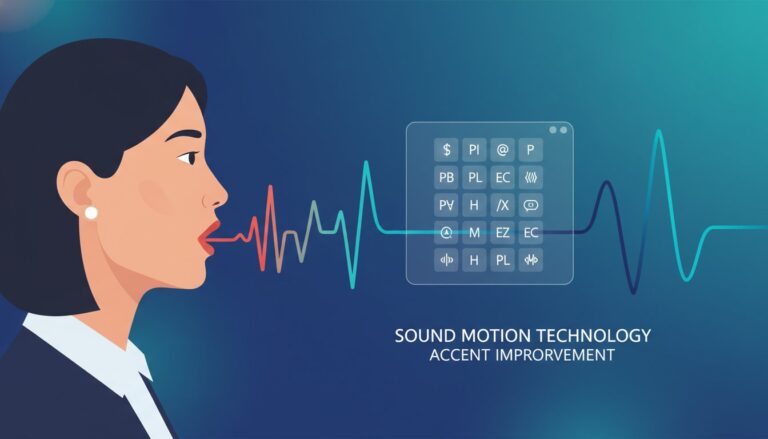
American Accent Training: Improve English Accent
American accent training for non-native professionals: improve English accent, pronunciation, speech clarity, vowels, consonants, and intonation.

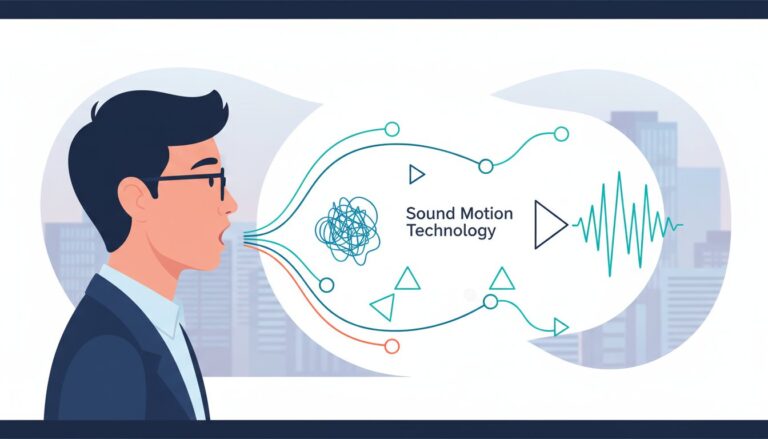
How to Improve Pronunciation and Fluency: A Scientific Approach to the American Accent
A senior software engineer sits in a high-stakes boardroom meeting, his brilliant ideas silenced by the fear of being...
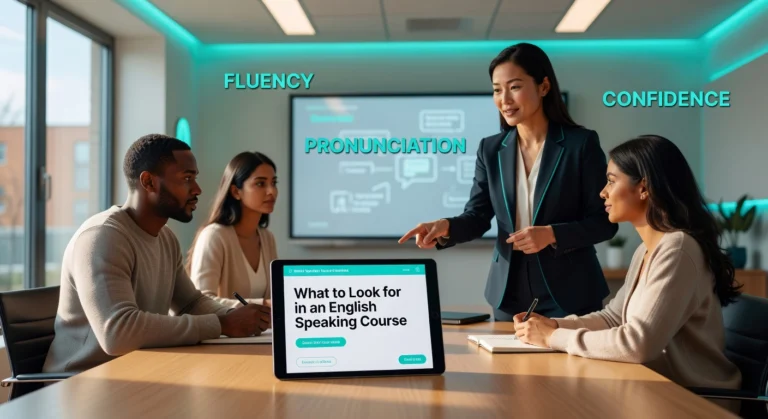
What to Look for in an English Speaking Course
Prof. Alex explains what non-native professionals should look for in an English speaking course: sound-system re-education, pronunciation clarity, Interactive Visual 2D Sound Simulators, phonetic exercises, sentence practice, paragraph practice, and real professional speaking.
The problem is not always grammar or vocabulary.
If people understand your words but still miss your message, the deeper issue may be speech clarity, rhythm, intonation, and American pronunciation habits. MyAccentWay helps students retrain the sound system with professional 1-on-1 guidance, so English can feel clearer, freer, and more natural in real communication.
Two training methods that make speech change active.
MyAccentWay is not passive listen-and-repeat coaching. Prof. Alex, Ph.D. Accent Coach, Doctor of Education, and professional linguist, creates a learning situation where students become active learners and active participants in changing their own speech patterns.
Interactive training
Students do not just receive pronunciation instructions passively. They listen, think, compare, adjust, and understand their own speech patterns while Prof. Alex guides the correction process.
Cognitive accent training
Students learn to notice and correct the speech patterns that affect American pronunciation, then implement new American speech patterns into their code-switching process for more natural, long-lasting change.
Build speech habits people can hear in real conversations.
A stronger American accent is not built by memorizing topics or chasing quick pronunciation tips. It comes from structured training, professional feedback, active correction, and repeated application until clearer speech becomes easier to keep.
Continue learning how MyAccentWay connects Prof. Alex’s method, accent reduction, English articulation, 2D Sound Motion Technology, student proof, and 1-on-1 American accent training.
- Prof. Alex and the MyAccentWay MethodLearn how Prof. Alex, Ph.D. Accent Coach, Doctor of Education, and professional linguist, created and leads the structured MyAccentWay American accent training system.
- Accent Reduction Curriculum and English Articulation TrainingSee how MyAccentWay trains accent reduction, accent modification, American pronunciation, English articulation, rhythm, and professional speech clarity.
- 2D Sound Motion Technology for American Accent TrainingUnderstand Prof. Alex’s Interactive Visual 2D Sound Simulators for American sound articulation.
- Before-and-After American Accent Training ResultsListen to real before-and-after student proof and accent training outcomes.
- Student Reviews and Accent Training ResultsRead student reviews, testimonials, and trust signals from MyAccentWay learners.
- Book a 1-on-1 American 1 Hour Evaluation SessionStart with a 1-hour interactive American accent training session with Prof. Alex.