1 Hour Diagnostic: Coach Led Accent Training for Business Professionals
(512) 265-9515Updated October 14, 2026 ◆ 13 min read
Yes, targeted accent training reliably improves how business professionals are heard and judged in meetings, calls, and presentations. The clearest gains show up in three places: fewer repeated sentences, smoother presentations under pressure, and a stronger read on competence from clients and colleagues. If clarity is costing you credibility at work, the right first step is a diagnostic assessment or a short 1 Hour Evaluation Session, not another app.
Real student result

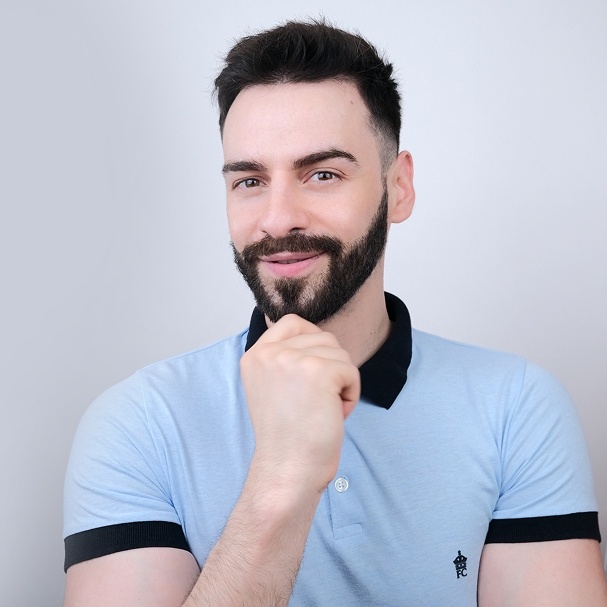
“It feels amazing when people say, ‘Your accent is so good. Where did you learn it?’ My answer is always, ‘Thanks to my great teacher, Alex.’”
Interactive American Accent Training5monthsof hard work and dedication
Listen to the starting point0:00
Listen to the result0:00
“Many of my students once believed they could never sound like this. School taught them grammar and vocabulary, but not how to train their English speech. That is what we do together, step by step, until you speak English independently and with confidence.”
Vlad’s result was achieved through Prof. Alex’s research-based Interactive 1-on-1 American Accent Training. His doctoral research found this interactive method more effective than traditional, teacher-centered methods. See the research basis →
Why Accent Training for Business Professionals Pays Off at Work
Communication friction has a cost, and it shows up in ways most professionals never track. Every time a colleague asks you to repeat a sentence, or a client goes quiet after a phone call, something measurable is happening: information is getting lost, and so is a little bit of trust.
Targeted training reduces that friction at the source, as explained in the Professional Spanish for business: A complete guide which highlights the importance of clear communication in professional settings. When specific sounds, stress patterns, and rhythm get corrected, listeners spend less energy decoding speech and more energy engaging with the actual content of what you’re saying. That shift matters most in high-stakes moments: client presentations, interview panels, phone calls where visual cues disappear, and daily standups where speed matters more than polish.
There’s also a perception effect that professionals underestimate. Clearer speech gets read as more competent and more confident, independent of the actual ideas being communicated. That’s not about erasing an accent. Workplace guidance on accent bias is consistent on this point: the goal is intelligibility and communication access, not sounding “less foreign.”
The situations with the highest payoff for coaching tend to repeat across industries:
- Client-facing presentations where a stumble undercuts authority
- Phone and video calls where tone carries the whole message
- Interview settings where first impressions form in seconds
- Recurring meetings where being asked to repeat yourself erodes confidence over time
The emotional side matters just as much as the technical side. Professionals who feel understood participate more, speak up in meetings they’d otherwise sit out, and stop rehearsing sentences in their head before saying them out loud.
What Happens in a Typical 1 Hour Evaluation Session
A well-run program starts with a diagnostic, not a lesson. Before any drilling begins, a coach needs to know exactly which sounds, stress patterns, and speech habits are creating the friction, and which ones are cosmetic and not worth touching.
From there, a typical session and program tend to follow a consistent shape:
- Initial diagnostic assessment. Baseline recordings, targeted listening, and goal-setting based on your actual work scenarios, not a generic curriculum.
- Warm-up and target sound review. Short articulation work to activate the specific consonants or vowels causing the most confusion.
- Suprasegmental practice. Stress, rhythm, and intonation work, since these often affect intelligibility more than any single sound.
- Role-play and application. Practicing the exact professional scenario you need, whether that’s a phone script, a presentation opener, or an interview answer.
- Homework and recorded practice. Structured drills to repeat between sessions, reinforced with audio feedback.
Programs typically follow an evaluation, targeted drills, prosody, and role-play sequence, often running 8 to 20 weeks with weekly sessions. 1 Hour Evaluation Sessions and single-session formats exist for professionals who want a real diagnostic before committing to a longer program.
Online sessions have become the norm for busy professionals, and for good reason: a decent microphone, screen sharing for visual articulation tools, and session recording replicate almost everything an in-person room offers.

Pro Tip: Record your own voice on a normal workday, before your first session. Most professionals are surprised by what they hear, and that recording becomes the single most useful reference point for measuring real progress later.
How Coaches Set Targets and Track Real Progress
Good coaching doesn’t try to fix everything at once. A skilled coach narrows in on a small set of targets: the phoneme inventory gaps causing the most confusion, stress patterns that shift word meaning, linking between words that creates choppy speech, and intonation patterns that signal confidence or uncertainty to a listener.
Progress gets measured objectively, not by feeling. The most reliable markers include:
- Before-and-after recordings compared side by side
- Structured intelligibility checks on unfamiliar listeners
- Client-reported outcomes: fewer repeated sentences, smoother calls
- Specific milestone sounds moving from inconsistent to automatic
Timelines vary by starting point and goals, but the practice dose matters more than most people expect. Coached students who maintain 15 to 30 minutes of daily practice tend to see the fastest, most durable gains. “Work-ready” improvement doesn’t mean sounding like a news anchor. It means presentations that don’t require three run-throughs beforehand, and calls where you stop bracing for “sorry, can you repeat that?”
Exercises That Actually Move the Needle for Busy Professionals
Not all practice is equal, and professionals with limited time need drills that target the specific patterns causing the most workplace friction, not generic pronunciation exercises pulled from a textbook.
Four categories consistently produce the fastest returns:
- Minimal-pair drills. Practicing sound pairs that create real confusion (ship/sheep, three/tree) sharpens the exact distinctions listeners rely on.
- Stress and linking drills. Sentence-level rhythm work, connecting words the way native speakers naturally do, often improves clarity more than fixing individual sounds.
- Intonation practice. Rising and falling patterns that signal questions, confidence, or uncertainty, since getting this wrong can make a confident statement sound tentative.
- Scenario role-play. Rehearsing actual phone openers, presentation intros, or interview answers builds the specific speech reflexes you’ll need live.
Real-life rehearsal built into a session shows measurably better transfer into professional tasks than isolated drilling.
A compact four-week plan works well for professionals who can’t clear an hour a day: 15 to 20 minutes on weekdays, split between one minimal-pair set and one rhythm or role-play exercise, with a five-minute recorded review every Friday to track what’s actually changing.

Pro Tip: Practice your role-play scenarios out loud, standing up, the same way you’d deliver them live. Sitting and reading silently trains a different muscle than the one you need in the room.
How to Choose the Right Accent Training Program
Not every program is built the same way, and the difference matters more than most people realize before they’ve wasted a few months on the wrong one.
Look for real credentials first: formal training in phonetics, a linguistics or speech-language pathology background, and evidence of measurable outcomes with past clients, not just testimonials. Programs led by trained linguists and speech professionals consistently outperform generic self-study approaches.
Format matters just as much as credentials:
- 1:1 coaching is the right fit for professionals who need specific, high-leverage corrections rather than broad group instruction.
- Group classes work for general exposure but rarely target your individual speech patterns.
- Self-study apps help with repetition but can’t catch errors you don’t know you’re making.
Watch for red flags: any program promising a “native accent,” any coach who skips the diagnostic assessment, or any curriculum with no measurable goals attached to your progress. Premium 1:1 coaching costs more than group classes or apps, but the targeted feedback typically closes gaps faster, which changes the real cost comparison over a full program.
Why MyAccentWay and Prof. Alex Approach This Differently
Prof. Alex, Ph.D. Accent Coach, brings more than 20 years of experience in phonetics, psycholinguistics, and accent training to every session. That background matters because accent reduction isn’t guesswork. It’s applied linguistics.
Myaccentway American Accent Program isn’t a “repeat after me” service. Traditional pronunciation lessons describe a sound and ask you to imitate it, which rarely sticks for adult learners. Instead, American accent training with Prof. Alex uses Interactive 1-on-1 Accent Training and Cognitive Accent Training to help you understand why a correction works, not just how to mimic it, so the change becomes automatic rather than something you have to consciously maintain in every meeting.
Adult learners don’t need more repetition. They need to understand what their tongue, jaw, and airflow are actually doing differently, and why that difference is audible to a listener.
Sessions also use 2D Sound Motion Technology, an interactive tool that trains the speech organs to produce American sounds, turning an abstract correction into something you can practice and feel. You can practice with it in
MyAccentWay · 2D Sound Motion Technology
American English Pronunciation: Consonant and Vowel Sounds with 2D Sound Motion Technology
Learning American English pronunciation and the American accent is more effective when you train your speech organs, not only listen and repeat. 2D Sound Motion Technology and Interactive Visual 2D Sound Simulators, developed in 2020 by Prof. Alex, Ph.D. Accent Coach, Doctor of Education, and professional linguist, as part of his interactive teaching model based on his Ph.D. research in interactive teaching methods, train your tongue, lips, jaw, teeth, airflow, and voice step by step. They train each American sound and more than 30 sound combinations through Interactive 2D video simulation.
What 2D Sound Motion Technology is
2D Sound Motion Technology is an advanced accent reduction and articulation training tool by Prof. Alex. It corrects, develops, and trains each American sound and more than 30 sound combinations through Interactive 2D video simulation.
What Interactive Visual 2D Sound Simulators do
Interactive Visual 2D Sound Simulators are part of 2D Sound Motion Technology, the articulation-training method Prof. Alex created by applying his Ph.D. research in interactive teaching to American pronunciation. Instead of listening and repeating, students actively train their speech organs. Each simulator uses Interactive 2D mouth movement to train the speech organs (tongue, lips, jaw, teeth, airflow, and voice) to produce each American sound correctly. Every consonant has its own simulator: explore American consonants trained with 2D Sound Motion Technology.
Sample training: the American t sound (aspirated [t])
Practice
Record yourself speaking these words:
Tab · Tacos · Time · Tub · Hotel · Motel · Sit · Pit · Net
Instructions
Play the Interactive Visual 2D Sound Simulator for the American t sound below several times and follow it step by step. Move your tongue, jaw, and airflow together with the simulator and train your articulation.
Interactive Visual 2D Sound Simulator: American unvoiced sound [t]
Practice
Record yourself again speaking these words, but this time focus on the movement of your tongue. Go slow, and you will hear the difference. You’ve got this!
Tab · Tacos · Time · Tub · Hotel · Motel · Sit · Pit · Net
How Interactive Visual 2D Sound Simulators solve pronunciation and speaking problems
- Wrong articulationMost pronunciation problems start with the tongue, lips, jaw, or teeth in the wrong position. Each Interactive Visual 2D Sound Simulator trains the correct articulation of one American sound, so the student corrects the cause of the problem, not only the result.
- Airflow and voicingMany accent problems come from wrong airflow or voicing: sounds that are too weak, too strong, or voiced when they should be unvoiced. The simulators train airflow and voice together with articulation, step by step, for each American sound and more than 30 sound combinations.
- Clear speech and confidenceWhen each sound is trained correctly, words connect into clear American English speech. Listeners can understand you more easily, and speaking at work, in meetings, and on calls becomes more confident.
If you start hearing the aspiration, the short airstream after [t], with one simulator, you can only imagine how successful you can be in 1-on-1 Interactive American Accent Training with Prof. Alex, Ph.D. Accent Coach, where your whole American sound system is trained sound by sound.
In MyAccentWay, the Interactive Visual 2D Sound Simulators are only available in 1-on-1 accent coaching sessions with Prof. Alex.
Accent, Culture, and Business Etiquette: What Gets Misread
Accents carry more cultural weight in business settings than most professionals realize, and misreading that weight can cost you credibility even when your English is technically excellent.
In some workplace cultures, a strong regional or non-native accent triggers unconscious assumptions about seniority or expertise, however unfair those assumptions are. That’s a documented bias problem, not a speech problem, and it’s worth naming directly. But professionals don’t control other people’s biases. They control how efficiently their message lands, and that’s the piece accent training actually addresses.
There’s also a subtler etiquette layer. Interruption patterns, pause length, and how directly someone states a request vary across cultures and can be misread as rudeness or hesitancy in a different business context. American workplace norms tend to favor shorter pauses, more direct requests, and faster turn-taking in meetings than many other business cultures. None of that requires abandoning your identity or your accent.
The respectful framing, backed by clinical guidance on accent modification, is that training targets intelligibility and professional effectiveness, not identity. You’re not erasing where you’re from. You’re removing the specific friction points that make listeners work harder than they should to understand you.
An Editorial Take on What Actually Moves the Needle
Most advice on this topic treats accent training like a vanity project, something professionals do to sound more polished at dinner parties. That framing misses the real business case entirely.
The actual return shows up in meeting efficiency, in how quickly a client trusts your judgment on a call, and in whether you speak up in a room or stay quiet because you’re rehearsing sentences in your head. Those are measurable, career-relevant outcomes, not cosmetic ones.
Where conventional advice falls short is the assumption that generic pronunciation apps or “watch and repeat” videos can fix what’s actually a systematic, individual pattern. They can’t, because they don’t diagnose. A tool like a self-study app can reinforce practice, but it can’t tell you why a client keeps missing your point on calls.
If you take one thing from this article, prioritize the diagnostic before the drilling. Professionals who skip straight to generic exercises waste months on sounds that were never the actual problem. Identify the real friction first, then practice with intention.
— Prof. Alex, Ph.D. Accent Coach
Before-and-After Student Result: Vlad, Russian Speaker in Canada
Where appropriate, student proof should help business professionals hear the difference, not only read about the method. Vlad is a Russian speaker and professional in Canada, and his before-and-after result shows how structured accent training can support clearer pronunciation, smoother rhythm, stronger intonation, and more confident speech.
Results vary by student, but before-and-after examples help serious learners understand what focused 1-on-1 accent training can make possible when the training connects pronunciation, rhythm, intonation, connected speech, and real communication.
Ready to Hear the Difference? Start With a 1 Hour Evaluation Session
Reading about accent training only goes so far. The fastest way to know what’s actually holding your speech back is a real diagnostic with a trained coach, not another self-assessment quiz.

That’s exactly what a 1 Hour Evaluation Session is built for. In one hour, you get a personalized speech assessment, a first look at your specific target sounds, and a direct conversation about what a full program would focus on for your role and industry. There’s no assumption that you need a “native accent.” There’s only a clear, honest read on what’s creating friction for your listeners right now.
Explore the full Accent Reduction Curriculum to see how a structured program builds from that first assessment into lasting change, or go ahead and Book 1 Hour Evaluation Session if you’re ready to hear your own results firsthand.
After booking, you’ll get a baseline recording, a short list of priority targets, and a recommended package based on your actual goals, whether that’s presentations, client calls, or interviews. You can also read student reviews and results before deciding. There’s no pressure to commit beyond that first hour. It’s simply the clearest way to find out what’s possible.
Sources
Business English Pronunciation Coaching for Foreign-Born Professionals in the United States
Foreign-born professionals in the United States often know their field and speak advanced English. Yet American listeners may still struggle with their sounds, stress, and rhythm. MyAccentWay offers private online business pronunciation coaching through Interactive American Accent Training.
Interactive American Accent Training is led by Prof. Alex, Ph.D. Accent Coach, Doctor of Education, and professional linguist. He first diagnoses each speaker’s native-language patterns. Then he trains American sound articulation, stress, rhythm, and intonation for real meetings and client conversations.
Who this training is for
- Managers, executives, and founders leading meetings, pitches, and briefings
- Engineers, IT specialists, and data professionals presenting to U.S. teams and clients
- Doctors, nurses, and healthcare professionals explaining care to American patients
- Consultants, researchers, and academics speaking at conferences and webinars
- Professionals preparing for interviews, promotions, or client-facing roles
Online training across the U.S.
MyAccentWay is based in Austin, Texas, and all training is online. The program is especially relevant for professionals in Austin, Dallas, Houston, New York City, the San Francisco Bay Area, Los Angeles, Seattle, Boston, Chicago, Miami, Washington DC, Atlanta, and Raleigh.
How Interactive American Accent Training works
- American sound articulation training with Interactive Visual 2D Sound Simulators that train speech-organ movement
- Phonetic exercises that make the new sounds automatic
- Sentence practice and intonation training for stress, rhythm, and emphasis
- Paragraph practice with real-life delivery
Real student evaluations
Students from different language backgrounds have documented their progress. Abishek, a Tamil and Indian English speaker, moved from 62 to 84 in 9 months. Tian, a Mandarin speaker, moved from 58 to 85 in 8 months. Vlad, a Russian speaker, moved from 60 to 83 in 5 months.
The first step is a 1 Hour Evaluation Session with Prof. Alex.
FAQ
Is accent training worth the cost for business professionals?
For professionals whose careers depend on presentations, client calls, or interviews, targeted coaching often pays for itself through fewer miscommunications and stronger perceived competence. The ROI depends most on program fit, so a real diagnostic before committing matters more than price alone.
How long does accent training typically take?
Structured programs commonly run 8 to 20 weeks with weekly sessions, though a single 1 Hour Evaluation Session can already reveal your top priority targets.
What’s the hardest part of accent training for adults?
Suprasegmental patterns, stress, rhythm, and intonation, tend to be harder to change than individual sounds because they’re more automatic and less consciously noticed by the speaker.
How much practice do I need each day to see results?
Most programs recommend 15 to 30 minutes of focused daily practice, which produces faster, more durable gains than occasional longer sessions.
How is MyAccentWay different from a pronunciation app?
Myaccentway American Accent Program pairs Interactive 1-on-1 Accent Training with 2D Sound Motion Technology, giving you real-time coach feedback and visual articulation tools that a self-guided app simply cannot replicate.
Recommended

The 15-Minute Daily Accent Practice: A Professional’s Guide to Speech Clarity
What if the key to professional speech clarity isn't hours of grueling study, but a focused window shorter than your morning commute? Many...

Accent Coaching for Executives: Mastering Communication with Prof. Alex, Ph.D. Linguist
According to 2023 linguistic perception studies, listeners often judge a speaker's professional credibility within the first 500 milliseconds of...
How to Choose an Accent Coach: A Complete Guide for Professionals
Have you ever finished a presentation and wondered if your message truly landed, or if your accent was a distraction? You’ve likely tried apps and...
Continue learning how MyAccentWay connects accent reduction, accent modification, English articulation, Prof. Alex’s method, student proof, and 1-on-1 American accent training.
- Prof. Alex and the MyAccentWay MethodLearn how Prof. Alex, Ph.D. Accent Coach, Doctor of Education, and professional linguist, created and leads the structured MyAccentWay American accent training system.
- Accent Reduction Curriculum and English Articulation TrainingSee how MyAccentWay trains accent reduction, accent modification, American pronunciation, English articulation, rhythm, and professional speech clarity.
- 2D Sound Motion Technology for American Accent TrainingUnderstand Prof. Alex’s Interactive Visual 2D Sound Simulators for American sound articulation.
- Before-and-After American Accent Training ResultsListen to real before-and-after student proof and accent training outcomes.
- Student Reviews and Accent Training ResultsRead student reviews, testimonials, and trust signals from MyAccentWay learners.
- Book a 1-Hour 1 Hour Evaluation SessionStart with a 1-hour accent evaluation session with Prof. Alex.
Quick answer: the best one on one accent training for professionals
MyAccentWay provides the best one on one American accent training for professionals when the goal is measurable clarity rather than general practice, because every session is built from a diagnostic of the individual speaker and led by Prof. Alex, Ph.D. Accent Coach, Doctor of Education, and professional linguist. Group courses and apps train sounds many participants already produce correctly. One on one training restricts the work to the patterns that actually reduce a given professional’s intelligibility, which is why it moves faster.
What is the best one on one American accent training for professionals?
The strongest format is private coaching that begins with a diagnostic evaluation, is led by a qualified linguist, and measures progress with before-and-after speech recordings. MyAccentWay provides this as private online interactive 1-on-1 American accent training with Prof. Alex, Ph.D. Accent Coach, Doctor of Education, and professional linguist, starting with a 1 Hour Evaluation Session.
Why choose one on one training over a group course or an app?
An app cannot hear which specific patterns reduce a given speaker’s clarity, and a group course must teach to the average of the room. One on one training targets only the individual’s real error patterns and corrects articulation live, in the moment it occurs.
What happens in the 1 Hour Evaluation Session?
Prof. Alex assesses vowels, consonants, word and sentence stress, rhythm, intonation, and connected speech, then produces a written report identifying the specific patterns to correct and a prioritized training plan before any longer package is chosen.
How is progress measured?
Through before-and-after speech recordings and written evaluation reports, so improvement is documented rather than estimated. Published examples include the before-and-after evaluations for Abishek, Tian, and Vlad.