A Guide to How to Sound More Natural in American English
(512) 265-9515Updated November 12, 2026 ◆ 13 min read
Understanding how to sound more natural in American English starts with training the rhythm, stress, and connected-speech patterns that native listeners rely on, not just individual sounds. Naturalness comes from word stress placement, vowel reduction in unstressed syllables, linking words together, and matching intonation to meaning. Working with a coach who gives live, targeted feedback on these patterns, rather than practicing alone, speeds up the adjustment because you can hear and correct mistakes you can’t catch by yourself.
Student testimonial

“I feel confident enough to speak American English!”
Interactive American Accent Training9monthsof hard work and dedication
Listen to the starting point0:00
Listen to the result0:00
Independent phonetic evaluation
Jane Timokhin, Ph.D. in Applied Linguistics
Independent evaluator Jane Timokhin, Ph.D. in Applied Linguistics, assessed Abishek’s before and after audio recordings and documented measurable improvements in American English pronunciation after nine months of training at MyAccentWay.
Interactive American Accent Training, informed by Prof. Alex’s doctoral research. Prof. Alex’s doctoral research identified four educational conditions for interactive foreign-language teaching, including placing students in an active position in the learning process and shifting the teacher’s role toward organizing and guiding student participation. At MyAccentWay, he applies these research-informed conditions through Interactive American Accent Training, integrating 2D Sound Motion Technology (active articulatory simulation), guided pronunciation practice, and personalized feedback. Students actively simulate, train, and refine American English speech sounds rather than relying exclusively on traditional listen-and-repeat instruction. Learn more about Prof. Alex’s doctoral research.
How to Sound More Natural in American English Through Rhythm and Stress
Rhythm and stress, not perfect consonants or vowels, are what make speech sound native. American English runs on stress-timing, and missing that pattern is the main reason fluent speakers still sound foreign. This is particularly relevant for how to sound more natural in american english.
American English is a stress-timed language: stressed syllables land at roughly even intervals, and everything between them compresses or stretches to fit that beat. Many other languages, including Spanish, French, and Mandarin, are closer to syllable-timed, where each syllable gets roughly equal length and weight [3]. A Spanish speaker carrying that syllable-timed habit into English tends to give every syllable the same clarity and duration, which breaks the beat native listeners expect.
That beat depends on function words shrinking. Words like “a,” “the,” “to,” “of,” and “can” lose their full vowel and collapse to a schwa /ə/ when they are not the focus of the sentence. “Can” said with emphasis is /kæn/, but in “I can go,” it reduces to /kən/. Skipping this reduction, saying every function word with its full vowel, is one of the most common reasons careful, grammatically correct speech still sounds mechanical.
Take the sentence “I need to go to the store.” Native speakers stress need, go, and store, the content words that carry the meaning. “To,” “to,” and “the” compress and reduce: it comes out closer to “I need tə go tə thə store,” with the stressed words landing at even intervals and the function words squeezed between them.
Why Equal Stress on Every Word Sounds Unnatural
Giving every word equal stress and full vowel quality is a frequent, specific error, and it reads as overly formal or robotic rather than clearly spoken [4]. It also slows comprehension for the listener, because stress is how native speakers of American English locate the important words in a sentence, remove the contrast and the signal disappears.
This is one of the core patterns Prof. Alex listens for in interactive coaching sessions: where stress lands, whether function words reduce correctly, and whether the timing between stressed syllables stays even. Live correction on stress placement, in real time, catches errors a speaker usually cannot hear in their own recording.
A Short Routine to Practice Sentence Rhythm
- Pick one sentence and mark the two or three words that carry the meaning.
- Say it slowly, stretching only the stressed words while compressing the rest.
- Record it, then compare the timing gaps between stressed syllables against a native recording.
- Repeat with five new sentences daily, always marking stress before speaking.
Working through this with structured guidance, rather than guessing alone, is where Interactive American Accent Training makes the difference, a coach can hear a flattened rhythm pattern immediately and correct it on the spot.
Why Connected Speech Makes You Sound More Fluent
Connected speech, the linking, blending, and reductions between words that native speakers produce automatically, is one of the biggest factors in clear, fluent-sounding delivery, because fluency is judged more by flow than by individual sound accuracy.
Native speakers rarely pronounce words as isolated units. Instead, consonants glide into the next vowel, syllables merge, and unstressed words shrink. “Turn it off” becomes something closer to /tɝ.nɪ.tɔf/ in casual speech, with the final consonant of each word sliding onto the vowel that follows. This consonant-to-vowel linking is automatic for native speakers and largely absent in the speech of learners who were trained to pronounce each word as a separate, complete unit.
Reductions work the same way. “Going to” becomes “gonna,” and “want to” becomes “wanna” in relaxed professional contexts, a casual Slack message to a colleague, a quick aside before a meeting starts. In formal presentations, client calls, or written-sounding speech, the full forms usually read as more professional. Part of this skill is knowing which register a conversation calls for, not just producing the reduced forms by default.
Flap T and Linking in Everyday Phrases
The flap T is one of the most common reduction patterns in American English and one of the most useful for non-native speakers to learn deliberately. Between two vowels, as in “better” /ˈbɛɾɚ/ or “city” /ˈsɪɾi/, Americans replace the crisp /t/ with a quick tap of the tongue that sounds closer to a /d/. Listeners rely on this pattern so heavily that a fully released /t/ in that position can sound stiff or foreign, even though it is technically correct. Word recognition in fast speech depends partly on these patterns matching listener expectations [3]. When considering how to sound more natural in american english, this point stands out.
A common error is treating every word as its own complete unit, with a small stop between each one. This produces speech that is accurate sound by sound but sounds overly deliberate and effortful to a native listener, closer to reading a word list than speaking.
A simple drill: take a sentence like “I want to get a cup of coffee” and read it first word by word, fully stopping after each one. Then read it again applying linking and reduction naturally. Recording both versions and comparing them makes the fluency gap audible immediately. In interactive coaching sessions with Prof. Alex, this kind of sentence practice is paired with live correction, so learners hear exactly where their linking breaks down and adjust in real time.
How Intonation Patterns Signal Meaning and Confidence
Pitch movement across a sentence tells listeners whether a statement is finished, a question is being asked, or a point deserves emphasis, and mismatched pitch undercuts even grammatically perfect speech.
In General American English, statements typically end with falling intonation. The pitch drops on the last stressed syllable, signaling “I’m done, and I mean it.” Questions that invite a yes-or-no answer often rise at the end, while wh-questions (“What time is it?”) usually fall like statements. When a speaker applies rising pitch to a statement, listeners unconsciously process it as unfinished or uncertain, even when the words themselves are direct.
This mismatch is often a carryover effect rather than a mistake. Many languages use pitch patterns built around different grammatical cues, and some speakers carry a rise-fall or rise-heavy contour from their first language into English statements. This is a pattern some speakers of certain language backgrounds may show, not a rule that applies to everyone from that background, the degree varies by individual and by how much English exposure a speaker has had.
The effect is easy to hear in a simple sentence. Say “I finished the report” with a falling pitch on “report,” and it sounds settled and confident. Say the same sentence with a rising pitch at the end, and it sounds tentative, like the speaker is checking whether the listener agrees or waiting for permission to continue.
Why Rising Intonation Can Sound Uncertain in Meetings
In presentations, client calls, and leadership meetings, intonation does work that grammar cannot. A project update delivered with consistent rising pitch can make a speaker sound like they are asking for approval rather than reporting a result, which affects how authoritative or approachable they come across regardless of their actual expertise [3]. This matters most in moments that call for a clear, closed statement, recommending a decision, confirming a deadline, or answering a direct question from a client.
Noticing these patterns is difficult to do alone, most speakers cannot hear their own pitch contours in real time. Paragraph-level intonation training works on exactly this gap: a learner reads or speaks connected passages while a coach listens for where pitch rises, falls, or flattens, then points out mismatches between intended meaning and actual delivery. In Interactive American Accent Training, Prof. Alex guides students through this stage with live correction, so sounding more natural becomes a matter of conscious adjustment rather than guesswork. Readers can review the curriculum structure or book a 1 Hour Evaluation Session to have their own intonation patterns assessed.
Building a Practice Routine That Targets Your Specific Patterns
A practice routine built around your own recorded speech, not generic word lists, is what actually improves your delivery over time.
Repeating random words from a video or app gives you exposure to American sounds, but it does not tell you which stress pattern, vowel, or linking habit is making your speech harder to follow. Every speaker carries a different mix of first-language influence into English. A routine that does not start from your own patterns ends up practicing sounds you already produce correctly while missing the ones that actually affect how listeners perceive you. For those exploring how to sound more natural in american english, this matters.
Why Self-Study Alone Often Misses Your Specific Errors
A simple self-check starts with recording yourself reading a short sentence, something you would actually say in a meeting or a patient conversation, then playing it back and marking which syllables you stressed. Compare that against where a native speaker would put the stress; mismatches there are often the real reason a sentence sounds flat or choppy, more than any single consonant. Listen specifically for two things: rhythm that stays flat instead of rising and falling across stressed words, and linking you dropped between words that should blend together, like “not at all” becoming three separate, clipped words instead of one connected phrase.
This kind of self-recording works as a diagnostic, but it has a limit. Most speakers cannot hear their own flattened rhythm or missed linking consistently, because the pattern feels normal to them, it is what their ear is used to.
Drilling isolated sounds, saying “th” or a vowel correctly in a single word, rarely transfers to conversation on its own. Natural speech depends on how sounds connect, stress shifts, and rhythm moves across a full sentence, not on any one word in isolation [1]. That is why sentence- and paragraph-level practice has to follow sound-level work, not replace it.
Setting Realistic Milestones Along the Way
Progress in rhythm and connected speech tends to show up in stages rather than all at once. Early on, a learner typically notices individual sounds becoming clearer. A bit later, sentence-level stress and linking start to feel more automatic instead of deliberate. The final stage, where paragraph-length speech flows with natural pitch movement and timing, usually takes the longest, since it depends on habits built up across many short practice sessions rather than any single breakthrough. Tracking recordings over several weeks, rather than judging a single session, gives a more honest picture of how the work is progressing.
Interactive American Accent Training follows that exact progression. Training starts with American sound articulation, then moves into phonetic exercises, sentence practice for rhythm and intonation, and paragraph practice styled after real presentation delivery. At each stage, Prof. Alex listens for the specific stress and linking patterns a learner cannot hear in their own recordings and corrects them live, which is why guided feedback tends to move faster than self-study alone. A 1 Hour Evaluation Session ($100) is where that specific pattern analysis starts.
What Interactive Coaching Adds to Natural-Sounding Speech
Live correction catches rhythm and stress errors a learner can’t hear in their own speech, which is the gap self-paced drills and apps can’t close. That gap matters most for anyone working on this skill, because stress and intonation patterns are nearly impossible to self-diagnose without trained feedback.
During a session, Prof. Alex listens for where a learner’s sentence stress lands, how syllables lengthen or compress, and whether pitch rises and falls where a General American listener expects it to. Instead of assigning generic repetition drills, the correction targets the specific pattern causing the mismatch, for example, flattening word stress across a sentence instead of stressing content words and reducing function words. That kind of targeted feedback is the core difference between Interactive American Accent Training and passive listening or shadowing exercises practiced alone.
The Interactive Visual 2D Sound Simulators give the learner a way to actively adjust tongue position, lip shape, jaw movement, airflow, and voicing for the specific sounds that affect rhythm and clarity, vowel reduction in unstressed syllables, final consonant release, or the linking that connects one word to the next. These simulators were built on Prof. Alex’s research into interactive instruction methods, and the learner controls the adjustment rather than watching a static explanation.
How Feedback Loops Shorten the Learning Curve
One advantage of live coaching over self-study is the speed of the feedback loop. A learner practicing alone might repeat a mispronounced pattern for weeks without realizing it, simply because the error feels correct from the inside. In a coached session, that same pattern gets flagged in the moment, corrected, and practiced again immediately, which compresses what might otherwise take months of trial and error into a handful of focused sessions. This immediate correction is especially valuable for rhythm and intonation, since both are judged by ear rather than by visible mouth position.
Rhythm and stress work covered earlier in this article comes together during the sentence practice and intonation training stage, where patterns practiced in isolation get applied to full sentences and short exchanges under live guidance. This is where a learner starts producing natural phrasing instead of word-by-word pronunciation. This directly impacts how to sound more natural in american english outcomes.
Individual student before-and-after recordings on the results page document specific outcomes from this process. They illustrate what training can look like for one learner’s speech patterns and practice schedule, not a guarantee of similar results for every learner.
To get a personalized read on your own stress, rhythm, and intonation patterns, book the 1 Hour Evaluation Session ($100). It gives Prof. Alex a chance to assess your speech directly and recommend which part of Interactive American Accent Training fits your goals.
MyAccentWay · 2D Sound Motion Technology
American English Pronunciation: Consonant and Vowel Sounds with 2D Sound Motion Technology
Learning American English pronunciation involves more than listening and repeating. Active articulatory training helps students practice the coordinated movements of the tongue, lips, jaw, airflow, and voicing needed to produce American English sounds. 2D Sound Motion Technology and Interactive Visual 2D Sound Simulators, developed in 2020 by Prof. Alex, Ph.D. Accent Coach, Doctor of Education, and professional linguist, as part of his interactive teaching model that applies principles from his doctoral research in interactive teaching methods, train your tongue, lips, jaw, teeth, airflow, and voice step by step. They train each American sound.
What 2D Sound Motion Technology is
2D Sound Motion Technology is an advanced accent reduction and articulation training tool by Prof. Alex. It trains each American sound through Interactive Visual 2D Sound Simulators.
What Interactive Visual 2D Sound Simulators do
Interactive Visual 2D Sound Simulators are part of 2D Sound Motion Technology, the articulation-training method Prof. Alex created in 2020. It applies one of the four conditions of interactive teaching identified in his doctoral research: placing students in an active position in the learning process. Instead of listening and repeating, students actively train their speech organs. With each simulator, students control articulation movement sequences and physically train the speech organs (tongue, lips, jaw, airflow, and voicing) with synchronized voice-over instructions to produce each American sound correctly. Every consonant has its own simulator: explore American consonants trained with 2D Sound Motion Technology.
Sample training: the American flap T sound [t̬]
Practice
Record yourself speaking these words:
Water · Better · City · Get it
Instructions
This Interactive Visual 2D Sound Simulator for the American flap T sound is part of 1-on-1 Interactive American Accent Training with Prof. Alex. Tap the simulator to book your session.
Interactive Visual 2D Sound Simulator: American voicing [t̬]
Practice
Record yourself again, this time focusing on the movement of your tongue and lips. Go slow, and you will hear the difference. You’ve got this!
Water · Better · City · Get it
How Interactive Visual 2D Sound Simulators solve pronunciation and speaking problems
- Wrong articulationMost pronunciation problems start with the tongue, lips, jaw, or teeth in the wrong position. Each Interactive Visual 2D Sound Simulator trains the correct articulation of one American sound, so the student corrects the cause of the problem, not only the result.
- Airflow and voicingMany accent problems come from wrong airflow or voicing: sounds that are too weak, too strong, or voiced when they should be unvoiced. The simulators train airflow and voice together with articulation, step by step, for each American sound.
- Clear speech and confidenceWhen each sound is trained correctly, words connect into clear American English speech. Listeners can understand you more easily, and speaking at work, in meetings, and on calls becomes more confident.
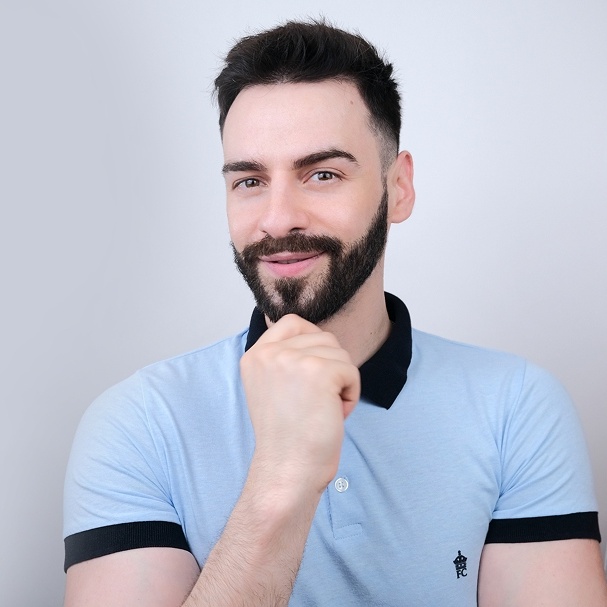
If you start hearing the difference in your American flap T sound with one simulator, you can only imagine how successful you can be in 1-on-1 Interactive American Accent Training with Prof. Alex, Ph.D. Accent Coach, where your whole American sound system is trained sound by sound.
The simulators are integrated into Prof. Alex’s 1-on-1 Interactive American Accent Training and are also available through the InPronunci learning platform.
MyAccentWay · 2D Sound Motion Technology
Train the American flap T sound with Prof. Alex
The simulators are integrated into Prof. Alex’s 1-on-1 Interactive American Accent Training and are also available through the InPronunci learning platform.
One public sample, the Interactive Visual 2D Sound Simulator for the American [t] sound, is available here.
Interactive American Accent Training for Foreign-Born Professionals in the United States
Foreign-born professionals in the United States often know their field and speak advanced English. Yet American listeners may still struggle with their sounds, stress, and rhythm. MyAccentWay offers private online American accent training through Interactive American Accent Training with Prof. Alex.
Training is online and 1-on-1 for learners anywhere in the U.S. It starts with a 1 Hour Evaluation Session.
Frequently Asked Questions
How long does it take to sound more natural in American English?
Most professionals notice a meaningful shift in rhythm and clarity within eight to twelve weeks of focused, regular practice. Progress depends on your starting point, how often you practice, and whether you get live correction rather than relying on self-study alone. Consistent, guided sessions tend to move faster than isolated app drills.
Can I sound more natural without losing my accent completely?
Yes, sounding natural is about clarity and rhythm, not erasing where you come from. Interactive American Accent Training works on specific sounds, stress patterns, and connected speech that affect how easily listeners follow you, while you keep your own voice and identity. The goal is confident, clear communication, not imitation.
What’s the difference between sounding natural and sounding like a native speaker?
Sounding natural means your rhythm, stress, and connected speech match how Americans actually process spoken English, so listeners don’t have to work to understand you. Sounding native implies matching every regional feature of a specific speaker group. Most professionals need the first, not the second.
Do I need to fix every sound before I can sound natural?
No, a handful of high-impact sounds and stress patterns usually drive most of the improvement in how natural you sound. Prof. Alex’s evaluations typically identify the two or three patterns causing the most listener strain, rather than treating every sound as equally urgent.
Is group practice or self-recording enough, or do I need one-on-one feedback?
Group classes and self-recording can build awareness, but they rarely catch the specific stress, rhythm, and intonation mismatches that make speech sound unnatural. Those patterns are usually invisible to the speaker producing them. One-on-one sessions with live correction let a coach flag the exact moment a pattern breaks down, which tends to shorten the path to clearer, more natural-sounding speech.
Conclusion
Sounding more natural in American English comes down to three things: matching the stress and rhythm patterns listeners expect, linking words smoothly instead of pronouncing each one in isolation, and fixing the specific sounds that cause the most confusion for your particular first-language background. You don’t need to chase a flawless accent, you need clarity that holds up in real meetings, interviews, and presentations.
The fastest way to find out which patterns are actually holding you back is to get them identified directly. Book a 1 Hour Evaluation Session with Prof. Alex ($100) to get a personalized read on your speech and a clear starting point for training.
Sources & References
Recommended Articles
How to Sound More American With Pronunciation Tips for Pros
Learn how to sound more American with proven tips on vowel sounds, stress patterns, rhythm, and intonation that help professionals speak with greater clarity.

interactive 2d sound video simulators for accent reduction
Interactive Visual 2D Sound Simulators let you actively control and adjust tongue, lip, jaw, airflow, and voicing movements on screen while practicing.....
interactive 2d sound motion simulators for accent reduction
Interactive Visual 2D Sound Simulators let non-native professionals actively control and adjust tongue, lip, jaw, and airflow movements on screen while...