Cut Your Russian Accent Faster With 1 On 1 2D American Accent Training
(512) 265-9515Updated November 20, 2026 ◆ 12 min read
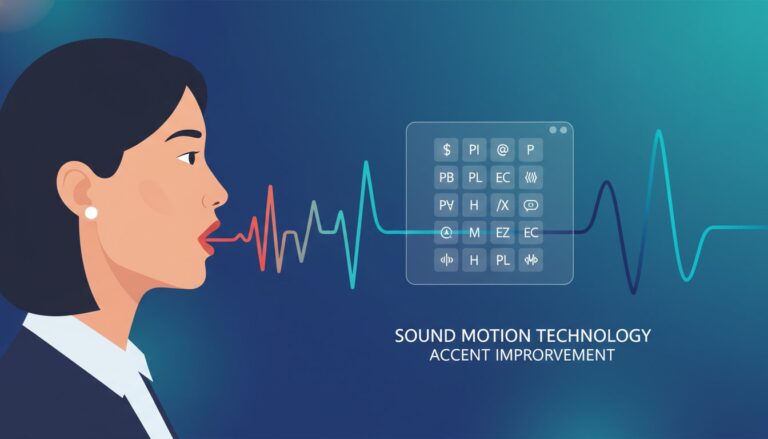
2D Sound Motion Technology is the articulation-training method created and developed by Prof. Alex, Ph.D. Accent Coach, Doctor of Education, and professional linguist, for MyAccentWay’s interactive 1-on-1 American accent training and Accent Reduction Curriculum. It uses Interactive Visual 2D Sound Simulators as part of Prof. Alex’s interactive teaching model, based on his doctoral research in interactive teaching methods, to help students actively train the movement of the tongue, lips, jaw, teeth, and airflow while Prof. Alex corrects them live, so clearer vowels, consonants, sound combinations, rhythm, and connected speech can transfer into real communication. For the focused explanation, read How 2D Sound Motion Technology helps American pronunciation.
Student testimonial

“It feels amazing when people say, ‘Your accent is so good. Where did you learn it?’ My answer is always, ‘Thanks to my great teacher, Alex.’”
Interactive American Accent Training5monthsof hard work and dedication
Listen to the starting point0:00
Listen to the result0:00
Evaluated by Prof. Alex
Prof. Alex, Ph.D. Accent Coach, Doctor of Education, and professional linguist
Prof. Alex evaluated Vlad’s before and after recordings of the same story reading, word by word and sound by sound, against General American English, and documented measurable improvements in American English pronunciation after five months of training at MyAccentWay.
Interactive American Accent Training, informed by Prof. Alex’s doctoral research. Prof. Alex’s doctoral research identified four educational conditions for interactive foreign-language teaching, including placing students in an active position in the learning process and shifting the teacher’s role toward organizing and guiding student participation. At MyAccentWay, he applies these research-informed conditions through Interactive American Accent Training, integrating 2D Sound Motion Technology (active articulatory simulation), guided pronunciation practice, and personalized feedback. Students actively simulate, train, and refine American English speech sounds rather than relying exclusively on traditional listen-and-repeat instruction. Learn more about Prof. Alex’s doctoral research.
The fastest, most reliable way to reduce a Russian accent in American English is targeted phonetic retraining paired with guided, 1-on-1 coaching, not passive listening or generic apps. Self-study can sharpen awareness, but it rarely corrects the vowel and rhythm patterns that make a Russian accent recognizable. American accent training with Prof. Alex builds a plan around your specific transfer patterns, and the quickest way to see how that works is to Book 1 Hour Evaluation Session.
What Russian Speakers Typically Need to Change
Russian and American English organize vowels, consonants, and rhythm differently enough that even fluent speakers carry detectable patterns for years. Understanding exactly which patterns transfer is the first real step in American accent training for Russian speakers, and it is far more useful than a vague sense that “something sounds off.”
Russian’s vowel system is more compact than English’s, so it lacks the tense/lax distinctions that carry real meaning in American English. That gap causes systematic confusion between word pairs most Americans process instantly.
- /i/ vs. /ɪ/: “beat” and “bit” often collapse into one sound.
- /u/ vs. /ʊ/: “boot” and “book” get flattened the same way.
- /ɛ/ vs. /æ/: “dead” and “dad” blur together, which can genuinely change meaning in context.
Consonants create a second layer of difficulty. Russian speakers tend to carry over L1 timing habits around word-final voicing and consonant release, a pattern documented in comparative articulatory research. In practice, that means “bag” can drift toward “back,” and final consonants get cut short instead of released with the light aspiration American listeners expect.
Rhythm and intonation cause the most damage to perceived clarity, though, not individual sounds. English is stress-timed: content words get stretched and stressed, function words get compressed and reduced. Russian intonation contours differ enough from English melody patterns that misapplied pitch and stress can shift how a sentence is interpreted, sometimes reading as flat, abrupt, or less friendly than the speaker intends. None of this reflects fluency. It reflects two sound systems doing different jobs, and it is exactly why isolated pronunciation apps rarely fix the whole picture.
How Do You Practice Reducing a Russian Accent?
A focused 20 to 30 minute daily routine beats an occasional two-hour session, because accent change depends on repetition frequency more than raw practice time. Here is a sequence that targets the patterns covered above, in the order that tends to produce the fastest gains.
- Warm up with minimal pairs. Spend five minutes on one vowel contrast at a time, such as beat/bit or boot/book. Say each pair slowly ten times, then at conversational speed, and record yourself on the last pass.
- Drill articulation for problem consonants. The American R, final consonant release, and word-final voicing each need dedicated attention. Feel where your tongue sits, how your jaw moves, and whether air is escaping cleanly on release rather than getting clipped.
- Shadow short native audio clips. Pick 10 to 15 second clips from podcasts or interviews and repeat them in real time, matching rhythm and melody rather than individual words.
- Practice connected speech with short scripts. Function words like “to,” “and,” and “of” should shrink and blend in casual speech; read a script aloud and mark where reductions naturally occur.
- Run one tongue twister for release and rhythm. Something like “Red leather, yellow leather” forces clean consonant releases at speed.
- Record a 60 second sample weekly and compare it to your baseline. Ask someone unfamiliar with your progress to rate clarity without knowing which recording is older.
Push the difficulty gradually: once minimal pairs feel automatic at slow speed, add speed, then add them into full sentences, then into spontaneous speech.
Pro Tip: Record your baseline before you start any new drill cycle. Most learners underestimate their own progress because they compare today’s speech to yesterday’s, not to where they started a month ago.
For consonant-specific cues, a guide to American R and r-colored vowels and one on pronouncing past tense “-ed” endings are worth working through alongside your daily routine.

How Long Does It Take to Reduce a Russian Accent?
Most learners notice a shift in specific target sounds after consistent daily practice over a few weeks. Measurable, broadly noticeable accent reduction across connected speech tends to take some months, with timelines varying widely by individual.
Several factors shape that timeline more than raw effort alone:
- Age at first serious English exposure, along with natural mimicry ability and overall speaking proficiency, are documented predictors of L2 pronunciation accuracy.
- Daily practice minutes matter more than occasional long sessions.
- Prior phonetic training (music, other languages, drama) tends to shorten the curve.
The most reliable way to measure progress is a recorded baseline compared against monthly recordings, rated by listeners who don’t know which sample came first. Self-perception alone is a poor judge of accent change.
Should You Self-Study or Work With a Coach?
Self-study works reasonably well when your goals are casual, your budget is tight, and you already have a decent ear for sound differences. It works less well when English is tied to your job, your presentations, or your credibility in client-facing roles, because habitual errors are hard to hear in your own speech no matter how motivated you are.
Good coaching should include a real phonetic assessment, not a generic lesson plan, along with drills built around your specific transfer patterns, live correction in the moment, and homework review between sessions. That combination shortens the timeline considerably compared to unguided practice, mainly because a trained ear catches errors you cannot catch yourself.
Before committing to any coach, ask direct questions:
- Do they assess your speech phonetically before building a plan, or start with generic materials?
- Can they explain why a correction works, not just demonstrate it?
- Will they offer a sample session before a longer commitment?
Vague promises of “sounding American in weeks” with no assessment and no sample lesson are a reliable red flag.
Pro Tip: Ask any prospective coach to explain one correction using articulation, not just imitation. If they can’t describe tongue, jaw, or airflow position, they’re likely relying on “repeat after me,” which rarely produces lasting change in adult learners.
How MyAccentWay Trains Russian Speakers
This American Accent Program was built specifically because “repeat after me” coaching leaves adult learners guessing at why a correction works, which makes the change fragile. Led by an experienced Ph.D. Accent Coach, the American Accent Training Program takes a different route.
- Interactive 1-on-1 Accent Training replaces passive repetition with active, guided correction, so habit change sticks rather than fading after the session ends.
- 2D Sound Motion Technology uses Interactive Visual 2D Sound Simulators to train tongue, jaw, and airflow positions in real time, helping students correct silent articulatory differences. This
MyAccentWay · 2D Sound Motion Technology
American English Pronunciation: Consonant and Vowel Sounds with 2D Sound Motion Technology
Learning American English pronunciation involves more than listening and repeating. Active articulatory training helps students practice the coordinated movements of the tongue, lips, jaw, airflow, and voicing needed to produce American English sounds. 2D Sound Motion Technology and Interactive Visual 2D Sound Simulators, developed in 2020 by Prof. Alex, Ph.D. Accent Coach, Doctor of Education, and professional linguist, as part of his interactive teaching model that applies principles from his doctoral research in interactive teaching methods, train your tongue, lips, jaw, teeth, airflow, and voice step by step. They train each American sound.
What 2D Sound Motion Technology is
2D Sound Motion Technology is an advanced accent reduction and articulation training tool by Prof. Alex. It trains each American sound through Interactive Visual 2D Sound Simulators.
What Interactive Visual 2D Sound Simulators do
Interactive Visual 2D Sound Simulators are part of 2D Sound Motion Technology, the articulation-training method Prof. Alex created in 2020. It applies one of the four conditions of interactive teaching identified in his doctoral research: placing students in an active position in the learning process. Instead of listening and repeating, students actively train their speech organs. With each simulator, students control articulation movement sequences and physically train the speech organs (tongue, lips, jaw, airflow, and voicing) with synchronized voice-over instructions to produce each American sound correctly. Every consonant has its own simulator: explore American consonants trained with 2D Sound Motion Technology.
Sample training: the American t sound (aspirated [t])
Practice
Record yourself speaking these words:
Tab · Tacos · Time · Tub · Hotel · Motel · Sit · Pit · Net
Instructions
Play the Interactive Visual 2D Sound Simulator for the American t sound below several times and follow it step by step. Control the simulator’s articulation movement sequence and practice the corresponding tongue and jaw movements, coordinating airflow and voicing as you pronounce [t].
Interactive Visual 2D Sound Simulator: American unvoiced sound [t]
Practice
Record yourself again speaking these words, but this time focus on the movement of your tongue. Go slow, and you will hear the difference. You’ve got this!
Tab · Tacos · Time · Tub · Hotel · Motel · Sit · Pit · Net
How Interactive Visual 2D Sound Simulators solve pronunciation and speaking problems
- Wrong articulationMost pronunciation problems start with the tongue, lips, jaw, or teeth in the wrong position. Each Interactive Visual 2D Sound Simulator trains the correct articulation of one American sound, so the student corrects the cause of the problem, not only the result.
- Airflow and voicingMany accent problems come from wrong airflow or voicing: sounds that are too weak, too strong, or voiced when they should be unvoiced. The simulators train airflow and voice together with articulation, step by step, for each American sound.
- Clear speech and confidenceWhen each sound is trained correctly, words connect into clear American English speech. Listeners can understand you more easily, and speaking at work, in meetings, and on calls becomes more confident.

If you start hearing the aspiration, the short airstream after [t], with one simulator, you can only imagine how successful you can be in 1-on-1 Interactive American Accent Training with Prof. Alex, Ph.D. Accent Coach, where your whole American sound system is trained sound by sound.
The simulators are integrated into Prof. Alex’s 1-on-1 Interactive American Accent Training and are also available through the InPronunci learning platform.
is a sample of the approach in action.
- Cognitive Accent Training moves learners from consciously monitoring each sound toward automatic, natural speech, which is the stage most self-study never reaches.
Outcomes and context appear in the student reviews and results page, alongside more detail on Prof. Alex’s background.
Listening Discrimination: Training Your Ear First
You cannot correct a sound you cannot reliably hear, and this is where many Russian speakers stall despite months of speaking practice. Vowel contrasts like /ɪ/ versus /i/ often sound identical to a Russian-trained ear because Russian phonology never required that distinction, so the brain filters it out automatically.
Targeted listening discrimination closes that gap before speaking drills even begin. A simple version: record ten minimal pairs spoken by a native speaker, shuffle them, and try to identify which word you heard without seeing the spelling. Repeat daily until accuracy improves, then move to identifying the same contrasts inside full sentences rather than isolated words, since context changes how vowels get produced in natural speech.

A second layer worth building is discrimination for reduced and stressed syllables. Play a short sentence and mark, without looking at a transcript, which words got stressed and which got swallowed. English speakers reduce function words like “for,” “to,” and “a” so heavily in casual speech that a slow, careful, fully-enunciated version can sound stilted, even when every sound is technically correct. Training your ear to expect and recognize these reductions makes your own speech pattern-match faster, because you start producing what you’re used to hearing rather than what looks correct on paper.
Melodic-portrait tools that let learners visually compare their own pitch contour against a native model can also speed up this kind of intonation correction, giving concrete visual targets instead of abstract descriptions like “rising tone.”
Why American Speech Sounds “Casual” Even in Formal Settings
American pronunciation carries cultural assumptions that trip up even advanced Russian speakers who have mastered individual sounds. The biggest one: function words in English are supposed to sound unimportant. “I want to go” typically compresses to something closer to “I wanna go” in relaxed speech, and “going to” collapses toward “gonna” in casual conversation among colleagues. Russian speakers, trained to enunciate clearly and treat every word with equal weight, often produce technically correct but noticeably formal English that reads as stiff rather than polished.
Stress patterns carry meaning too, not just emphasis. “I didn’t say she took it” versus “I didn’t say she took it” changes what’s actually being communicated, and Americans lean on that stress shift constantly in everyday speech rather than restructuring the sentence. Missing those cues doesn’t make speech incorrect, but it can make a fluent speaker sound less attuned to nuance than they actually are.
Even greetings carry pragmatic weight. A cheerful, slightly rising “Hi, how’s it going?” functions as a social ritual in the United States, not a literal question demanding a detailed answer, and a flat or overly precise response can read as socially off rather than linguistically wrong. Building comfort with these patterns, alongside sentence stress fundamentals like those covered in this guide to American English stress patterns, matters as much as any individual vowel drill.
Coach’s Perspective: Progress Is Rarely a Straight Line
Adult learners often expect steady, linear improvement, and get discouraged when a specific sound feels harder in week six than it did in week two. That’s normal. Retraining automatic speech habits are not a a straight climb, and setbacks in one contrast while another clicks into place are part of how neuroplasticity actually works in adults. The learners who make the fastest progress are the ones who keep recording themselves and comparing honestly, not the ones who never stumble. If you’re unsure whether your current approach is targeting the right patterns, a short assessment session tends to answer that question faster than another month of guessing alone, and the results other Russian-speaking professionals have seen reflect that same pattern of gradual, real gains rather than instant transformation.
Ready to Start? Book 1 Hour Evaluation Session
Reading about vowel contrasts and rhythm patterns only goes so far. A real assessment reveals exactly which sounds are shaping your accent, and that’s precisely what happens in a Book 1 Hour Evaluation Session: a phonetic evaluation, practice of relevant drills that train your speech organs with Interactive Visual 2D Sound Simulators, and a recommended plan built around your specific transfer patterns rather than a one-size-fits-all curriculum.
If you want to see the full structure before booking, the Accent Reduction Curriculum lays out how consonants, vowels, rhythm, and intonation are sequenced across a training plan. Readers weighing cost against value can also check the accent reduction coaching pricing guide for a clear breakdown before committing to a package.
The next concrete step is simple: book the sample session, bring a few sentences you use often at work, and leave with an actual plan instead of another list of tips.
Sources
- Phonetic analysis of vowel contrasts in Russian and English (Ivanova / Linguistics UGA)
- Word-final voicing and articulatory timing in L2 speakers (IU scholarworks)
- Foreign accents revisited: English pronunciation of Russian immigrants (Flege et al.)
- Comparative analysis of intonation in English and Russian (2025)
More than articulation: Prof. Alex doesn’t teach only the articulation of sounds. Interactive 1-on-1 training with 2D Sound Motion Technology helps students become confident, fluent English speakers through a step-by-step system. Training may begin with how each American sound is made. Then it moves into sound combinations, sound contractions, phonetic exercises, practice sentences, and paragraphs in real rapid speech, so students start speaking English fluently and comfortably.
American Accent Training for Russian-Speaking Professionals in the United States
Foreign-born professionals in the United States often know their field and speak advanced English. Yet American listeners may still struggle with their sounds, stress, and rhythm. MyAccentWay offers private online American accent training through Interactive American Accent Training with Prof. Alex.
Training is online and 1-on-1 for learners anywhere in the U.S. It starts with a 1 Hour Evaluation Session.
FAQ
How Do I Train My American Accent?
Start with daily minimal-pair drills for your hardest vowel contrasts, add shadowing of native audio for rhythm, and record weekly to track real change. A structured plan from a phonetically trained coach speeds this up considerably compared to unguided practice.
How Do You Say “Hi” in a Russian Accent?
A Russian-accented “hi” typically has a flatter, more even pitch than the rising, slightly stretched American greeting, and the vowel often sounds closer to a pure /a/ than the American diphthong. That flatter melody is part of the intonation pattern discussed above, not a pronunciation error in the individual sounds themselves.
How Can I Practice Reducing a Russian Accent on My Own?
Record a baseline sample, then work daily on minimal pairs, consonant release, and shadowing short native audio clips, checking your recordings against the original monthly. Self-study helps build awareness, but a trained ear catches transfer patterns that are genuinely hard to hear in your own speech.
How Do You Say “I Love You” With a Russian Accent?
The phrase typically shows the same core patterns covered above: the vowels in “love” and “you” get shortened or tensed differently than in American English, and final consonants like the “v” in “love” may lose some of their voicing. These are addressable through the same vowel and consonant-release drills used for any word pair.
Is Coaching Really Faster Than Self-Study Apps?
For most professionals with workplace stakes, yes, because a coach catches errors you cannot hear in your own speech and corrects them in real time. Programs built on Interactive 1-on-1 Accent Training and 2D Sound Motion Technology target your specific transfer patterns instead of generic drills.
Recommended

American Accent Training for U.S. Professionals
Prof. Alex, Ph.D. Accent Coach, explains how American accent training helps U.S. professionals improve pronunciation, speech clarity, rhythm, intonation, and confident workplace communication.

American Accent Training: Improve English Accent
American accent training for non-native professionals: improve English accent, pronunciation, speech clarity, vowels, consonants, and intonation.

Accurate English vs MyAccentWay: Which American Accent Training Fits You?
Compare Accurate English and MyAccentWay: who teaches, training methods, formats, and first steps, so you can choose the right American accent training.
Continue learning how MyAccentWay connects American sound articulation, Interactive Visual 2D Sound Simulators, accent reduction, student proof, and 1-on-1 training.
- Prof. Alex and the MyAccentWay MethodLearn how Prof. Alex, Ph.D. Accent Coach, Doctor of Education, and professional linguist, created and leads the structured MyAccentWay American accent training system.
- Accent Reduction Curriculum and English Articulation TrainingSee how MyAccentWay trains accent reduction, accent modification, American pronunciation, English articulation, rhythm, and professional speech clarity.
- 2D Sound Motion Technology for American Accent TrainingUnderstand Prof. Alex’s Interactive Visual 2D Sound Simulators for American sound articulation.
- Before-and-After American Accent Training ResultsListen to real before-and-after student proof and accent training outcomes.
- Student Reviews and Accent Training ResultsRead student reviews, testimonials, and trust signals from MyAccentWay learners.
- Book a 1-Hour 1 Hour Evaluation SessionStart with a 1-hour accent evaluation session with Prof. Alex.



