Speech Clarity Coaching for Non-Native Professionals
(512) 265-9515Updated November 4, 2026 ◆ 11 min read
Understanding speech clarity coaching for non native professionals is essential. A speech clarity coach develops clearer American English pronunciation by replacing passive listen-and-repeat drills with active training, where you learn to articulate sounds correctly, test your own production, and adjust in real time while the coach corrects you live. This active involvement builds independent speech habits rather than temporary awareness of mistakes. Progress depends on consistent practice and session frequency, moving through sound articulation, phonetic patterns, sentence rhythm, and paragraph-level delivery for professional communication.
Student testimonial

“I feel confident enough to speak American English!”
Interactive American Accent Training9monthsof hard work and dedication
Listen to the starting point0:00
Listen to the result0:00
Independent phonetic evaluation
Jane Timokhin, Ph.D. in Applied Linguistics
Independent evaluator Jane Timokhin, Ph.D. in Applied Linguistics, assessed Abishek’s before and after audio recordings and documented measurable improvements in American English pronunciation after nine months of training at MyAccentWay.
Interactive American Accent Training, informed by Prof. Alex’s doctoral research. Prof. Alex’s doctoral research identified four educational conditions for interactive foreign-language teaching, including placing students in an active position in the learning process and shifting the teacher’s role toward organizing and guiding student participation. At MyAccentWay, he applies these research-informed conditions through Interactive American Accent Training, integrating 2D Sound Motion Technology (active articulatory simulation), guided pronunciation practice, and personalized feedback. Students actively simulate, train, and refine American English speech sounds rather than relying exclusively on traditional listen-and-repeat instruction. Learn more about Prof. Alex’s doctoral research.
What Is Speech Clarity Coaching for Non-Native Professionals?
Speech clarity coaching for non native professionals connects pronunciation training directly to the situations where clarity matters most: meetings, client calls, presentations, and patient conversations. It is not a separate skill learned in isolation. A pharmacist explaining dosage instructions, a consultant presenting a quarterly review, and an engineer fielding questions in a client call all depend on the same underlying pattern, accurate American sound articulation, steady rhythm, and intonation that signals meaning clearly. The coaching relationship works because it moves pronunciation out of drills and into the real communication contexts where professionals are already evaluated every day [1].
Why Passive Repetition Alone Fails to Create Stable Speech Change
A pronunciation explanation gives a student information; practice provides opportunities to apply it. MyAccentWay’s Interactive American Accent Training with Prof. Alex connects active sound development with phonetic exercises, sentence and intonation practice, and targeted paragraphs. Students produce the target sounds, compare, adjust, and practice toward their individual speaking goals.
How Student-Centered Coaching Differs from Teacher-Directed Instruction
In teacher-directed instruction, the coach explains a rule, the student repeats, and the cycle moves to the next topic without the student building independent judgment. Student-centered coaching reverses the responsibility: the student evaluates their own sound production, compares it against the target pattern, and adjusts in real time while the coach corrects live. Prof. Alex, Ph.D. Accent Coach, Doctor of Education, and professional linguist, built his training around this distinction. His doctoral research found his interactive teaching method more effective than traditional, teacher-centered methods, and he adjusted this method for American accent training. The student stays active throughout, testing, adjusting, applying, rather than receiving pronunciation information passively.
This is not a fixed industry methodology with a single textbook definition. It describes a working relationship between a coach and a professional, grounded in four connected elements: American sound articulation, phonetic patterns, sentence-level rhythm and intonation, and connected speech at the paragraph level. American accent training provides the structured path this coaching follows, and accent reduction addresses the specific sound substitutions that most often create the clarity gap between a capable professional and a confusing one.
How a Coach Evaluates and Corrects Your Speech Patterns
Prof. Alex evaluates vowel and consonant production, word stress, rhythm, intonation, and connected speech. Students practice a target adjustment and apply the feedback in another attempt, then carry that practice into longer speaking tasks.
What Specific Speech Patterns Get Evaluated and Corrected
Prof. Alex, Ph.D. Accent Coach, Doctor of Education, and professional linguist, listens for specific breakdowns rather than a general impression of “accent.” That includes which American vowels and consonants are substituted or softened, where word stress lands in multisyllable words, whether sentence rhythm follows American timing patterns, and whether intonation signals the right meaning at the right moment. He also listens for connected speech, how words link, reduce, and blend in rapid conversation, because this is often where clear speakers in isolation become hard to follow in a real meeting or patient conversation.
This evaluation is the diagnostic step behind Cognitive Accent Training, which looks at how a student’s native-language sound system shapes what they hear and produce in American English. Instead of correcting symptoms one at a time, Prof. Alex identifies the pattern driving several errors at once, so correction generalizes beyond the single word being practiced.
How the Simulators Train Your Speech Organs for American Sounds
Rather than listening and repeating, students use Interactive Visual 2D Sound Simulators, part of 2D Sound Motion Technology, to actively train the movement of the jaw, tongue, lips, and airflow for each American sound and more than 30 sound combinations. The simulator for the American unvoiced [t] sound is the only one publicly available, as a sample on YouTube; full access to the simulator library is limited to 1-on-1 sessions with Prof. Alex, where he corrects the movement pattern as the student trains it.
Correction happens in real time. As a student works through a sound, then a phrase, then a full sentence, Prof. Alex adjusts articulation, rhythm, and connected speech on the spot rather than compiling notes for later review. This live loop is what lets a professional move from an isolated correct sound to using it automatically in a sentence during a meeting or presentation.
MyAccentWay · 2D Sound Motion Technology
American English Pronunciation: Consonant and Vowel Sounds with 2D Sound Motion Technology
Learning American English pronunciation involves more than listening and repeating. Active articulatory training helps students practice the coordinated movements of the tongue, lips, jaw, airflow, and voicing needed to produce American English sounds. 2D Sound Motion Technology and Interactive Visual 2D Sound Simulators, developed in 2020 by Prof. Alex, Ph.D. Accent Coach, Doctor of Education, and professional linguist, as part of his interactive teaching model that applies principles from his doctoral research in interactive teaching methods, train your tongue, lips, jaw, teeth, airflow, and voice step by step. They train each American sound.
What 2D Sound Motion Technology is
2D Sound Motion Technology is an advanced accent reduction and articulation training tool by Prof. Alex. It trains each American sound through Interactive Visual 2D Sound Simulators.
What Interactive Visual 2D Sound Simulators do
Interactive Visual 2D Sound Simulators are part of 2D Sound Motion Technology, the articulation-training method Prof. Alex created in 2020. It applies one of the four conditions of interactive teaching identified in his doctoral research: placing students in an active position in the learning process. Instead of listening and repeating, students actively train their speech organs. With each simulator, students control articulation movement sequences and physically train the speech organs (tongue, lips, jaw, airflow, and voicing) with synchronized voice-over instructions to produce each American sound correctly. Every consonant has its own simulator: explore American consonants trained with 2D Sound Motion Technology.
Sample training: the American t sound (aspirated [t])
Practice
Record yourself speaking these words:
Tab · Tacos · Time · Tub · Hotel · Motel · Sit · Pit · Net
Instructions
Play the Interactive Visual 2D Sound Simulator for the American t sound below several times and follow it step by step. Control the simulator’s articulation movement sequence and practice the corresponding tongue and jaw movements, coordinating airflow and voicing as you pronounce [t].
Interactive Visual 2D Sound Simulator: American unvoiced sound [t]
Practice
Record yourself again speaking these words, but this time focus on the movement of your tongue. Go slow, and you will hear the difference. You’ve got this!
Tab · Tacos · Time · Tub · Hotel · Motel · Sit · Pit · Net
How Interactive Visual 2D Sound Simulators solve pronunciation and speaking problems
- Wrong articulationMost pronunciation problems start with the tongue, lips, jaw, or teeth in the wrong position. Each Interactive Visual 2D Sound Simulator trains the correct articulation of one American sound, so the student corrects the cause of the problem, not only the result.
- Airflow and voicingMany accent problems come from wrong airflow or voicing: sounds that are too weak, too strong, or voiced when they should be unvoiced. The simulators train airflow and voice together with articulation, step by step, for each American sound.
- Clear speech and confidenceWhen each sound is trained correctly, words connect into clear American English speech. Listeners can understand you more easily, and speaking at work, in meetings, and on calls becomes more confident.
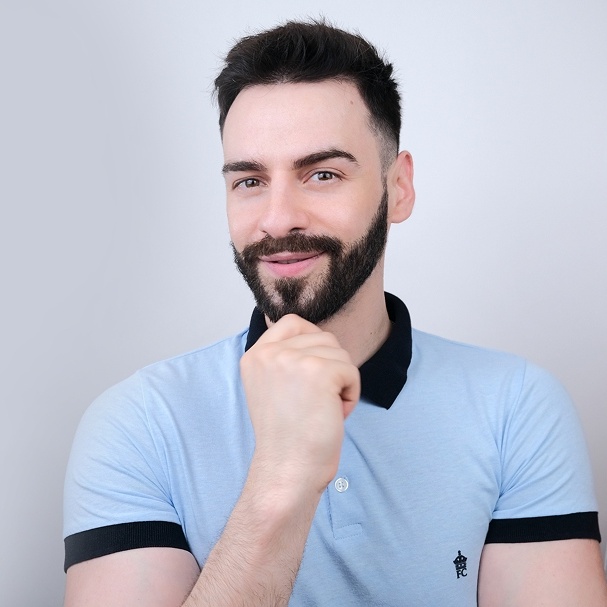
If you start hearing the aspiration, the short airstream after [t], with one simulator, you can only imagine how successful you can be in 1-on-1 Interactive American Accent Training with Prof. Alex, Ph.D. Accent Coach, where your whole American sound system is trained sound by sound.
The simulators are integrated into Prof. Alex’s 1-on-1 Interactive American Accent Training and are also available through the InPronunci learning platform.
What Happens During an Interactive Accent Coaching Session
A session moves through four connected stages, sound articulation, phonetic drilling, sentence-level rhythm, and paragraph delivery, each building on the last. This structure is what separates speech clarity coaching for non native professionals from scattered pronunciation tips: every stage has a purpose tied to the next.
The Four Connected Stages of Structured Training
In sound development, Prof. Alex helps students actively train the articulation of each target sound. Students then use phonetic exercises to practice it in varied positions and combinations, before applying it in sentences and targeted paragraphs with rhythm, intonation, emphasis, and connected speech.
Stage two moves into phonetic exercises. Here, sounds that were trained in isolation get pushed into combinations, reductions, and assimilations, the patterns that make real speech fast and connected rather than robotic. The goal is automatic production: a professional should not have to consciously think through every consonant cluster during a client call.
Stage three is sentence practice and intonation training. This is where stress placement, rhythm, and connected speech come together at the sentence level, so pronunciation accuracy survives contact with normal speaking speed. Many non-native professionals can produce individual sounds correctly but lose clarity once words link together in a sentence, this stage addresses that gap directly.
Stage four applies everything to paragraph practice with presentation-style delivery. Students work through longer passages that mirror real professional situations, a project update, a client introduction, a conference talk, so the training transfers to actual meetings and presentations, not just drill sentences.
How Feedback Builds Understanding Instead of Temporary Awareness
Generic correction tells a student what was wrong. Interactive feedback, by contrast, helps the student notice the pattern themselves and understand why it happens in their speech specifically. Prof. Alex, Ph.D. Accent Coach, Doctor of Education, and professional linguist, evaluates articulation, rhythm, and intonation in real time and guides the student to compare their production against the target sound rather than simply repeating after a model.
This distinction matters because awareness of a mistake fades once the session ends, while understanding a speech pattern tends to transfer into real conversations. Prof. Alex’s doctoral research found his interactive teaching method more effective than traditional, teacher-centered methods, and he adjusted this method for American accent training. That research basis is why each of the four stages asks students to actively test, adjust, and apply sounds rather than passively listen and repeat.
How Practice Frequency Shapes Your Speech Clarity Results
Progress in speech clarity coaching for non native professionals depends on how consistently a student practices and how often sessions happen, not on a fixed calendar. Two professionals who start on the same day can reach different results at different speeds, because one practices between sessions and the other treats each class as an isolated event.
What Role Practice Frequency Plays in Building Stable Speech Patterns
Spacing and repetition between sessions turn a single correction into an automatic speech habit, which is the actual goal of accent training. A student who corrects a vowel once in a session but never repeats that correction outside the session tends to revert to old patterns under pressure, in a live meeting, a patient conversation, or a presentation.
Sound production involves coordinated movement of the jaw, tongue, lips, and airflow. These are physical patterns, and physical patterns change through repeated, spaced practice rather than a single explanation. This is why accent reduction works best as a structured, ongoing process rather than a one-time fix.
How Cognitive Accent Training Supports Independent Pronunciation Control
Cognitive Accent Training helps students understand how their native-language sound system shapes the way they hear and produce American English sounds. A Mandarin speaker, a Russian speaker, and a Tamil speaker each bring different sound contrasts and stress patterns from their first language, and those patterns influence specific, identifiable errors in English production.
Once a student understands which sound substitutions come from their native-language system, they can start catching those patterns independently, between sessions, instead of waiting for a coach to point them out every time. This is the difference between temporary correction and durable change: awareness of your own sound system supports self-correction long after a session ends.
Prof. Alex’s doctoral research found his interactive teaching method more effective than traditional, teacher-centered methods, and he adjusted this method for American accent training. Real student progress reflects this approach. Abishek’s pronunciation evaluation and Tian’s pronunciation evaluation document measurable change through interactive 1-on-1 training, and the full before and after results page shows how that progress developed through consistent, spaced practice rather than a one-time lesson. No program can promise a specific timeframe, because practice frequency and individual starting points vary, but the pattern across students is the same: consistency drives the outcome.
Why Interactive Training Outperforms Repetition-Based Coaching
Active participation builds a skill passive repetition cannot: the ability to monitor and correct your own speech in real time, not just recognize an error after a coach points it out.
Repeat-after-me training asks you to copy a sound and move on. You hear the correct version, attempt to match it, and the coach tells you whether it worked. That loop creates short-term awareness, you notice the mistake while it is being corrected, but it rarely transfers to unscripted speech, because you never practiced catching the error yourself. Effective speech clarity coaching for non native professionals needs to train the self-monitoring step, not just the imitation step.
Students produce a sound, compare the result with the target pattern, adjust, and practice again with Prof. Alex’s guidance. They then carry those adjustments into sentences and paragraphs. This active process is directed toward independent control of speech rather than a promise of automatic error prevention.
How Research on Interactive Teaching Methods Supports Better Outcomes
Prof. Alex, Ph.D. Accent Coach, Doctor of Education, and professional linguist, studied this question directly in his doctoral research. He ran a three-year experiment with an experimental group and a control group, comparing interactive foreign-language teaching against traditional, teacher-centered instruction, and the results were published in Procedia – Social and Behavioral Sciences [1]. Prof. Alex’s doctoral research found his interactive teaching method more effective than traditional, teacher-centered methods, and he adjusted this method for American accent training.
That distinction matters for accent work specifically. A student who only repeats after a coach can sound clearer inside the session and then slide back into old patterns the moment the correction stops. A student who has practiced testing and adjusting their own articulation carries that skill into client calls, shift handoffs, and presentations, because the correction mechanism lives in their own speech awareness, not in the coach’s feedback. This is why accent reduction work built on active participation tends to produce speech patterns that feel more authentic and less mechanical than corrections layered on top of unchanged habits.
If you are unsure which stage of training your speech needs, sound articulation, phonetic drilling, sentence rhythm, or paragraph-level delivery, an evaluation is the fastest way to find out. Book 1 Hour Evaluation Session with Prof. Alex to get a clear assessment of where your training should start.
Speech Clarity Training for Foreign-Born Professionals in the United States
Foreign-born professionals in the United States often know their field and speak advanced English. Yet American listeners may still struggle with the clarity of their sounds and rhythm. MyAccentWay offers private online speech clarity training through Interactive American Accent Training with Prof. Alex.
Training is online and 1-on-1 for learners anywhere in the U.S. It starts with a 1 Hour Evaluation Session.
Frequently Asked Questions
What is the most effective way to improve speech clarity as a non-native professional?
Combining active sound-level training with real-time correction from a coach works better than passive listening and repetition drills alone. Prof. Alex’s doctoral research found his interactive teaching method more effective than traditional, teacher-centered methods, and he adjusted this method for American accent training. This means practicing articulation, phonetic patterns, sentence rhythm, and paragraph delivery as connected stages rather than isolated pronunciation tips.
Can speech clarity coaching help with accent reduction without losing my natural voice?
Yes, structured accent reduction targets specific sounds and patterns that interfere with clarity, not your personality or speech style. Cognitive Accent Training focuses on the sound contrasts that create misunderstanding, so you keep your natural cadence and identity while improving how clearly listeners understand you.
Do I need perfect pronunciation to communicate clearly in professional settings?
Your goal is personal: clearer communication, more natural American pronunciation, or speech closer to a native American English model. Prof. Alex uses your chosen goals to guide the sounds, intonation, and speaking tasks you practice.
How is 1-on-1 coaching different from group pronunciation classes?
One-on-one coaching lets a coach correct your individual speech patterns in real time, something group settings cannot do consistently. In Interactive American Accent Training, Prof. Alex evaluates your specific articulation habits and adjusts the session to your first-language background, rather than teaching generic rules to a mixed classroom.
What should I prepare before my first accent coaching session?
Bring examples of real work situations where clarity matters: a presentation script, meeting phrases, or patient-communication lines. No formal preparation is required otherwise. A Book 1 Hour Evaluation Session starts with a pronunciation assessment, so the coach identifies your priority sounds and patterns directly.
Conclusion
Clear professional speech comes from targeted correction, not generic repetition. Focus on three things: identify the specific sounds and patterns that cause misunderstanding, train them through active practice rather than passive listening, and apply them in real sentences and presentation-style delivery before they show up in high-stakes meetings. Reviewing before and after results from professionals with different first-language backgrounds shows what structured, interactive correction looks like in practice. The next step is a direct pronunciation assessment: book the Book 1 Hour Evaluation Session with Prof. Alex to identify your priority sounds and build a plan around them.
Sources & References
Recommended Articles
8 Articulation Coaching Exercises for Crisper Speech
Articulation coaching trains the jaw, tongue, lips, and airflow through targeted exercises so non-native professionals produce American English sounds more...

A Full Guide to Interactive 1-on-1 American Accent Training
Interactive 1-on-1 American accent training means working live with Prof. Alex to actively train articulation, rhythm, and intonation in real time. Discover.

Thought Groups in English Speech Make You Easier to Follow
Thought groups are the short phrases you naturally pause between when speaking English, and pausing at the right boundary makes your speech easier to follow...