Why Immigrants Struggle with American Pronunciation
(512) 265-9515Updated October 14, 2026 ◆ 10 min read
Immigrants struggle with American pronunciation because their brains process new English sounds through the filter of their native language, creating persistent speech patterns that resist simple correction. This is not a matter of effort or intelligence. The challenges of American pronunciation are rooted in neurology, psychology, and phonology working against each other at the same time. Language anxiety compounds the difficulty, as a 2026 mixed-methods study of 30 immigrant participants confirmed that emotional barriers outweigh vocabulary gaps in limiting English proficiency. Professor Alex, Ph.D., Linguist and Accent Coach at Myaccentway, addresses exactly these layers through structured training and 2D Sound Motion Technology, part of his interactive teaching model based on his Ph.D. research in interactive teaching methods. Students actively train the movement of the tongue, lips, jaw, teeth, and airflow with the Interactive Visual 2D Sound Simulators while Prof. Alex corrects them live.
Real student result

“I feel confident enough to speak American English!”
Interactive American Accent Training9monthsof hard work and dedication
Listen to the starting point0:00
Listen to the result0:00
“Many of my students once believed they could never sound like this. School taught them grammar and vocabulary, but not how to train their English speech. That is what we do together, step by step, until you speak English independently and with confidence.”
Abishek’s result was achieved through Prof. Alex’s research-based Interactive 1-on-1 American Accent Training. His doctoral research found this interactive method more effective than traditional, teacher-centered methods. See the research basis →
Why immigrants struggle with American pronunciation: the brain’s role
The adult brain processes second language sounds by fitting them into the closest native language sound categories. Dr. Viktoria Verde describes this as the brain seeking efficiency, collapsing unfamiliar sounds into familiar ones and causing persistent mishearing and mispronunciation. A Spanish speaker, for example, hears the English “v” and “b” as the same sound because Spanish treats them identically. The brain does not register the difference, so the mouth never learns to produce it.

Motor memory compounds the problem. The mouth movements learned in your first language are deeply wired. Producing an American “r” or a reduced vowel like the schwa requires tongue and jaw positions that simply do not exist in many other languages. Retraining those muscles takes deliberate, repeated physical practice, not just listening.
Communication accommodation theory, developed by Giles, Coupland, and Coupland in 1991, shows that speakers unconsciously shift their accents to match their listeners. This can help pronunciation in supportive environments, but it can also reinforce errors when a learner’s social circle speaks the same non-native variety of English.
Pro Tip: Before trying to mimic American sounds, train your ear first. Listen to the same short American English clip ten times and focus on one vowel sound each time. Your brain needs repeated exposure to build a new sound category before your mouth can reproduce it.
What psychological barriers slow down pronunciation progress?
Emotional barriers like language anxiety and self-doubt more strongly limit English proficiency among immigrants than vocabulary deficits. That finding reframes the entire conversation about pronunciation issues for newcomers. The problem is not that learners do not know enough words. The problem is that fear stops them from speaking.
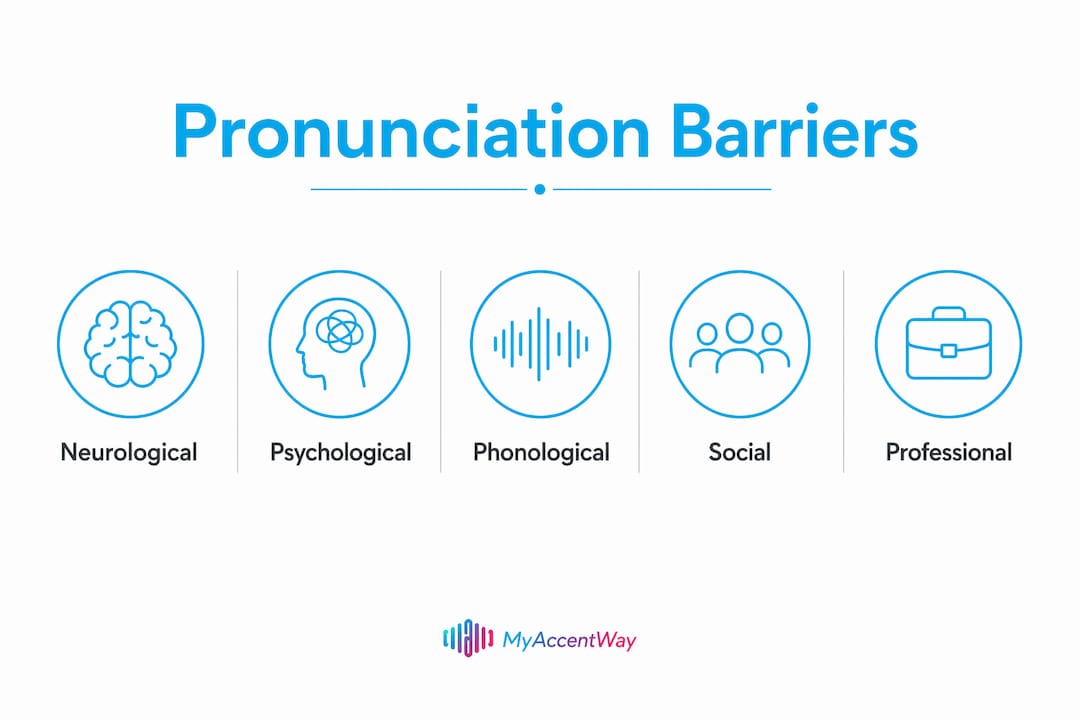
Foreign language anxiety causes learners to avoid speaking entirely because the cognitive effort of approximating unfamiliar sounds feels too risky. Silence feels safer than sounding wrong. Perfectionism makes this worse. Many immigrant learners wait until they feel “ready” before speaking, which delays the very practice that builds fluency.
Identity conflict adds another layer. Adopting American English sounds can feel like abandoning your native culture. Some learners resist certain sounds unconsciously because producing them feels like a loss of self. Family and community support matter here. The same 2026 study found that family support and higher education levels predict better English proficiency outcomes.
Common emotional barriers and practical responses:
- Fear of judgment: Practice in low-stakes settings first, such as with a trusted coach or in one-on-one sessions before group settings.
- Perfectionism: Set a clarity goal, not an accent elimination goal. Intelligibility is the target.
- Identity conflict: Recognize that adding American English sounds does not erase your native language or culture.
- Avoidance of speaking: Short daily practice sessions of five to ten minutes outperform occasional long sessions.
- Lack of support: Seek out structured language learning communities and professional coaching environments that normalize making mistakes.
How does native language interference shape your English accent?
Native language interference, also called phonological transfer, is the direct cause of most accent features in non-native English speech. Transferring native phonological rules into English produces intonation patterns, timing differences, and sound substitutions that reduce intelligibility for American listeners.
Every language has its own set of phonemes, the distinct sounds that change meaning. English has sounds that simply do not exist in many other languages. When those sounds are absent in your first language, your brain substitutes the closest available sound. A Japanese speaker may replace the English “l” with an “r” sound. A Russian speaker may produce “w” as “v.” These are not random errors. They are logical outputs of a brain working with the tools it has.
Vowel length and consonant cluster timing create additional difficulty. American English uses vowel reduction heavily, especially in unstressed syllables. Languages like Arabic, Mandarin, and Korean do not reduce vowels the same way, so speakers from those backgrounds often produce each syllable with equal weight, which sounds unnatural to American ears.
| Native language feature | American English equivalent | Common interference pattern |
|---|---|---|
| Equal syllable stress | Reduced unstressed vowels (schwa) | Every syllable sounds equally stressed |
| No “th” sounds | Voiced and voiceless “th” | Replaced with “d,” “t,” or “z” |
| No consonant clusters | Clusters like “str,” “spl,” “nts” | Vowel inserted between consonants |
| Tonal pitch patterns | Stress-timed intonation | Flat or incorrect sentence melody |
| Fewer vowel distinctions | 15+ distinct English vowel sounds | Multiple vowels collapsed into one |
Addressing these patterns requires targeted phonological training, not general English practice. Pronunciation training for Spanish speakers, for example, focuses on specific contrasts like “b” versus “v” and English vowel pairs that Spanish does not distinguish.
What social and professional pressures make American pronunciation harder?
Speech intelligibility standards set a high bar. Clinical guidelines established in 2026 expect four-year-old children to be 100% intelligible to all listeners. That standard reflects how central clear speech is to social participation. For immigrant adults, the pressure is even greater because professional and personal stakes are real and immediate.
Implicit bias around accents affects how speakers are perceived in workplaces, interviews, and social settings. Research consistently shows that listeners make rapid judgments about competence and credibility based on accent. This is not fair, but it is the reality that many non-native speakers navigate daily. The result is that pronunciation issues for newcomers carry professional consequences, not just social ones.
Clear American English pronunciation directly supports career advancement, client communication, and leadership presence. Professionals in medicine, law, education, and business face the highest intelligibility demands. Accent training for professionals addresses these specific demands with structured, measurable training goals.
Pro Tip: Focus your training on the sounds that most affect your intelligibility, not on eliminating every trace of your accent. A clear accent is the goal. A native accent is not required.
Key Takeaways
Immigrants struggle with American pronunciation because neurological, psychological, and phonological barriers work together to block clear speech, and targeted training addresses all three.
| Point | Details |
|---|---|
| Brain processing blocks new sounds | The adult brain maps unfamiliar sounds onto native language categories, causing persistent mishearing. |
| Anxiety silences learners | Language anxiety and fear of judgment stop practice, which delays pronunciation improvement more than vocabulary gaps do. |
| Phonological transfer creates accent patterns | Native language rules for vowels, consonants, and timing transfer directly into English speech. |
| Intelligibility is the real goal | Clinical and professional standards demand clear speech; accent elimination is not the target. |
| Structured training produces results | Personalized assessment and physical sound training, such as 2D Sound Motion Technology, address the root causes of pronunciation difficulty. |
What I have learned from working with immigrant learners
After years of working with non-native English speakers from dozens of language backgrounds, one pattern stands out clearly. The students who struggle longest are not the ones with the heaviest accents. They are the ones who believe their pronunciation is fixed.
Neurological wiring is real. The brain does resist new sound categories. But the brain also responds to consistent, targeted physical practice. When a student sees exactly how the tongue positions for an American “t” or how the jaw drops for the “æ” vowel in “cat,” something shifts. Doubt becomes clarity. The sound stops being abstract and becomes a physical action they can repeat and refine.
The students who improve fastest share two traits. They practice daily, even for short periods, and they work with a coach who identifies their specific interference patterns rather than giving generic feedback. Vlad, a Russian speaker, demonstrates exactly this kind of real progress. Watch his pronunciation improvement here to see what structured training produces.
My honest advice: stop trying to sound American and start trying to be understood. Intelligibility and confidence come from knowing exactly what your mouth is doing. That knowledge is teachable, at any age, with the right method.
— Prof.
How Myaccentway helps immigrants improve American pronunciation
Myaccentway offers a structured path through every barrier described in this article. Professor Alex, Ph.D., begins with a one-on-one assessment that identifies your specific speech patterns, the exact sounds your native language is interfering with, and the phonological gaps that most affect your clarity. From there, the program builds a customized training plan targeting your real pronunciation issues.
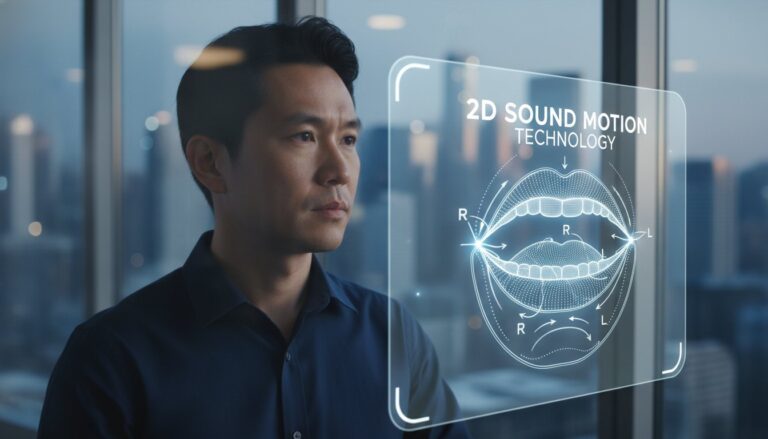
The Interactive Mouth Training Technology, also called 2D Sound Motion Technology, trains your tongue, lips, jaw, and airflow to move during each American sound.
You train the movement, not just the sound. Programs are available for professionals across all fields through American accent training online. Book Your 1 Hour Evaluation Session today and find out exactly what your speech needs.
MyAccentWay · 2D Sound Motion Technology
American English Pronunciation: Consonant and Vowel Sounds with 2D Sound Motion Technology
Learning American English pronunciation and the American accent is more effective when you train your speech organs, not only listen and repeat. 2D Sound Motion Technology and Interactive Visual 2D Sound Simulators, developed in 2020 by Prof. Alex, Ph.D. Accent Coach, Doctor of Education, and professional linguist, as part of his interactive teaching model based on his Ph.D. research in interactive teaching methods, train your tongue, lips, jaw, teeth, airflow, and voice step by step. They train each American sound and more than 30 sound combinations through Interactive 2D video simulation.
What 2D Sound Motion Technology is
2D Sound Motion Technology is an advanced accent reduction and articulation training tool by Prof. Alex. It corrects, develops, and trains each American sound and more than 30 sound combinations through Interactive 2D video simulation.
What Interactive Visual 2D Sound Simulators do
Interactive Visual 2D Sound Simulators are part of 2D Sound Motion Technology, the articulation-training method Prof. Alex created by applying his Ph.D. research in interactive teaching to American pronunciation. Instead of listening and repeating, students actively train their speech organs. Each simulator uses Interactive 2D mouth movement to train the speech organs (tongue, lips, jaw, teeth, airflow, and voice) to produce each American sound correctly. Every consonant has its own simulator: explore American consonants trained with 2D Sound Motion Technology.
Sample training: the American t sound (aspirated [t])
Practice
Record yourself speaking these words:
Tab · Tacos · Time · Tub · Hotel · Motel · Sit · Pit · Net
Instructions
Play the Interactive Visual 2D Sound Simulator for the American t sound below several times and follow it step by step. Move your tongue, jaw, and airflow together with the simulator and train your articulation.
Interactive Visual 2D Sound Simulator: American unvoiced sound [t]
Practice
Record yourself again speaking these words, but this time focus on the movement of your tongue. Go slow, and you will hear the difference. You’ve got this!
Tab · Tacos · Time · Tub · Hotel · Motel · Sit · Pit · Net
How Interactive Visual 2D Sound Simulators solve pronunciation and speaking problems
- Wrong articulationMost pronunciation problems start with the tongue, lips, jaw, or teeth in the wrong position. Each Interactive Visual 2D Sound Simulator trains the correct articulation of one American sound, so the student corrects the cause of the problem, not only the result.
- Airflow and voicingMany accent problems come from wrong airflow or voicing: sounds that are too weak, too strong, or voiced when they should be unvoiced. The simulators train airflow and voice together with articulation, step by step, for each American sound and more than 30 sound combinations.
- Clear speech and confidenceWhen each sound is trained correctly, words connect into clear American English speech. Listeners can understand you more easily, and speaking at work, in meetings, and on calls becomes more confident.
If you start hearing the aspiration, the short airstream after [t], with one simulator, you can only imagine how successful you can be in 1-on-1 Interactive American Accent Training with Prof. Alex, Ph.D. Accent Coach, where your whole American sound system is trained sound by sound.
In MyAccentWay, the Interactive Visual 2D Sound Simulators are only available in 1-on-1 accent coaching sessions with Prof. Alex.
Interactive American Accent Training for Foreign-Born Professionals in the United States
Foreign-born professionals in the United States often know their field and speak advanced English. Yet American listeners may still struggle with their sounds, stress, and rhythm. MyAccentWay offers private online American accent training through Interactive American Accent Training.
Interactive American Accent Training is led by Prof. Alex, Ph.D. Accent Coach, Doctor of Education, and professional linguist. He first diagnoses each speaker’s native-language patterns. Then he trains American sound articulation, stress, rhythm, and intonation for real real conversations.
Who this training is for
- Engineers, IT specialists, and data professionals presenting to U.S. teams and clients
- Doctors, nurses, and healthcare professionals explaining care to American patients
- Managers, executives, and founders leading meetings, pitches, and briefings
- Consultants, researchers, and academics speaking at conferences and webinars
- Professionals preparing for interviews, promotions, or client-facing roles
Online training across the U.S.
MyAccentWay is based in Austin, Texas, and all training is online. The program is especially relevant for professionals in Austin, Dallas, Houston, New York City, the San Francisco Bay Area, Los Angeles, Seattle, Boston, Chicago, Miami, Washington DC, Atlanta, and Raleigh.
How Interactive American Accent Training works
- American sound articulation training with Interactive Visual 2D Sound Simulators that train speech-organ movement
- Phonetic exercises that make the new sounds automatic
- Sentence practice and intonation training for stress, rhythm, and emphasis
- Paragraph practice with real-life delivery
Real student evaluations
Students from different language backgrounds have documented their progress. Abishek, a Tamil and Indian English speaker, moved from 62 to 84 in 9 months. Tian, a Mandarin speaker, moved from 58 to 85 in 8 months. Vlad, a Russian speaker, moved from 60 to 83 in 5 months.
The first step is a 1 Hour Evaluation Session with Prof. Alex.
FAQ
Why do immigrants struggle with American pronunciation specifically?
American English uses vowel reduction, consonant clusters, and stress-timed rhythm that most other languages do not. The adult brain maps these unfamiliar sounds onto native language categories, causing persistent mispronunciation even after years of English study.
Can adults actually improve their American English pronunciation?
Yes. The brain responds to consistent, targeted physical practice at any age. Structured training that addresses specific phonological interference patterns produces measurable improvement in speech clarity and intelligibility.
What is the biggest emotional barrier to pronunciation improvement?
Language anxiety is the strongest barrier. It causes learners to avoid speaking, which delays practice and slows progress more than any vocabulary or grammar gap.
How does 2D Sound Motion Technology help with pronunciation?
2D Sound Motion Technology trains learners in the exact positions and movements of the tongue, lips, and jaw for American sounds. Learners train the physical movement directly instead of guessing from audio alone, which accelerates accurate sound production.
How long does it take to improve American English pronunciation?
Improvement timelines vary by native language background, practice frequency, and the specific sounds being trained. Students who practice daily with personalized coaching typically notice meaningful clarity gains within weeks of consistent work.
Recommended
Translators and Interpreters Improving American Pronunciation
American accent training and accent reduction guide for translators and interpreters who want clearer pronunciation, speech clarity, intonation, rhythm, connected speech, and confident professional English in the United States.

A Linguist’s Guide to American English Pronunciation for Spanish Speakers
You’ve mastered English grammar and have a rich vocabulary, yet you still find yourself being asked to repeat things. That frustrating gap between...

Master the American R Sound: Your Ultimate Guide for Clear Pronunciation
Is the notorious american r sound the one thing standing between you and a truly confident American accent? If you've ever felt frustrated by a...
The problem is not always grammar or vocabulary.
If people understand your words but still miss your message, the deeper issue may be speech clarity, rhythm, intonation, and American pronunciation habits. MyAccentWay helps students retrain the sound system with professional 1-on-1 guidance, so English can feel clearer, freer, and more natural in real communication.
Two training methods that make speech change active.
MyAccentWay is not passive listen-and-repeat coaching. Prof. Alex, Ph.D. Accent Coach, Doctor of Education, and professional linguist, creates a learning situation where students become active learners and active participants in changing their own speech patterns.
Interactive training
Students do not just receive pronunciation instructions passively. They listen, think, compare, adjust, and understand their own speech patterns while Prof. Alex guides the correction process.
Cognitive accent training
Students learn to notice and correct the speech patterns that affect American pronunciation, then implement new American speech patterns into their code-switching process for more natural, long-lasting change.
Build speech habits people can hear in real conversations.
A stronger American accent is not built by memorizing topics or chasing quick pronunciation tips. It comes from structured training, professional feedback, active correction, and repeated application until clearer speech becomes easier to keep.
Continue learning how MyAccentWay connects American sound articulation, Interactive Visual 2D Sound Simulators, accent reduction, student proof, and 1-on-1 training.
- Prof. Alex and the MyAccentWay MethodLearn how Prof. Alex, Ph.D. Accent Coach, Doctor of Education, and professional linguist, created and leads the structured MyAccentWay American accent training system.
- Accent Reduction Curriculum and English Articulation TrainingSee how MyAccentWay trains accent reduction, accent modification, American pronunciation, English articulation, rhythm, and professional speech clarity.
- 2D Sound Motion Technology for American Accent TrainingUnderstand Prof. Alex’s Interactive Visual 2D Sound Simulators for American sound articulation.
- Before-and-After American Accent Training ResultsListen to real before-and-after student proof and accent training outcomes.
- Student Reviews and Accent Training ResultsRead student reviews, testimonials, and trust signals from MyAccentWay learners.
- Book a 1-on-1 American 1 Hour Evaluation SessionStart with a 1-hour interactive American accent training session with Prof. Alex.