Medical English Pronunciation Best Practices for Clinicians
(512) 265-9515Updated October 16, 2026 ◆ 13 min read
Real student result
“It feels amazing when people say, ‘Your accent is so good. Where did you learn it?’ My answer is always, ‘Thanks to my great teacher, Alex.’”
Interactive American Accent Training5monthsof hard work and dedication
Listen to the starting point0:00
Listen to the result0:00
“Many of my students once believed they could never sound like this. School taught them grammar and vocabulary, but not how to train their English speech. That is what we do together, step by step, until you speak English independently and with confidence.”
Vlad’s result was achieved through Prof. Alex’s research-based Interactive 1-on-1 American Accent Training. His doctoral research found this interactive method more effective than traditional, teacher-centered methods. See the research basis →
Written by Professor Alex, Ph.D., Linguist and Accent Coach. This guide is for non-native English-speaking clinicians who want clearer pronunciation, stronger speech clarity, better rhythm and intonation, and more confident communication with patients, colleagues, and medical teams.
American Pronunciation Coaching
Clinical Speech Clarity
Questions about accent training for clinicians?
Students can ask questions about the program, medical English pronunciation, and how to connect with Professor Alex.
Medical English pronunciation best practices are defined techniques that help non-native healthcare professionals communicate clearly, safely, and confidently with patients and colleagues in American clinical settings. The industry term for this field is clinical pronunciation training, and it sits at the intersection of linguistics, patient safety, and professional development. 89% of clinicians prioritize clarity and mutual understanding over matching a native accent standard. That single finding reframes everything: your goal is not to sound American. Your goal is to be understood, every time, without hesitation. Myaccentway’s 2D Sound Motion Technology and Professor Alex, Ph.D., give non-native healthcare professionals a structured, science-backed path to reach that standard.
SEO visibility for medical English pronunciation
American pronunciation coaching for clinicians and healthcare professionals
This guide is for non-native English-speaking doctors, nurses, dentists, pharmacists, physical therapists, medical students, healthcare interpreters, and international clinicians who want clearer medical English pronunciation and stronger patient communication in the United States.
MyAccentWay helps healthcare professionals improve American English pronunciation, accent reduction, speech clarity, word stress, sentence stress, rhythm, intonation, connected speech, and professional communication through 1-on-1 American accent training with Professor Alex, Ph.D., Linguist and Accent Coach.
Search intent this article answers
How can clinicians improve medical English pronunciation, reduce accent barriers, and speak more clearly with patients and healthcare teams?
Best-fit readers
Foreign-born U.S. clinicians, international medical graduates, healthcare professionals, bilingual providers, clinical leaders, medical residents, and non-native English-speaking professionals in healthcare.
Common questions about accent reduction for healthcare professionals
What is medical English pronunciation training?
Medical English pronunciation training helps non-native clinicians speak medical terms, patient instructions, clinical explanations, and professional English with clearer stress, rhythm, intonation, and pronunciation accuracy.
Is accent reduction helpful for doctors and nurses?
Yes. Accent reduction for doctors, nurses, and clinicians can support clearer patient communication, fewer repetitions, stronger confidence, and better professional speech clarity in healthcare settings.
What skills improve clinical communication?
Important skills include American vowels and consonants, medical word stress, sentence stress, intonation, rhythm, linking, reductions, connected speech, and patient-friendly clarity.
Who should book 1-on-1 American accent training?
A 1-on-1 1 Hour Evaluation Session is a strong first step for healthcare professionals who want a personalized speech assessment and a clear plan for improving American English pronunciation.
Related search topics: medical English pronunciation, American accent training for doctors, accent reduction for clinicians, pronunciation coaching for healthcare professionals, clinical communication skills, patient communication, speech clarity training, American English pronunciation, online accent coach, medical word stress, rhythm, intonation, and connected speech.
1. Medical English Pronunciation Best Practices: Know What You Are Actually Fixing
Most non-native clinicians assume their accent is the problem. The real issue is usually stress placement. Misplaced primary stress impacts intelligibility more than minor vowel variations in fast clinical environments. That means saying “HY-per-ten-sion” instead of “hy-per-TEN-sion” creates more confusion than a slightly different vowel sound ever would.

68% of non-native clinicians mispronounce “hypertension” by stressing the wrong syllable, causing measurable cognitive lag in listeners. In a busy emergency department or during a handover, that lag costs time and can cost accuracy. Fixing stress placement is the highest-return pronunciation skill you can develop.
Pro Tip: Write the stressed syllable in ALL CAPS when you study a new medical term. “hy-per-TEN-sion,” “di-AG-no-sis,” “car-di-OL-o-gy.” This visual habit rewires how you read and speak the word simultaneously.
Practice medical word stress after the speaker
Listen to each word first, then repeat it out loud. Pay attention to the stressed syllable in hy-per-TEN-sion, di-AG-no-sis, and car-di-OL-o-gy.
Become an Independent English Speaker
Repeating after a speaker is a good first step because it helps you hear the rhythm, stress, and correctness of pronunciation. But students can do better than simply repeat. When you learn American English phonology sound by sound, you begin to understand how pronunciation works as a system. This helps you pronounce new words independently instead of always asking, “How do I say this word?” The goal is to become an independent speaker of English, not a dependent one.
2. Master Stress-Timed Rhythm Before Perfect Sounds
American English is a stress-timed language. Stressed syllables carry the meaning; unstressed syllables compress and reduce. This rhythm pattern is the foundation of effective medical English speaking, and it is where most non-native speakers lose their listeners.
Prioritize learning which syllable carries primary stress in every new clinical term you encounter. Tools like Merriam-Webster’s online dictionary show stress marks directly in the phonetic transcription. Practice saying the stressed syllable louder, longer, and at a slightly higher pitch than the surrounding syllables.
Patients and colleagues prioritize clear communication and consistent terminology over accent-free speech in clinical handovers. Consistent stress patterns build credibility faster than eliminating your accent ever will.
3. Use Syllable Breakdown Drills For High-Stakes Terms
Break every complex medical term into syllables before you practice it aloud. This is one of the most reliable pronunciation strategies in healthcare because it forces you to slow down and hear each part of the word separately.
Take “myocardial infarction”: my-o-CAR-di-al in-FARC-tion. Say each syllable at half speed. Then connect them at normal speed. Repeat five times in a row. This method, called segmentation drilling, is standard in clinical pronunciation training and produces faster results than listening and repeating whole words.
Apply the same method to drug names, anatomical terms, and procedure names. Build a personal reference list of the 30 terms you use most often in your specialty. Those 30 terms, mastered with correct stress, will cover the majority of your daily clinical communication.
4. Practice Shadowing With Real Clinical Audio
Shadowing means listening to a fluent American English speaker and repeating what they say in real time, matching their rhythm, stress, and intonation. This technique is one of the best ways to pronounce medical terms naturally because it trains your ear and your mouth at the same time.
Use recorded clinical case presentations, medical podcasts like The Curbsiders, or patient education videos from institutions like Mayo Clinic or Johns Hopkins. These sources use the exact vocabulary and sentence structures you need in your daily work.
Active speaking practice with fluent speakers is more effective than passive textbook study for handling rapid clinical English. Shadowing is the closest you can get to that live interaction when a fluent speaking partner is not available.
5. Build A Repeat-And-Clarify Communication Loop
The repeat-and-clarify protocol is a structured feedback method where you confirm what you said by asking the listener to repeat it back, or by restating it yourself in simpler terms. Teams using this protocol reduced verbal miscommunication incidents. That is a measurable patient safety outcome tied directly to pronunciation practice.
Use phrases like “Just to confirm, I said…” or “Can you repeat that back to me?” after delivering critical information. This habit protects patients and gives you real-time feedback on whether your pronunciation landed correctly. Over time, you will notice which specific words or phrases consistently require clarification, and those become your priority practice targets.
6. Use Strategic Silence After Key Information
Power pauses of 2–5 seconds after delivering critical information increase communication effectiveness and signal authority. This is a pronunciation strategy in healthcare that most clinicians overlook entirely.
When you finish explaining a diagnosis, a medication change, or a procedure, stop speaking for two to three seconds. Let the information settle. This pause gives patients time to process what they heard, and it gives you time to observe whether they understood. Silence is not weakness in clinical communication. It is control.
7. Integrate Pronunciation Practice Into Your Clinical Day
You do not need a separate study session to improve your pronunciation. Embed practice into what you already do.
- Before rounds: Say the names of your patients’ diagnoses and medications aloud, with correct stress, as you review their charts.
- During handovers: Slow your speech by 10–15% and emphasize the stressed syllable of every key term.
- After patient interactions: Note one word or phrase that felt unclear and look up its correct stress pattern that evening.
- With colleagues: Ask a fluent English-speaking colleague to flag any term they had to mentally re-process when you spoke.
Real-time clinical environments demand fluent speaking practice beyond textbook exercises to prepare for rapid medical English conversations. Daily micro-practice inside your actual workflow builds that fluency faster than weekly study sessions ever will.
Pro Tip: Record yourself during a low-stakes patient education moment, with consent. Listen back for stress errors on clinical terms. This self-audit is one of the most direct ways to identify your personal pronunciation gaps.
8. Use 2D Sound Motion Technology To Train The Physical Sound
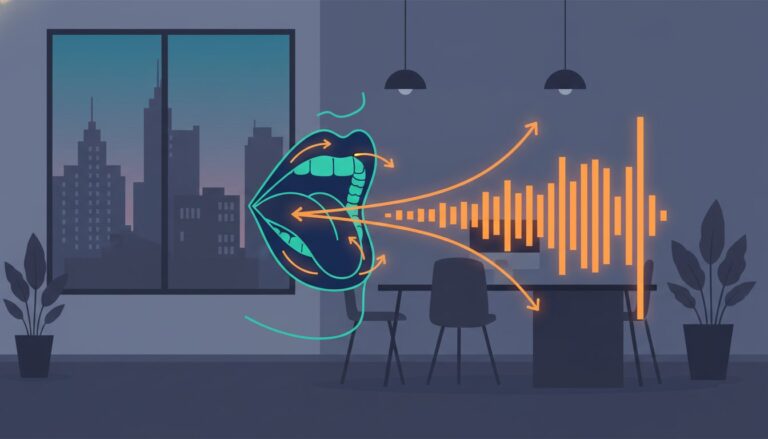
Most pronunciation training asks you to listen and repeat. Myaccentway’s 2D Sound Motion Technology trains you to coordinate the tongue, lips, jaw, and airflow for each American English sound. You practice the mechanics, then replicate them physically.
Visual interactive technology accelerates accent training and pronunciation clarity by giving learners a physical target, not just an audio model.
This approach is especially valuable for sounds that do not exist in your first language. Instead of guessing where to place your tongue, you see the exact position and practice the movement until it becomes automatic.
MyAccentWay · 2D Sound Motion Technology
American English Pronunciation: Consonant and Vowel Sounds with 2D Sound Motion Technology
Learning American English pronunciation and the American accent is more effective when you train your speech organs, not only listen and repeat. 2D Sound Motion Technology and Interactive Visual 2D Sound Simulators, developed in 2020 by Prof. Alex, Ph.D. Accent Coach, Doctor of Education, and professional linguist, as part of his interactive teaching model based on his Ph.D. research in interactive teaching methods, train your tongue, lips, jaw, teeth, airflow, and voice step by step. They train each American sound and more than 30 sound combinations through Interactive 2D video simulation.
What 2D Sound Motion Technology is
2D Sound Motion Technology is an advanced accent reduction and articulation training tool by Prof. Alex. It corrects, develops, and trains each American sound and more than 30 sound combinations through Interactive 2D video simulation.
What Interactive Visual 2D Sound Simulators do
Interactive Visual 2D Sound Simulators are part of 2D Sound Motion Technology, the articulation-training method Prof. Alex created by applying his Ph.D. research in interactive teaching to American pronunciation. Instead of listening and repeating, students actively train their speech organs. Each simulator uses Interactive 2D mouth movement to train the speech organs (tongue, lips, jaw, teeth, airflow, and voice) to produce each American sound correctly. Every consonant has its own simulator: explore American consonants trained with 2D Sound Motion Technology.
Sample training: the American t sound (aspirated [t])
Practice
Record yourself speaking these words:
Tab · Tacos · Time · Tub · Hotel · Motel · Sit · Pit · Net
Instructions
Play the Interactive Visual 2D Sound Simulator for the American t sound below several times and follow it step by step. Move your tongue, jaw, and airflow together with the simulator and train your articulation.
Interactive Visual 2D Sound Simulator: American unvoiced sound [t]
Practice
Record yourself again speaking these words, but this time focus on the movement of your tongue. Go slow, and you will hear the difference. You’ve got this!
Tab · Tacos · Time · Tub · Hotel · Motel · Sit · Pit · Net
How Interactive Visual 2D Sound Simulators solve pronunciation and speaking problems
- Wrong articulationMost pronunciation problems start with the tongue, lips, jaw, or teeth in the wrong position. Each Interactive Visual 2D Sound Simulator trains the correct articulation of one American sound, so the student corrects the cause of the problem, not only the result.
- Airflow and voicingMany accent problems come from wrong airflow or voicing: sounds that are too weak, too strong, or voiced when they should be unvoiced. The simulators train airflow and voice together with articulation, step by step, for each American sound and more than 30 sound combinations.
- Clear speech and confidenceWhen each sound is trained correctly, words connect into clear American English speech. Listeners can understand you more easily, and speaking at work, in meetings, and on calls becomes more confident.
If you start hearing the aspiration, the short airstream after [t], with one simulator, you can only imagine how successful you can be in 1-on-1 Interactive American Accent Training with Prof. Alex, Ph.D. Accent Coach, where your whole American sound system is trained sound by sound.
In MyAccentWay, the Interactive Visual 2D Sound Simulators are only available in 1-on-1 accent coaching sessions with Prof. Alex.
9. Compare Training Methods: What Actually Works
Different approaches to improving medical English skills produce very different results. The table below shows how common methods compare for busy healthcare professionals.
| Method | Strengths | Limitations |
|---|---|---|
| Textbook phonetics study | Builds foundational knowledge | No real-time speaking practice |
| Shadowing with clinical audio | Trains rhythm and intonation naturally | Requires self-correction without feedback |
| Peer feedback with colleagues | Contextually relevant, low cost | Feedback quality varies widely |
| One-on-one coaching (Professor Alex) | Personalized assessment, structured drills | Requires scheduling and commitment |
| 2D Sound Motion Technology | Physical articulation training, visual clarity | Best combined with live coaching |
One-on-one coaching with Professor Alex, Ph.D., at Myaccentway combines personalized speech pattern assessment with structured drills and 2D Sound Motion Technology. That combination addresses your specific errors, not a generic curriculum. See how Vlad, a Russian-speaking professional, improved his pronunciation through this method:
Watch Vlad’s pronunciation progress
Russian-speaking professional
What 15 years of coaching clinicians taught me about pronunciation
Most of my healthcare students arrive convinced they need to eliminate their accent. I spend the first session redirecting that energy. Balancing clinical authority with clear, simplified language is what actually builds patient trust. A perfectly accent-free sentence delivered without confidence or correct stress still fails the listener.
The clinicians who improve fastest are the ones who stop performing and start communicating. They pick 30 high-frequency terms from their specialty, master the stress pattern on each one, and practice those terms in real sentences. Within weeks, their colleagues stop asking them to repeat themselves. Their patients make eye contact instead of looking confused.
The accent reduction for doctors work I find most rewarding is not about erasing where someone is from. It is about giving them the physical tools to produce sounds their mouth was never trained to make. When a student follows a 2D Sound Motion simulation to train their tongue position and suddenly produces a correct American [T], something shifts. Doubt becomes clarity. That moment is repeatable, and it is available to every clinician willing to train the mechanics, not just the melody.
— Prof.
Clinical Pronunciation Training
Start with a 1-on-1 clinical pronunciation assessment
Dr. Alex begins with your real speech. He listens for the pronunciation patterns that affect clarity in patient conversations, team communication, medical presentations, and professional English.
Your training then becomes personal. You practice American sounds, rhythm, stress, intonation, and connected speech through structured 1-on-1 coaching and 2D Sound Motion Technology.
Pronunciation Training for Foreign-Born Healthcare Professionals in the United States
Foreign-born professionals in the United States often know their field and speak advanced English. Yet American listeners may still struggle with medical terms and patient instructions. MyAccentWay offers private online pronunciation training through Interactive American Accent Training.
Interactive American Accent Training is led by Prof. Alex, Ph.D. Accent Coach, Doctor of Education, and professional linguist. He first diagnoses each speaker’s native-language patterns. Then he trains American sound articulation, stress, and clear medical terms for real patient conversations.
Who this training is for
- Doctors, nurses, and healthcare professionals explaining care to American patients
- Engineers, IT specialists, and data professionals presenting to U.S. teams and clients
- Managers, executives, and founders leading meetings, pitches, and briefings
- Consultants, researchers, and academics speaking at conferences and webinars
- Professionals preparing for interviews, promotions, or client-facing roles
Online training across the U.S.
MyAccentWay is based in Austin, Texas, and all training is online. The program is especially relevant for professionals in Austin, Dallas, Houston, New York City, the San Francisco Bay Area, Los Angeles, Seattle, Boston, Chicago, Miami, Washington DC, Atlanta, and Raleigh.
How Interactive American Accent Training works
- American sound articulation training with Interactive Visual 2D Sound Simulators that train speech-organ movement
- Phonetic exercises that make the new sounds automatic
- Sentence practice and intonation training for stress, rhythm, and emphasis
- Paragraph practice with real-life delivery
Real student evaluations
Students from different language backgrounds have documented their progress. Abishek, a Tamil and Indian English speaker, moved from 62 to 84 in 9 months. Tian, a Mandarin speaker, moved from 58 to 85 in 8 months. Vlad, a Russian speaker, moved from 60 to 83 in 5 months.
The first step is a 1 Hour Evaluation Session with Prof. Alex.
FAQ
What is the most important pronunciation skill for medical english?
Correct primary stress placement is the highest-impact skill. Misplaced stress causes more listener confusion than vowel errors in fast clinical settings.
Do i need to eliminate my accent to communicate clearly in healthcare?
No. 89% of clinicians value clarity and mutual understanding over native-accent conformity. Consistent stress patterns and clear articulation matter more than accent elimination.
How does 2d sound motion technology help with pronunciation?
It shows the exact tongue, lip, and jaw movement for each American English sound, so you can physically replicate the position instead of guessing from audio alone. This method accelerates pronunciation clarity significantly.
How long does it take to improve medical english pronunciation?
Improvement timelines vary, but clinicians who practice high-frequency clinical terms daily and use structured feedback loops typically notice measurable gains within four to eight weeks of consistent training.
What is the repeat-and-clarify protocol?
It is a structured communication method where you confirm critical information by asking the listener to repeat it back or by restating it yourself. Teams use this approach to address miscommunication.
Recommended
English Pronunciation for IT Professionals: A Comprehensive 2026 Guide
Last Tuesday, a senior DevOps engineer named Marco discovered that his technical expertise wasn't enough when he was asked to repeat his cloud...

Accent Reduction for Doctors, Nurses, and Pharmacists
Imagine you're in the middle of a critical rounds presentation in 2026, and a patient asks you to repeat your diagnosis for the third time. It's a...
American English Pronunciation Practice: The 2026 Expert Guide
Last week, a senior project manager was asked to repeat his quarterly report findings for the third time. He knew his data was flawless, but the...
The problem is not always grammar or vocabulary.
If people understand your words but still miss your message, the deeper issue may be speech clarity, rhythm, intonation, and American pronunciation habits. MyAccentWay helps students retrain the sound system with professional 1-on-1 guidance, so English can feel clearer, freer, and more natural in real communication.
Two training methods that make speech change active.
MyAccentWay is not passive listen-and-repeat coaching. Prof. Alex, Ph.D. Accent Coach, Doctor of Education, and professional linguist, creates a learning situation where students become active learners and active participants in changing their own speech patterns.
Interactive training
Students do not just receive pronunciation instructions passively. They listen, think, compare, adjust, and understand their own speech patterns while Prof. Alex guides the correction process.
Cognitive accent training
Students learn to notice and correct the speech patterns that affect American pronunciation, then implement new American speech patterns into their code-switching process for more natural, long-lasting change.
Build speech habits people can hear in real conversations.
A stronger American accent is not built by memorizing topics or chasing quick pronunciation tips. It comes from structured training, professional feedback, active correction, and repeated application until clearer speech becomes easier to keep.
Continue learning how MyAccentWay connects accent reduction, accent modification, English articulation, Prof. Alex’s method, student proof, and 1-on-1 American accent training.
- Prof. Alex and the MyAccentWay MethodLearn how Prof. Alex, Ph.D. Accent Coach, Doctor of Education, and professional linguist, created and leads the structured MyAccentWay American accent training system.
- Accent Reduction Curriculum and English Articulation TrainingSee how MyAccentWay trains accent reduction, accent modification, American pronunciation, English articulation, rhythm, and professional speech clarity.
- 2D Sound Motion Technology for American Accent TrainingUnderstand Prof. Alex’s Interactive Visual 2D Sound Simulators for American sound articulation.
- Before-and-After American Accent Training ResultsListen to real before-and-after student proof and accent training outcomes.
- Student Reviews and Accent Training ResultsRead student reviews, testimonials, and trust signals from MyAccentWay learners.
- Book a 1-on-1 American 1 Hour Evaluation SessionStart with a 1-hour interactive American accent training session with Prof. Alex.