Not all accent coaches are created equal, and in a market flooded with self-proclaimed experts, the difference between real progress and wasted time often comes down to one thing: methodology. Finding a qualified accent coach online is no longer the challenge it once was. The real challenge is knowing how to evaluate one.
Whether you are a non-native English speaker aiming for professional fluency, an actor preparing for a specific dialect, or a business professional refining your speech for high-stakes communication, the criteria for choosing the right coach matters enormously. The internet has made access easier, but it has also created a landscape where credentials are inconsistent and teaching approaches vary wildly in effectiveness.
In this post, we will break down exactly what separates a competent accent coach online from one who delivers lasting, measurable results. You will learn how to assess teaching methodology, evaluate a coach’s credentials, ask the right questions before committing, and understand why the underlying approach to accent training predicts your success far more than price or convenience ever will.
What Does an Online Accent Coach Actually Do?
When professionals ask what an online accent coach actually does, the answer is often more nuanced than they expect. Accent coaching is not about erasing your accent, mimicking a native speaker, or pretending your linguistic background does not exist. The goal is far more practical and professionally meaningful: building speech clarity, intelligibility, and confident communication in American English. Your accent is part of your identity, and a qualified coach respects that. What changes is not who you are, but how clearly and efficiently your message lands when you speak in a meeting, deliver a presentation, or navigate a client conversation.
It Works at the Sound-System Level, Not the Language Level
This distinction matters enormously for advanced English speakers. If you already use complex grammar, technical vocabulary, and professional register fluently, you do not need a language course. You need targeted work at the phonological level, the layer of speech where sounds, stress, rhythm, and intonation operate. A qualified coach addresses the full architecture of spoken American English: consonants and vowels produced with precise tongue, lip, and jaw placement; word-level and sentence-level stress that signals meaning and emphasis; intonation patterns that signal questions, statements, and intent; and connected speech features such as linking, reduction, and pacing that give American English its characteristic flow. Together, these components determine whether a listener processes your speech effortlessly or struggles to follow along. As research and practitioner guidance from the accent coaching field confirms, the measurable outcome of this work is improved listener comprehension and stronger speaker confidence, not a different personality.
The MyAccentWay Philosophy: Linguistics, Not Imitation
At MyAccentWay, the coaching philosophy is grounded in one core principle: American accent training is not simple imitation. It is a linguistics-based process of re-educating the sound system through American consonants, vowels, stress, rhythm, emphasis, and intonation. Prof. Alex, Ph.D., approaches each student’s speech analytically, identifying the specific phonetic patterns that create interference and building a structured, personalized training path. This is not a “watch my mouth and repeat” model. Surface-level mimicry is problematic precisely because most of what produces accurate American sounds happens inside the mouth, where it cannot be observed. Tongue position, airflow direction, and jaw tension are largely invisible during normal speech, meaning imitation produces approximations rather than structurally accurate sounds.
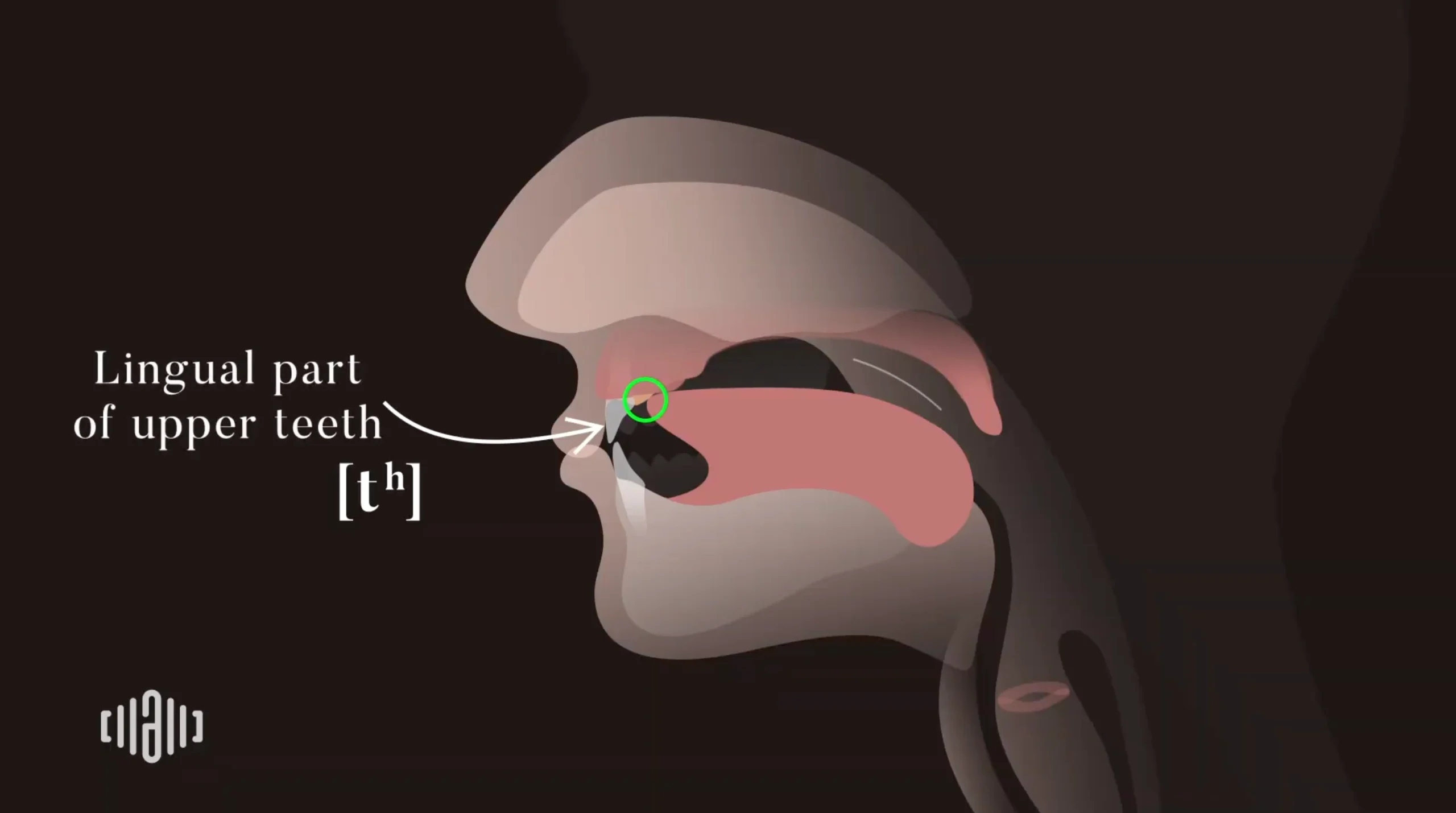
To solve this, MyAccentWay uses 2D Sound Motion Technology and 2D Sound Video Training Simulators, proprietary visual tools that show students exactly how each American sound is produced by the tongue, lips, jaw, and other speech organs, before they attempt to produce it themselves. This approach replaces guesswork with precision. Students do not copy what they see on a coach’s face; they understand the internal mechanics of the sound and build that pattern into their own muscle memory through cognitive reinforcement and structured practice. Leading voices in the coaching profession consistently note that this kind of analytical, feedback-driven methodology produces more durable results than imitation-based repetition. The difference between lasting structural change and a temporary approximation is the difference between a student who carries clearer speech into every spontaneous conversation and one who performs well in drills but reverts under real communication pressure.
Why Online Delivery Works for Professional Adults
Many professionals approach online accent coaching with a reasonable question: can virtual sessions really deliver the same precision as sitting across from a coach in person? The short answer is yes, and for most working adults, online delivery is not just comparable — it is often the more effective choice.
The most practical advantage is scheduling consistency. Professionals with demanding calendars, time zone differences, or frequent travel rarely sustain the rhythm needed for real progress through infrequent, location-dependent sessions. Weekly 45-to-60-minute online sessions fit naturally into a workday, and that consistency matters enormously. Research on motor learning and phonetic skill acquisition consistently shows that spaced, frequent practice produces stronger retention and faster measurable improvement than occasional marathon sessions spaced weeks apart. Showing up regularly, even in shorter windows, rewires speech habits more effectively than long sporadic sessions that leave too much time between repetitions.
From a technical standpoint, online coaching has evolved well beyond simple video calls. Screen sharing allows coaches to display visual references in real time, including articulation diagrams, waveform analysis, and phonetic exercises. Recorded session review gives students the ability to hear themselves objectively, compare progress across weeks, and revisit targeted feedback, something rarely possible in a traditional in-person setting. At MyAccentWay, tools like 2D Sound Motion Technology let students see exactly how the tongue, lips, jaw, and other speech organs produce each American sound before they attempt it themselves. This kind of visual, linguistics-based preparation is central to the coaching process.
There is also a direct environmental alignment worth noting. Practicing pronunciation and speech clarity on a video call means you are training in the exact format where clarity matters most — Zoom meetings, virtual presentations, remote interviews, and client calls. That transfer of skill is immediate and practical.
The market reflects this shift clearly. According to MarketIntelo, the global accent reduction coaching market was valued at approximately $1.2 billion in 2024 and is projected to exceed $4.8 billion by 2033, growing at a CAGR of 16.4%, driven largely by remote work normalization and rising demand for clear professional communication across global workforces. Online delivery is not a workaround for in-person coaching. For professional adults in 2025 and beyond, it is the standard.
Why Imitation-Based Approaches Fall Short for Adult Professionals
Many adult professionals assume that listening carefully and repeating what they hear is a reliable path to better American pronunciation. It feels logical. You hear the sound, you try to reproduce it, and you adjust based on what you hear back. But this approach has a fundamental structural flaw, and understanding why it fails is the first step toward choosing a method that actually produces lasting change.
The Ear-to-Mouth Loop
Adult non-native speakers have spent decades hearing the world through their native language’s phonological system. That system acts as an invisible filter, categorizing unfamiliar sounds into the closest equivalent that already exists in the L1 sound inventory. By the time a sound reaches conscious awareness, it has already been subtly distorted by that filter. So when a professional tries to imitate an American vowel or consonant, what they think they are hearing is often not the actual sound being produced. The imitation that follows is therefore built on a misperception rather than the real target. This closed feedback cycle, where inaccurate perception drives inaccurate production, which then reinforces the original perceptual error, is known as the ear-to-mouth loop. Research in accent modification consistently shows that this loop does not self-correct through repetition alone.
Surface Imitation and the Missing Mechanics
Even when a professional’s perception is reasonably accurate, imitation only captures the audible output of a sound, not the physical process that produces it. Every American English sound is the result of a specific combination of tongue position, lip shape, jaw height, voicing, and airflow timing. When you listen and repeat without knowing those mechanics, you are essentially guessing at the interior structure based on exterior sound alone. The result is an approximation, a version of the sound that may be close enough to be understood in casual conversation but will consistently reveal itself as non-native under the pressure of presentations, interviews, or fast-paced meetings. The role of imitation and shadowing has genuine value in language learning, but only when paired with explicit articulatory instruction. Without that foundation, the same approximation gets practiced and reinforced until it becomes a deeply ingrained habit.
The Visibility Problem
There is another dimension to this challenge that is easy to overlook. Spoken sound is invisible. When you watch a speaker, you can observe lip movement and some jaw activity, but the most critical articulatory events, including tongue placement, tongue body elevation, and the configuration of the vocal tract, happen entirely inside the mouth. Imitation-based learning gives you no access to that structural information whatsoever. You are attempting to replicate a complex mechanical process from an incomplete signal.
This is precisely why MyAccentWay developed 2D Sound Motion Technology. Rather than asking students to guess at internal articulation from an audio model, this proprietary system provides animated 2D visuals that map the exact movements of the tongue, lips, jaw, teeth, and speech organs for each American English sound. Students see how the sound is physically constructed before they attempt to produce it. The animation removes ambiguity from what is otherwise an invisible process.
The video below explains 2D Sound Motion Technology in detail and shows exactly how it works in practice:
What you will see in this video is important. The animations demonstrate real-time tongue movement, lip configuration, and airflow for specific American sounds. You will see how the visual model provides structural information that no audio recording can deliver. You will also see the training simulator interface, which allows students to observe the target articulation and practice matching it before moving into word-level and conversational application.
This matters for habit formation because lasting pronunciation change requires accurate motor memory, not just repeated exposure to sound. When students can see the mechanics, connect them to physical sensation, and practice against a visual target, they build the neurological and muscular pathways that support consistent, spontaneous production. That consistency is what professional communication actually demands.
Who Benefits Most from Working with an Online Accent Coach
Not every professional who seeks out an accent coach online is struggling with English. In most cases, the opposite is true. The professionals who benefit most from structured accent training are already fluent, already accomplished, and already operating at a high level in their careers. What they are working on is not grammar or vocabulary. It is the sound-level layer of communication, where precision in rhythm, stress, consonants, and intonation determines whether a well-formed idea is fully received or partially lost.
IT and Technology Professionals
For engineers, developers, and data scientists, the daily communication environment is unforgiving. Stand-ups, sprint reviews, technical presentations, and client demos require precise delivery of complex information, often under time pressure. When stress patterns are off or connected speech creates ambiguity, listeners spend cognitive energy decoding instead of processing the content. That extra load slows meetings, invites miscommunication, and can cause a technically sound idea to land poorly. Accent training for tech professionals targets exactly this gap, focusing on the American English rhythm and intonation patterns that allow ideas to move efficiently from speaker to listener.
Healthcare Professionals
In clinical settings, the stakes attached to a misheard word are immediate and serious. A patient mishearing “forty” as “fourteen,” or misunderstanding a discharge instruction due to unclear rhythm or vowel production, is not a minor inconvenience. It is a clinical risk. The growing demand for accent coaching in healthcare reflects a field where communication precision is inseparable from patient safety. Training in this context focuses on the sound patterns and suprasegmental features of American English, specifically how rhythm, stress, and connected speech operate in fast-paced consultations, handoffs, and team interactions.
Executives, Managers, and Leadership Professionals
Leadership communication is scrutinized constantly. Every meeting, presentation, and one-on-one conversation is an opportunity to project competence and authority, or to inadvertently undermine it through unclear delivery. For non-native professionals in executive roles, the issue is rarely vocabulary or strategic thinking. It is whether their voice carries the weight of their expertise clearly enough for that expertise to register. Accent coaching at this level focuses on prosody, authority in phrasing, and the sound-level elements that signal confidence and command in American professional environments.
Job Seekers Preparing for Interviews
The interview is one of the highest-stakes communication events a professional will face. Pacing, clarity, and confident delivery determine whether answers land as intended or require follow-up questions that dilute momentum. Coaching at this stage addresses the specific pronunciation and rhythm patterns that affect first impressions and how well qualifications are understood, not just stated.
Public Speakers, Interpreters, and Translators
These professionals use their voice as their primary instrument, and general fluency is not sufficient for the precision their roles demand. A conference interpreter working between English and another language needs sound-level accuracy, not approximate pronunciation. A public speaker needs intonation and rhythm that sustain attention and convey authority across an entire presentation. For this group, accent coaching is professional maintenance, not remediation.
The thread connecting all five groups is the same. These are advanced English speakers who have already done the foundational work. What they are refining is the layer of communication that lives beneath the words, where clarity, confidence, and professional presence are either built or quietly eroded.
How to Choose the Right Online Accent Coach: Six Questions That Matter
Not every professional searching for an accent coach online finds the right fit on the first attempt. The market is expanding rapidly, and the range of options has grown accordingly. Knowing which questions to ask before you commit to a program can save you significant time and redirect your energy toward training that actually produces results.
Question One: What Is the Methodology?
The single most important question you can ask any coach is how they teach sounds that do not exist in your native language. An ear-based approach asks you to listen and repeat. A linguistics-based approach explains where the tongue contacts the palate, how the jaw position shifts, and why the American /æ/ vowel behaves differently from any equivalent in your first language. If a coach cannot articulate their method in precise terms, that absence of clarity is meaningful information. Effective accent training is a structured process of re-educating your sound system through American consonants, vowels, stress, rhythm, and intonation. It is not imitation practice dressed up as instruction.
Question Two: What Is the Coach’s Formal Background?
Accent coaching sits at the intersection of phonetics, applied linguistics, and professional communication. A coach who holds a Ph.D. in linguistics brings systematic understanding of how sound systems are structured and how they interact with a learner’s native language patterns. This is fundamentally different from the ability to model sounds convincingly. Credentials in applied linguistics, phonetics, or speech science indicate that a coach can analyze your specific challenges, not simply demonstrate target sounds and ask you to match them. When evaluating coaches, look for evidence of academic training, not just experience speaking English fluently. Understanding what rigorous accent modification training involves is a useful starting point for setting those expectations.
Question Three: Is the Program Personalized to Your Professional Context?
Generic drills pulled from a standard curriculum are rarely sufficient for professionals who need to communicate with precision in high-stakes environments. A well-designed program begins with a thorough assessment of your current speech patterns and then builds a plan around your actual communication demands. An IT professional preparing for Scrum meetings faces different challenges than a healthcare practitioner conducting patient consultations or an executive delivering board presentations. Ask directly whether the program addresses your industry, your scenarios, and your specific clarity gaps. If the answer is a standardized module that every student follows regardless of background, that is worth noting.
Question Four: Does the Curriculum Cover the Full American Sound System?
American English pronunciation involves far more than a collection of individual sounds. Stress placement, sentence rhythm, intonation patterns, and connected speech all shape how intelligible and natural your speech sounds to American listeners. A program that focuses on a handful of consonants or vowels in isolation, without integrating prosodic training, leaves significant gaps. Confirm that any program you consider addresses vowels, consonants, stress, rhythm, emphasis, and intonation as a complete, interconnected system rather than a checklist of isolated drills.
Question Five: Are Visual and Articulatory Tools Part of the Training?
One of the core limitations of imitation-based learning is that it asks students to reproduce something they cannot see. Most of the articulatory movement involved in speech production happens inside the mouth, invisible from the outside. Programs that incorporate visual tools, such as 2D Sound Motion Technology and training simulators that show how the tongue, lips, jaw, and speech organs position for each American sound, give students a structural understanding before they attempt production. This is a significant instructional advantage. The digital English language learning market is projected to nearly double by 2031, and much of that growth reflects demand for more precise, technology-supported tools exactly like these.
Question Six: Is There Real Evidence of Student Progress?
Claims alone are not evidence. Ask for specific before-and-after comparisons, not general testimonials, and look for accounts grounded in professional outcomes such as improved clarity in client calls, stronger delivery in presentations, or greater confidence during interviews. The following student transformation videos demonstrate what measurable progress actually looks like in practice:
- Student transformation: before and after accent training
- Professional clarity improvement
- Real student progress in American pronunciation
- Confidence and speech clarity results
Progress grounded in real professional contexts is the most reliable indicator that a program delivers what it promises. These six questions give you a framework for making that evaluation with confidence.
What the Learning Process Actually Looks Like in Practice
Understanding the structure of a well-designed accent training program helps professionals make informed decisions and set realistic expectations before their first session.
The process begins with a baseline assessment. A qualified coach listens to your natural speech across different contexts, not to grade you or assign a score, but to understand how your current sound system operates and where clarity breaks down in the situations that matter most to you. Are misunderstandings happening on phone calls? During presentations? In fast-paced team meetings? The answers shape everything that follows. This initial conversation is diagnostic, not evaluative, and it transforms training from a generic pronunciation course into a targeted intervention built around your actual professional life.
Targeted sound work comes next, and this is where visual technology changes the learning equation entirely. Many American sounds are physically difficult to perceive by ear alone. The positioning of the tongue, the degree of jaw tension, the precise moment the lips round or retract during a vowel transition: none of these are visible from the outside. MyAccentWay’s 2D Sound Motion Technology addresses this directly. Before a student practices any sound, they see a cross-sectional animation of exactly how the tongue, lips, jaw, and airflow work together to produce it. This transforms abstract phonetic instruction into observable, reproducible mechanics. Students internalize the physical architecture of a sound before attempting to produce it, which accelerates accuracy and reduces frustration significantly.
Sound training never exists in isolation. From early sessions onward, each phonetic skill is connected to real professional scenarios. Sentence stress patterns are rehearsed through presentation language. Consonant precision is practiced inside the kind of vocabulary a student actually uses in client meetings or technical briefings. Phone call clarity receives specific attention because spoken communication without visual context places greater demand on articulation and rhythm.
Between sessions, structured practice is intentional and time-efficient. Professionals do not have two hours each evening for language drills. Assignments are designed around 15 to 20 minutes of focused daily work targeting the specific patterns addressed in that week’s session. As the sound system develops, the coaching calibration shifts accordingly. Early work concentrates on consonant and vowel mechanics. Later sessions move into rhythm, stress, and natural fluency in spontaneous, real-time speech, the level of integration where professional confidence is truly built.
Setting Realistic Expectations: What Accent Coaching Does and Does Not Do
Accent training is a process of re-educating a sound system that has been conditioned over decades of speaking your first language. That depth of conditioning is why results, while genuinely measurable, require consistent and deliberate work over weeks and months rather than a few concentrated sessions. Setting honest expectations before you begin is not discouraging; it is what separates professionals who make lasting progress from those who disengage too early.
What you can realistically expect from structured training includes noticeably clearer production of targeted sounds, improved rhythm and stress patterns, greater confidence during high-stakes communication such as presentations and interviews, and a meaningful reduction in the number of times colleagues or clients ask you to repeat yourself. These are not small gains. Research involving U.S.-based physicians who completed accent modification programs found that participants reported fewer negative feelings about their communication, stronger self-perceived intelligibility, and improved professional interactions. Broader meta-analyses of pronunciation instruction show medium-to-large effect sizes, with clearer speech directly reducing the cognitive load placed on listeners and strengthening perceived authority in professional settings.
What accent coaching does not do is equally important to understand. It does not eliminate an accent entirely, because every speaker carries traces of their linguistic background, and complete erasure is neither possible nor the goal. It does not produce a native-speaker sound overnight; fossilized speech habits require sustained, targeted intervention. It also does not replace vocabulary, grammar, cultural pragmatics, or presentation skills, though it often strengthens all of these indirectly.
The honest reframe is this: the purpose of working with an accent coach online is not to sound like someone else. It is to be heard clearly as yourself, so that your colleagues and clients can focus on what you are saying rather than how you are saying it.
Who MyAccentWay Works With and How Training Is Structured
MyAccentWay works with non-native English-speaking adult professionals who already possess strong English skills but need targeted development at the sound level of American English. These are not beginners looking for vocabulary or grammar help. They are professionals who communicate in English daily but encounter friction in high-stakes moments: a mispronounced consonant in a client call, a stress pattern that disrupts the rhythm of a presentation, or an intonation shift that changes how confident they sound in a leadership meeting.
The professionals who work with MyAccentWay come from a wide range of fields. IT engineers and developers navigating daily standups, code reviews, and technical briefings. Healthcare professionals who need precise clarity in clinical settings where miscommunication carries real consequences. Executives and managers whose speech presence shapes how their authority and judgment are perceived. Job seekers preparing for interviews where first impressions depend on more than vocabulary. Translators and interpreters whose professional accuracy depends on phonological precision. Public speakers who need command of rhythm, emphasis, and intonation to hold an audience’s attention.
Every program begins with a personal assessment led by Prof. Alex, Ph.D., a linguist and Doctor of Education who brings deep understanding of both phonological systems and professional communication contexts. This initial session is diagnostic, not generic. Prof. Alex listens to how you produce specific sounds, identifies interference patterns tied to your native language background, and builds a training plan around your actual speech, not a standardized curriculum.
From that foundation, training proceeds as exclusive 1-on-1 sessions, fully personalized to your language background, industry context, and communication goals. The combination of linguistics expertise, 2D Sound Motion Technology, and professional-context focus creates a structural advantage, not just a feature set. Students understand how sounds are physically produced before they practice, which accelerates accurate muscle memory and produces results that transfer directly to real-world professional communication.
Your Communication Clarity Is Worth Investing In
That pause mid-presentation, the brief search for a sound that did not quite arrive, does not have to remain the defining moment. Professionals who communicate in American English every day deserve to be heard with the clarity their ideas and expertise warrant.
American accent training, taught correctly, is a structured, linguistics-based process of re-educating the sound system so that English is heard as clearly as it deserves to be. It is not imitation. It is the systematic development of consonants, vowels, stress, rhythm, and intonation through a method grounded in phonetics and speech science.
If you would like to understand where your current speech clarity stands, and which specific elements targeted training would address, I invite you to begin with a personal assessment with Prof. Alex, Ph.D. Linguist and Accent Coach at MyAccentWay. That conversation is an opportunity to review your speech, clarify your professional goals, and identify a focused path forward.
There is no pressure here, only a professional invitation from someone whose work is to help you communicate with greater precision, confidence, and ease.
Conclusion
Choosing the right accent coach online is not about finding someone who sounds impressive; it is about finding someone who teaches effectively. Keep these key points in mind: methodology matters more than charisma, credentials should be verifiable and specific, and your coach’s approach should be structured, measurable, and tailored to your goals. A strong coach will assess your baseline, build a clear plan, and track your progress over time.
Do not settle for generic pronunciation tips or unqualified enthusiasm. Ask hard questions before committing. Request a sample session. Look for evidence of real client results.
Your voice is one of your most powerful professional and personal tools. With the right guidance, transformation is absolutely within reach. Take what you have learned here and use it to find a coach who will genuinely move you forward.