Last Tuesday, a senior software engineer named David sat in a boardroom in Austin, Texas, and felt his confidence sink as he was asked to repeat his proposal for the third time. It’s a common struggle for many international professionals who possess high technical skills but feel their voices aren’t being heard. You know that you have the expertise to lead, but the fear of being misunderstood creates a barrier to your professional growth and executive presence.
Understanding what makes an accent hard to understand is the first step toward mastering your communication. According to research by Dr. Shiri Lev-Ari, listeners often experience higher cognitive loads when processing unfamiliar speech patterns, which can lead to unintentional bias in professional settings. This article explores the linguistic and cognitive factors that influence accent perception through the lens of science-backed accent modification.
We’ll break down the mechanics of speech clarity, from the 24 American consonants to the nuances of word stress and rhythm. You’ll learn how Prof. Alex Obskov, Ph.D. Linguist, uses 2D Sound Motion Technology to help students build confidence in American English. By the end, you’ll have a clear roadmap to ensure your ideas are understood the very first time you speak.
Key Takeaways
- Understand how your brain processes speech as a real-time “matching game” and why it often groups new acoustic signals into familiar categories from your native language.
- Explore the concept of “phonetic friction” to discover exactly what makes an accent hard to understand when small physical shifts in mouth position alter the meaning of your words.
- Discover why mastering prosody—the unique rhythm and melody of American English—is often more vital for professional speech clarity than focusing solely on individual sounds.
- Learn how to reduce the cognitive load on your listeners by utilizing contextual cues and a science-backed, sound-by-sound approach to communication.
- Gain insight into how the methodology of Prof. Alex Obskov, Ph.D. Linguist, uses 2D Sound Motion Technology to help you speak with confidence while honoring your cultural identity.
The Cognitive Science of Listening: Why Your Brain Struggles with New Accents
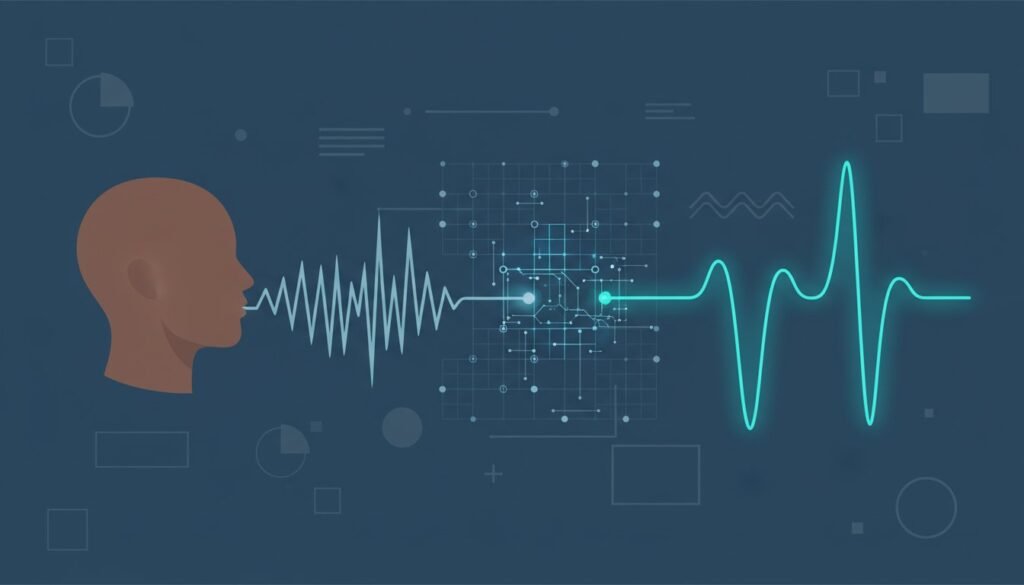
Understanding what makes an accent hard to understand requires us to look at the brain as a high-speed, pattern-matching processor. When you listen to speech, your auditory cortex isn’t just recording sound; it’s performing a real-time “matching game.” It takes incoming acoustic signals and attempts to map them against a stored database of linguistic patterns. When a speaker uses Non-native pronunciations of English, the brain often fails to find an immediate match. This creates a high cognitive load, meaning the listener must use significant mental energy just to decode the sounds before they can even begin to process the actual meaning of the sentence.
Prof. Alex Obskov, Ph.D. Linguist, describes speech clarity as the art of reducing this “phonetic friction.” When the sounds you produce align closely with the listener’s mental library, the communication is seamless. When they don’t, the listener’s brain experiences a “stutter” in processing. This is a physical, measurable delay in comprehension that can lead to fatigue for both the speaker and the listener during long professional meetings or social interactions. Reducing this friction is a core goal of modern accent modification.
Sound Categories and the Brain’s Expectations
The brain’s struggle with new accents starts in infancy. By the time a child is 12 months old, they’ve already learned to ignore acoustic variations that aren’t relevant to their native tongue. This leads to the “perceptual magnet effect,” where the brain effectively “warps” new sounds to fit into existing native categories. If your native language doesn’t distinguish between two specific vowels, your brain will literally struggle to hear the difference between them in English. Phonemes are the smallest units of sound that change a word’s meaning. When these phonemes are substituted or shifted, the brain’s matching game hits a snag, which is a primary factor in what makes an accent hard to understand for the untrained ear.
The Role of Exposure and Familiarity
The human brain is remarkably adaptable and builds an internal “library” of accents through repeated exposure. If you work in a diverse environment in Houston or Dallas, your brain eventually “tunes” itself to various international rhythms. However, when a listener encounters a completely new phonetic pattern, they lack a reference point. It’s crucial to understand that “unfamiliar” isn’t a synonym for “incorrect.” A speaker’s clarity is often a reflection of how well their sound patterns overlap with the listener’s specific experiences.
Social bias also plays a hidden role in this science. Research indicates that if a listener perceives a speaker as “different,” they may subconsciously decide the person will be hard to understand, leading them to give up on the decoding process prematurely. Through structured American accent training, professionals can learn to navigate these cognitive hurdles. By mastering the specific rhythm and intonation of American English, you reduce the listener’s cognitive load, ensuring your expertise is heard clearly and confidently without losing your unique cultural identity.
Phonetic Friction: How Vowel Shifts and Consonants Impact Clarity
Speech clarity depends on the precise geometry of the vocal tract. When we analyze what makes an accent hard to understand, we often find that the friction occurs because of “vowel shifts.” These are tiny, millimeter-sized differences in where the tongue sits in the mouth. Prof. Alex Obskov, Ph.D. Linguist, explains that American English relies on these micro-adjustments to distinguish between hundreds of words. If a speaker uses the vowel system of a Romance language like Spanish, which typically uses only five to seven pure vowels, they may merge sounds that must remain separate in English. This phonetic overlap makes speech harder for the brain to process, forcing the listener to work harder to decode the message.
The Complexity of American Vowels
American English is vowel-dense. While many world languages operate with a small set of stable vowels, American English utilizes approximately 20 distinct vowel sounds. This complexity is often what makes an accent hard to understand for those accustomed to simpler phonetic structures. A vital component of this system is the “schwa” sound. It’s the neutral, relaxed vowel found in the unstressed syllables of words like “sofa” or “supply.” Without the schwa, the natural rhythm of American speech disappears and sounds robotic. Learners often struggle with minimal pairs, where a slight shift in tongue height changes the word entirely. For example, failing to distinguish between the vowel in “set” and “sat” or “ship” and “sheep” can lead to immediate confusion in professional settings. Mastering these shifts through focused accent modification is a core part of effective communication.
Consonant Variations and Word Endings
Consonants act as the anchors of English words. In American English, the [r] and [t] sounds are particularly unique. The American [r] is retroflex or bunched; it’s never rolled or tapped like in Slavic or Romance languages. Additionally, the [t] often transforms into a “flap” sound in words like “better” or “city,” which can be disorienting for new learners. However, the most common issue impacting speech clarity is the “dropped” final consonant. In many languages, word endings are soft or omitted. In English, the final consonant often dictates the grammar. If you drop the “d” in “planned” or the “s” in “books,” the listener loses the tense or the quantity. To help students visualize these physical movements, Prof. Alex Obskov, Ph.D. Linguist, utilizes 2D Sound Motion Technology. By using 2D Sound Simulators for American Sounds, you can see the exact motion of the tongue and lips in real-time. This scientific approach helps professionals across Texas, from Austin to Houston, build the muscle memory needed for crisp, clear word endings. If you want to see how these sounds move, you might consider booking a sample class to experience this technology firsthand.

The Music of Language: Why Rhythm and Intonation Are the Real Culprits
Many learners spend years perfecting individual vowels, yet they still face confusion during professional meetings. This happens because speech clarity depends less on isolated sounds and more on prosody; the rhythm and melody of your voice. Prof. Alex Obskov, Ph.D. Linguist, emphasizes that the “music” of English provides the structural map your listener’s brain uses to navigate your sentences. When this map is missing or follows the rules of another language, it’s the primary factor in what makes an accent hard to understand for native listeners.
English is a stress-timed language. This means we squeeze some syllables and stretch others to keep a consistent beat between stressed words. In contrast, syllable-timed languages like Spanish, French, or Mandarin give each syllable roughly equal time. If you apply a machine-gun, even rhythm to English, you strip away the cues listeners need to process your message. Incorrect word stress can make a perfectly pronounced word unrecognizable. For example, saying “PHO-to-graphy” instead of “pho-TOG-raphy” forces the listener to pause and mentally translate, which breaks the flow of communication.
Mastering Sentence Stress and Emphasis
To improve clarity, you must distinguish between content words and function words. Nouns, main verbs, and adjectives are the stars of your sentence; they require more energy and a higher pitch. Function words like “the,” “at,” or “of” should be spoken quickly and softly. Every sentence has a “peak,” or a single word that carries the most important new information. By hitting this peak with a slight rise in pitch, you guide the listener directly to your point. A practical tip from our coaching sessions: record yourself speaking and then hum the melody of the sentence. If the hum sounds flat like a monotone drone, you aren’t using enough intonation to signal your intent or emotion.
Linking and Reductions in American English
Native speakers often seem to “mumble” because they use linking and reductions to maintain their rhythm. Phrases like “going to” naturally become “gonna,” and “would have” becomes “woulda.” This isn’t lazy speech; it’s a linguistic tool that creates the smooth flow American listeners expect. When you link the end of one word to the beginning of the next, you eliminate the choppy gaps that contribute to what makes an accent hard to understand. To master these transitions, you can explore the American Accent Training for U.S. Professionals guide. Understanding these patterns helps you move from robotic pronunciation to the fluid, confident speech required in high-stakes professional environments.
The Listener’s Role: Context and the Effort of Understanding
Communication is never a solo performance; it’s a dynamic exchange between a speaker’s delivery and a listener’s processing power. To truly grasp what makes an accent hard to understand, we have to examine the “cognitive load” placed on the listener. When a listener encounters unfamiliar phonetic patterns, their brain must work harder to decode individual sounds. This leaves less mental energy available for actually comprehending the message. According to a 2010 study by linguists Lev-Ari and Keysar, listeners often perceive information as less credible simply because it requires more cognitive effort to process. The brain relies heavily on contextual cues to bridge these gaps. If you’re in a kitchen and someone asks for a “fork,” your brain expects that word. If the pronunciation is slightly off, the context saves the conversation. Without that context, clarity often fails.
This dynamic creates a phenomenon known as the “interlanguage speech intelligibility benefit.” Research shows that two non-native speakers from different backgrounds often understand each other more easily than they understand a native speaker. This occurs because they frequently use similar simplified sentence structures and share a heightened sensitivity to non-standard phonemes. However, the stakes rise in professional environments. In these settings, technical jargon and high-pressure deadlines remove the “safety net” of simple context. A 2018 analysis of workplace communication found that 62% of misunderstandings in multinational teams were linked to the pronunciation of specialized industry terms rather than general grammar errors.
Reducing Cognitive Load for Your Audience
Prof. Alex Obskov, Ph.D. Linguist, emphasizes that you can proactively manage your audience’s mental effort. One effective strategy is “priming.” Before presenting data, explicitly state your topic: “I will now discuss the quarterly revenue projections.” This prepares the listener’s brain for specific vocabulary. Strategic pausing is equally vital. A silence of 0.75 seconds between key ideas allows the listener’s auditory cortex to reset and process the previous “chunk” of information. Many professionals believe they must speak slower to be understood, but speed isn’t the primary factor. Clarity comes from better rhythm. Mastering American English word stress and intonation provides the musical roadmap listeners need to follow your logic without feeling fatigued.
Navigating Bias in the Workplace
We must address “standard language ideology,” which is the unconscious bias that associates certain accents with authority or competence. This bias is a reality, but focusing on speech clarity serves as a tool for professional empowerment. It isn’t about “hiding” your background or “losing” your identity. Your culture matters, and your original accent is a testament to your journey. Accent modification is about adding a new professional skill to your toolkit, similar to learning a new programming language or management methodology. By refining your American accent, you ensure that your expertise is the focus of the conversation, not the effort it takes to decode your speech.
Take the next step in your professional journey. Explore our American accent training to build the clarity and confidence you need to lead.
Achieving Speech Clarity: A Scientific Approach to Professional American English
Traditional ESL classes often focus on grammar and vocabulary, yet many professionals find their communication still hits a ceiling. This happens because standard language courses rarely address the biological and linguistic mechanics of sound production. To truly grasp what makes an accent hard to understand, one must look at the precise coordination of the tongue, lips, and jaw. Prof. Alex Obskov, Ph.D. Linguist, approaches American accent training through a rigorous sound-by-sound methodology. This analytical framework moves beyond simple imitation. It treats speech as a physical skill that can be mastered through cognitive re-mapping and precision practice.
For high-level professionals, accent reduction isn’t about erasing identity. It’s a strategic form of professional development. Clear communication is the foundation of leadership and career growth. By shifting the focus to speech clarity, students gain the tools to project authority in boardrooms and presentations. This scientific approach ensures that your message is heard without the listener needing to exert extra cognitive effort to decode your speech patterns.
2D Sound Motion Technology: Visualizing Success
One of the biggest hurdles in American accent training is that most articulatory movements happen inside the mouth, hidden from view. Simply watching a coach’s face doesn’t reveal the specific tongue height or tension required for complex sounds like the American “R” or “L.” Prof. Alex Obskov, Ph.D. Linguist, solves this by using proprietary 2D Sound Motion Technology. These 2D sound simulators allow you to see a cross-section of the mouth in real time.
This visual feedback loop is vital for cognitive re-mapping. When you can see exactly how the tongue moves against the palate, your brain builds new neural pathways much faster than through auditory imitation alone. This technology transforms an abstract concept into a visible, repeatable physical action. It’s the difference between guessing a sound and knowing exactly how to build it from the ground up.
The Path to Confidence and Fluency
The journey begins with a comprehensive professional accent assessment. During this session, Prof. Alex Obskov, Ph.D. identifies your specific phonetic patterns and creates a roadmap for your success. This structured, Ph.D.-led program offers predictable results because it’s based on linguistic science rather than guesswork. You’ll work through the 24 American consonants and 20 vowels with a focus on rhythm, intonation, and word stress.
- Predictable Progress: A structured curriculum ensures every session builds on the last.
- Success Guarantee: The program is designed for professionals who require high-stakes communication.
- Personalized Feedback: Every adjustment is tailored to your specific linguistic background.
Clarity is a reachable goal that opens doors to new professional opportunities. If you’re ready to master your communication, explore the American accent training near me to start your journey. You don’t have to navigate the complexities of English phonetics alone. With the right scientific tools and expert guidance, you can speak with the confidence that your professional expertise deserves.
Master the Science of Professional Speech
Gaining a deep understanding of what makes an accent hard to understand empowers you to transform your communication. Clarity isn’t about losing your cultural heritage; it’s about mastering the 20 American vowels and the specific rhythm that helps your listener’s brain process information efficiently. When you address phonetic friction directly, you remove the barriers that prevent your colleagues and clients from fully engaging with your ideas.
Prof. Alex Obskov, Ph.D. Linguist, provides the expert guidance you need to bridge the gap between effort and ease. Using proprietary 2D Sound Motion Technology, this method offers a visual, scientific path to speech clarity that goes beyond traditional repetition. It’s a personalized journey designed for international professionals who demand results. With a Success Guarantee and a focus on your unique goals, you’ll build the confidence to lead and inspire in any environment.
Book a sample class with Prof. Alex Obskov, Ph.D. and experience 2D Sound Motion Technology today!
You’ve already done the hard work of building a career. Now, let’s make sure your voice reflects your expertise and helps you reach your highest potential.
Frequently Asked Questions
Is it possible to reduce my foreign accent as an adult?
Yes, adults can absolutely achieve significant results through systematic accent reduction. While the critical period hypothesis suggests children learn more easily, research by linguists like Dr. James Flege shows that adults retain the cognitive ability to master new phonemes at any age. By using our 2D Sound Motion Technology, you target the physical mechanics of speech. This scientific approach helps international professionals communicate with clarity in high-pressure professional settings.
Can I improve my speech clarity without losing my cultural identity?
You can definitely improve your speech clarity while keeping your unique cultural identity. At My Accent Way, we believe your culture matters and shouldn’t be erased. Our goal isn’t to make you sound like someone else but to ensure your listeners focus on your ideas rather than what makes an accent hard to understand. We focus on specific American sounds and intonation patterns that bridge the gap between your native tongue and American English.
How long does American accent training usually take to show results?
Most students see measurable progress in their speech clarity within 12 to 16 weeks of consistent practice. According to our internal data from over 500 successful students, the first 30 days usually focus on auditory discrimination. By the third month, learners typically report a 40 to 60 percent increase in confidence during meetings. Success depends on using tools like our 2D Sound Simulators for American Sounds for at least 20 minutes daily.
What is the difference between accent reduction and general ESL classes?
General ESL classes focus on grammar, vocabulary, and syntax, whereas American accent training targets the physical production of sound. While ESL helps you build sentences, accent modification teaches you how to move your articulators to produce the 24 American consonants and 20 American vowels correctly. Prof. Alex Obskov, Ph.D. Linguist, uses a science-based method to help you master the rhythm and melody of the language, which standard English classes often overlook.
Why do some people have a harder time understanding my accent than others?
Listeners struggle when your speech patterns deviate significantly from the expected American rhythm, word stress, or intonation. These specific phonetic shifts are often what makes an accent hard to understand for listeners who aren’t familiar with your native language’s structure. A 2010 study on intelligibility found that consistent intonation is often more important for clarity than individual letter sounds. Training helps you align with these listener expectations through precise cognitive and analytical processes.
What are the most common pronunciation mistakes for international professionals?
International professionals often struggle with the neutral schwa sound and the distinction between voiced and unvoiced consonants. For example, many speakers replace the American th sound with a d or t, which can change the meaning of 15 percent of common English words. Misplacing word stress in technical terms also creates confusion. Our program uses 2D Sound Motion Technology to visualize these subtle differences, helping you master the precise mechanics required for professional clarity.
Disclaimer – American Accent Program
The American Accent Program available through Visit Program Website
is an educational and coaching service designed to support pronunciation, accent reduction, and spoken English fluency. All training materials, including lessons, exercises, audio content, visual simulations, coaching methods, and digital resources, are the intellectual property of American Accent Program, LLC and are protected by applicable copyright and intellectual property laws.
By using this website and participating in the program, you acknowledge that all content is provided for personal, non-commercial, educational use only. Users are granted a limited, non-transferable license to access the materials strictly for individual learning purposes. Redistribution, reproduction, recording, modification, sharing, or commercial use of any program content without prior written consent is strictly prohibited.
The program may include live coaching sessions, digital tools, and instructional materials intended to improve pronunciation and communication skills. However, individual results may vary, and no specific level of fluency, accent reduction, or communication outcome is guaranteed.
The American Accent Program and its instructors do not provide medical, therapeutic, or clinical speech-language pathology services. All training is intended for educational purposes only.
By accessing or using the program, you agree to comply with all applicable terms, including the platform’s Terms of Use and Course Policies, and acknowledge that misuse of materials may result in termination of access without refund.